Poet Hoa Nguyen and editorial assistant Conrad Schaefer discuss Nguyen’s poems featured in the Summer 2025 issue of Colorado Review. Their conversation covered poetic process, emplacement, as well as Nguyen’s divinatory/visionary poetics. They also discussed Nguyen’s archival research; the pairing of lineage and diasporic experience in her lyric poetry.
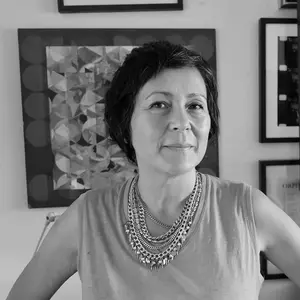
Born in the lower Mekong Delta and raised in the DC area, Hoa Nguyen is a poet and professor at Toronto Metropolitan University. She’s the author of six books of poetry and 2024 recipient of the C.D. Wright Award in Poetry from the Foundation of Contemporary Art.
Conrad Schaefer: It’s been about a year since your poems were published in the Colorado Review and probably longer since you first submitted them. I’m curious what the experience is like, going back to poems after they’ve been published.
Hoa Nguyen: It was kind of great because I remember these poems, but you move on and you work on other things. You can also look back and be like: “Is this mapping to what I’m working on now?” Like, you’re often thinking about . . . coherency when you’re building towards a manuscript—or at least that’s one of the things that I can do—it’s actually not necessarily beneficial for making a manuscript because it can stop you. But it was actually a pleasure to look at these when I got my print copy, which is when I was visiting CSU, and then to read them and be like: “Oh, yeah, these are good.”
CS: They were good. Absolutely.
HN: Well, they also came out of a particular period where I just got back from a pretty significant trip to Vietnam. I had never been to the South where I had been born and where my mother was born and raised. I’d only been to Hanoi and that was actually only seven years ago. My mother never returned after she left, you know. She left at the age of twenty-seven and never went back. She passed in 2019. So, I was also bringing her ashes to the province that she was born and raised in. Those poems came after that trip in a kind of storm of poems that were informed by dream and had a kind of visionary spirit to them. But they are also a bit autoethnographic as you probably could discern, having to do with previous experiences and sorting them through from the perspective of having been around a little bit.
CS: You mentioned this idea of coherency possibly helping larger manuscripts, but sometimes hindering the process, and I’m curious about how you view, say, these poems and this trip to Vietnam among your work as a whole. Like you said it’s in part autoethnographic; I’m curious if you see your other work part of that tradition as well?
HN: I suppose so. I mean, I’m often in my poems. My speaker can resemble things from my life and my previous impulses were typically aligned with emplacement, a kind of attention to the surround, which includes the everyday, includes one’s reading life, one’s dreaming life, et cetera. There often is a relationship to the perceptual expression of a life, of a viewpoint, of a placed-ness—or I use the word emplacement—which can encompass perspectives that have to do with one’s alignment with all of these things, which is both diffuse and particular. With my last book, A Thousand Times You Lose Your Treasure, I had a particular shape of inquiry, in contrast to my previous five books, which were less pointed towards a particular impulse of expression, but rather maintained an open container of poetic inquiry and expression, which also was deeply informed by my reading life, my engagements with poetry.
CS: I’d like to ask about your poem “Believe the Soul to be Moist like Dew.” In the first few stanzas of this poem, the speaker uses pronouns of the first person plural and throughout the poem there is an oscillation between self, other, and the communal within varying degrees of proximity and agency. In the first stanza of this poem, it reads: “and racing the overloaded pony / twitch of a willow stick to gallop.” There, it seems that agency is left unattributed; we don’t see who’s twitching the willow stick. Shortly after, the agency is distributed. To quote the poem, “and we race us.” I really loved those shifts in this poem, and I’m curious about the role of agency in general, could you speak on that?
HN: Yeah, I don’t know that I think of it in terms of agency, but I do think of it in terms of vocality. Or perhaps as forms of address. Forms of address but also forms of embodiment. I feel like one of the things that poems can do so beautifully is they can slip in and out of bodies. The speaker doesn’t have to be stable. Even the objects or the subjects of address don’t have to remain stable. And there’s something about an oscillating instability that more accurately represents, I think, experiences of speaking to or toward. In other words, like this poem, “Believe the Soul to be Moist like Dew,” there’s an encounter. Well, first, there’s a scenario of needing to hurry through an environment and then also stop short. There’s urgency and prevention of calamity that are introduced in the opening, and then there’s a reference to Selina, who is [a] figure in the archive that I’m curious about pairing. For Selina in Victorian Cornwall, giving birth without a partner of record would have marked her with pervasive stigma, affecting all aspects of life, from employment prospects to community relations. Like my mother, who gave birth to me outside of marriage, fathered by a foreigner, she was marked as socially deviant and vulnerable to societal condemnation. “Selina / in her moon guise” refers to the origin of her name and she appears as a female creatrix. This child that we protect, this she-child, is another figure of the poem . . . The scene kind of switches . . . inexplicably, there’s an encounter that the “I” speaker has with a child of mixed Vietnamese and European descent. This encounter also collides with history and an alchemical ritual towards transformation. So, the impulse is transformation. What I’m up to in my current writing is not necessarily just to encounter these historical figures or these archival figures . . . [but also] imagining what that circumstance would have looked like. It’s not so much about how we represent those facts, but somehow creating an aperture of possibility, where these stories can transform and be released from these calamities. You can imagine why it’s also a difficult series to write.
CS: When you came and visited us at CSU in February, you talked about divinatory poetics and discussed Keats’ concept of negative capability, the idea of being comfortable with uncertainty. I think after hearing your talk and reading your poems again afterwards, I started to think about . . . negative capability and perhaps also the alternative [being uncomfortable with uncertainty] . . . in a toxic space. Thinking about your poem “Dull the Broken Idol,” I was wondering if you could speak on how negative capability may relate to ideas that are present in this poem such as alienation, microaggression, or anything else you might feel is integral.
HN: Yeah, that one’s kind of a heavy poem . . . “Dull the Broken Idol.” Like, break the idol and then dull it, you know? It really is the impulse of the poem in a way. I mean, it’s not exactly a curse. It’s not exactly an accusation, but it’s not not that. And it’s a mode that can align towards reclaiming. Reclaiming the imposed diminishment, let’s say. Maybe actually your word agency is cogent here, too. That the speaker’s view is to reposition their agency with “fffff a leaving a trail of you,” It’s a kind of refusal. So, yeah, negative capability, I think that’s sort of what poets do, whether they know the term or not. It’s that creative space that allows for communications to arrive from elsewhere. In the current sequence, I’m imagining time and place and joining up with this, like, unknown spirit and performing different magical acts together as a form of transformation.
CS: You’re part of this collective “She Who Has No Master(s)” (SWHNM). How do you see your poetic process engaging in groups like this?
HN: I’ve been part of this collective since 2017. And then in the last five years . . . really putting my creative attention to the collective’s projects, both as a participant and as a co-curator. My participation with the SWHNM collection made my last book, A Thousand Times You Lose Your Treasure, possible. I had been thinking about writing it for more than twenty years but was not able to address the particulars of diasporic Vietnamese experiences, my mother’s or my own, in order to manage it. Without my collaborative work, which includes our social practice in a politics of connection, I’m not sure I could have written it. In other words, coming together with other people who share this particular diasporic history and also as women or nonbinary people (which is also further particularized), gave me access or agency to be able to begin to address those concerns. As a mixed-race person, as a monoglot, as a person who was raised during a period of time when the war in Vietnam was ongoing, combined to create hostilities towards us upon arrival to the US. I will never understand how much my mother suffered upon her arrival. She was always very private about those things, but I know that they existed. I remember some of them as well as my own. To have a collectivity [provides] not only interpersonal connections, but also forms of expression. Our mode is hybrid poetics and polyvocality which was already embedded in my poetics. But especially, in a latent way, the hybridity, working with image or moving image, working with sound. The polyvocality provided me, I think, a form of access that could address and counter the monolithic received narratives . . . [as well as] access to expression that I don’t know that I would have had otherwise.
CS: How do you view the relationship between memory and the present moment in your work and creative process? I’m really curious about shared memory in your work too.
HN: Sometimes I record things in my notebook, but often, you know, we are ourselves a recorder. In my “Poetry and Poetics” class, we were talking about the ways in which poetry can be an archival space, the poem as record, the poem as presentation without possession. Record, re-cord, which is also interesting to me, but they etymologically come from the same root. And it has to do with putting it in your heart… it’s heart memory… the belief that [the heart] was the site of memory and thought. So, the idea of the records is that memory—those patterns of connections—become residents of that rhythmic place; a place of pulse, of vividness, the coursings of the blood, provided a vivid avatar to think with. The page is a site in which you’re taking the record, the coursings, the circulations, and the things that become part of the body, part of the experience. It’s the field that’s activated by these elements and includes a third unknown in the act of recording it or interacting with the fields of the page, [allowing] other things that are slightly beyond your immediate control or ego-control to happen. I think that circles back a little bit to the negative capability, the statement of Keats, who suggests that the poet be less aligned with ego and self-directed ideas. It’s an openness that allows for the unexpected, the thing that you didn’t even know.
 Conrad Schaefer is an MFA candidate in poetry at Colorado State University and an editorial assistant for the Center for Literary Publishing.