Editorial assistant Aliza Anderson-Diepenbrock discusses multigenre publication and more with Keith Stahl, whose essay “Rabid” is featured in the Spring 2026 issue of Colorado Review.
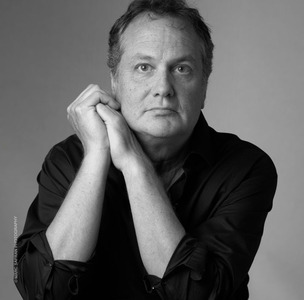 Keith Stahl’s first novel, Dear Future Occupants, is forthcoming from University of Wisconsin Press (Fall, 2026), and his poetry collection, From the Gunroom, is available from Main Street Rag Publishing. Keith teaches Creative Writing at Syracuse University and Writers Voice. Visit KeithStahl.net for links to many published pieces.
Aliza Anderson-Diepenbrock: I’m always interested in talking with writers who write across the genres and you have published poetry, fiction, and nonfiction. Correct?
Keith Stahl: This essay will be my first nonfiction publication. When I got into my MFA, I did not think I was a poet. I mean, I wrote a poem in fifth grade. It was the first thing I ever wrote, and I hid it. My sister found it and showed it to my mother. And my mother put it on the refrigerator with a magnet. And that began my writing career. So I guess back then, I was a poet.
But when I finally got to Syracuse, I kind of mocked poetry. Then, Sarah Harwell kind of turned me on to poetry a little bit. And yeah, my first publication was a poetry collection. So now with the novel, University of Wisconsin Press has billed me as a poet who has written a novel. And I’m like, “No. That’s not right.” And now the nonfiction. They are all… interconnected so closely, you know?
AAD: When you start a piece, do you know what genre you want to go in? Or do you ever find yourself exploring a spark that might take shape in a couple of different genres first?
KS: As far as genre goes, I have an idea before I go into something. I definitely follow sparks, though. Dana Spiotta at Syracuse told me, “You have to go where the energy is.” There are times I’m working on a novel or I’m working on a short story, but I’ll free write to warm up in the morning and sometimes there’s a spark that sends me off on a tangent.
In terms of genre though, with the poetry collection, that was certainly poetry from the beginning…I found this old gun manual in a bookstore in Boston and the language just spoke to me. I was taking a poetry workshop with Sarah Harwell, and I was like, “Let’s see if we could produce some poems using just the language from this gun manual.” But later on in that collection, there’s like a flash fiction piece. So, I started toying with that.
With the piece that’s in Colorado Review, the origin was totally nonfiction. I was teaching a class at the Downtown Writer’s Center in Syracuse, the YMCA. I had the students do an exercise from Raymond Queneau’s, Experiments in Style. He has one story that he rewrites in different voices, different genres, like 101 times: Dream is one, Hesitation, Word Game, The Rainbow. I chose Prognostication, which is where you write using “one day you will” or “this will happen to you.”
It just so happens that my wife and I were bitten by a rabid fox that week. I was like, “I’ve got to write about the fox.” It started off as nonfiction, but in that weird voice: “One day, you’ll be behind the barn…”
But my instinct was, “Okay, I’m a fiction writer, I need to write fiction.” So, I worked on it for probably a year, trying to push it into fiction.
From a fiction point of view, I was like “Ok, I’ve got that we were bitten by a fox. We went to the hospital, and everything’s okay now”—and that sort of didn’t stand on its own. I was making things up, and I just wasn’t feeling the energy. I tried to get the thread about the father in there.
I had two versions, and one of them was just like, “Okay, let’s just make this nonfiction.” and I just put it on the shelf for a few months. It was in teaching a nonfiction class up at SU, I started reading some Jo Ann Beard, and was introduced to the braided narrative, and just realized, “Oh, it doesn’t have to be like fiction, where it’s escalation, escalation.” So, I picked up the story, and I read it, and I was like, “I would read this story as it is.” So, I started sending it out. And it was like, a week later, Colorado Review picked it up. So yeah, now my brain is spinning between nonfiction and fiction.
AAD: Could you speak more about what feels possible with nonfiction compared to fiction? So often, when we’re talking about nonfiction, it’s defined by what it’s not, nonfiction —but with this piece nonfiction was an opening for you beyond what was not possible in fiction?
KS: Yeah, I guess I hadn’t thought of this. But you’re right. Nonfiction connotes constraints. It must be something that really happened, and that means… constraints. But as you’re saying, with what I just talked about, there are constraints with fiction, in essence, because for it to be worth it, you’ve got to keep the reader reading plot wise, or character development, or whatever it is, you know, thematically. I guess it’s true for both genres.
But the restriction with fiction, for me, and maybe this is just my hang up, is everything needs to escalate and blow up. It needs to lead to a place of resolution, or at least a place where there could have been finality and resolution, but there wasn’t. Now I’m discovering nonfiction where it is just like, “This happens.” So maybe the themes can be a little more amorphous?
AAD: One of the things I noticed in your piece is juxtaposition, there’s both micro and macro level juxtaposition. There’s the moment with the narrator juxtaposed to the Navy SEAL. The narrator in the slippers, sort of fumbling along learning about trapping foxes. Similarly with the two main threads and the juxtaposition of the rabies and the dying father. It sounds like once you embraced nonfiction, the opening for you in this piece was that you could just let those juxtaposition and weavings drive the piece. Does that feel true?
KS: Yeah, I am thinking about how one of the threads, when it was fiction, was this big, huge jealousy thread with the Navy SEAL and I just wasn’t feeling that. Following the Navy SEAL around had to be a big deal. I needed to pump that up for escalation and make it a story versus just quietly presenting it as an element of my personality, a fleeting thought, the comedy of being in these slippers again.
AAD: I’m curious about the absurdity. Whether it’s with this essay specifically or your work at large, what does the absurd make possible for you in writing?
KS: I guess it opens possibilities. I mean, ideally, when you’re in the zone when you’re writing, and you’re feeling it—like, I feel some type of connection. I’ve talked to some people, and they’ll say, you know, higher power, or the universe, or God, or, you know, higher self, or whatever. You’re just kind of flowing. And it’s kind of like, “Where did that come from?”
I’ve been—it’s almost sketching—I’m working on a new novel. I’ll just lean back in the recliner and try to take the pressure off myself; just see where the scene goes, and just have it be bizarre, you know? That’s freeing, and maybe that is what the absurd does—it gives permission to bypass constraints or expectations. The writers on our shoulder: “Don’t do this; you should do that; good writing should be like this”—but then when I just let it go, I can be like, “Oh, this came out. I kind of like this.”
AAD: You spoke about the use of future tense in “Rabid,” and how that came from the prompt. But I’m curious about the use of second person. Was that also a part of the prompt? Or was that something you stepped into? The second person can be hard to pull off, but in this essay, it’s really driving the piece with a kind of a distanced, instructional tone. And I’m curious about your process with that.
KS: I mean, the second person was also part of Queneau’s prompt so I just went with it. And I don’t know why it works so well, but you’re right, I think it does.
I mean, I can justify it now that I’ve done it. I mean, what does the second person do in general? I’m thinking it makes things more intimate. So, I can say, well, if we’re dealing with themes of death and the inevitability of death and fear of death, then certainly “you” works. But I don’t know. I don’t have the answers.
And then, you reach the point where it’s like, “Oh, is this just style?” I still have concern about that with this piece. Sometimes I feel like, “Oh, you’re writing in this weird stylistic form for the sake of style?” George Saunders talks about asking what’s the heart of the story? It could be characters or could be thematic, or diction. But then, yeah, I see some pieces where it’s like, “Oh, it’s just style at the heart,” and it’s almost pretentious to me. So just being fancy with the second person, turns me off, you know, unless it has heart.
AAD: I think this piece has a lot of heart. What would you say is the heart of this piece?
KS: You know, I was asked that by a therapist? And for months, I was like, “Oh, it’s about sanity, it’s about rabies and insanity, it’s about death and insanity.” And it took me months for me to see it was simple. It’s about fear. It’s about the fear, fear, fear of death and fear and my experience lately as you get older. What does your end looming do to you? What does the death of friends that you went to high school with do for you? Makes you appreciate the people that are around you still. It makes you appreciate a cup of coffee in the morning. That was one heart of the piece.
AAD: I was really struck by elements of, of certainty and uncertainty throughout the piece. On the one hand, formally with the “you will” there is a lot of certainty: this is going to happen. Yet, in a lot of ways, there is a lot of uncertainty in the piece. We get this repetition of what will “probably be the last visit”, and then the final two lines of the piece introduce a maybe to the “you will.” I’m curious about how you see certainty and uncertainty at work in the piece.
KS: Yeah, I guess that’s what it’s about, isn’t it? We just don’t know. We can think we know. We can talk ourselves into being certain. Maybe that’s genuine, but I’ll speak for myself, there’s a part of me that’s uncertain. I’m not certain about this, but maybe with the second person and the “you will” there’s an element of uncertainty to that, an undertone to that, because the reader might be thinking in response to the “you”: “No, because number one, I’m not married. Number two, I don’t have a gazebo. I don’t live near foxes.” There’s that kind of uncertainty and discomfort, which I think can be entertaining. And then with the “maybe this will happen”—“maybe you will hug your wife,” or whatever the line—I learned this from Mary Karr up at Syracuse, to be honest with the reader, and I’m not certain about my memory. That’s the “maybe,” and yet that kind of stirs up that uncertainty, too.
AAD: That’s an interesting point, that in making a declarative “you will do this,” it almost introduces an opening for uncertainty because there is something to definite counter. The uncertainty of the maybe presents this uncertainty, this precarity and lack of control that I think the narrator is really, like grappling with throughout the piece.
KS: But none of this happened in my writing process. This is coming now, because you’re talking about it. And I’m going, “Oh, yeah, exactly. Right. Oh, I set out to do this. And I knew what the hell I was doing.” When really so much of the process is serendipitous. And you just go where the energy is. You go with the flow.
AAD: It brings us back to where we started, following the energy of the piece. In this case, you had a prompt, and you had this moment, and there was energy that you followed, and all these threads came through.
KS: I’m thinking two things: a lot of times it takes somebody else for me to look at a project or whatever and get their take on it for me to see the piece. Like you just did it now: I’m like, “Oh, yeah, okay. The uncertainty—”these are all the elements”—or, you know, a therapist, kind of guiding me into fear of death. And, yeah, so it’s kind of going with the flow.
But having said that, of course, I’m like, “Oh, my first nonfiction piece published by Colorado Review! They rejected two of my best stories. So, what is the formula to get published? Start with a good anecdote, and I’m going to write in the second person, and I’m going to do a braided narrative.” But you know, if I just follow a formula, then I just end up going through the motions, and then I’m missing the heart of a piece.
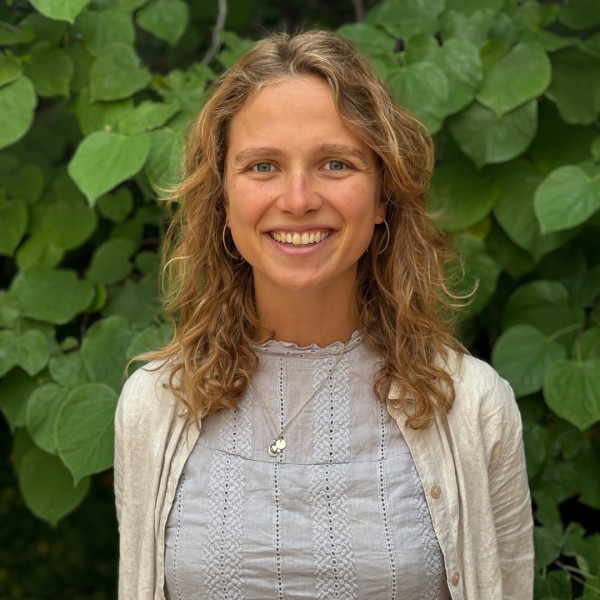 Aliza Anderson-Diepenbrock is an essayist and poet. She is an MFA candidate in creative nonfiction at Colorado State University, where she is also an instructor of first-year composition and an associate editor for Colorado Review. Born and raised on a family farm on Orcas Island, Washington, she writes of self through place and place through self.