Associate Editor Autumn Koors-Foltz talks to Jacques J. Rancourt about his featured poems in the Fall/Winter 2025 issue of Colorado Review.
Jacques J. Rancourt is the author of Brocken Spectre (Alice James Books, 2021) a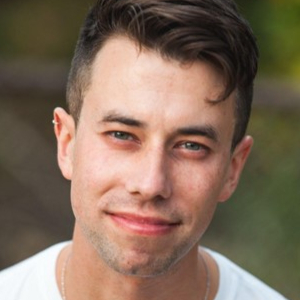 nd Novena (Pleiades Press, 2017). His poems have appeared recently in The New Republic, The Kenyon Review, Image, and Poetry, and his honors include fellowships from the National Endowment for the Arts, the Wisconsin Institute for Creative Writing, and Stanford University, where he was a Wallace Stegner Fellow. He lives and teaches in San Francisco.
Autumn Koors-Foltz: In this new poem, “Charlie Hebdo” in Colorado Review, I was curious about the sense of grief there. I found that in your work, Brocken Spectre, I was interested in how both of these texts seem to be approaching and navigating grief. Have you found that over time in your writing through these topics that you’re coming at it from a different place now, or do you still find yourself working through what you had articulated as the “proximities of faith” that were leading some of those explorations in Brocken Spectre?
Jacques J. Rancourt: Yeah, thanks for that question. You know, I’ve actually been thinking a lot about what sort of things––as I finish my third book—what things and themes hold all three books together. And it comes with two things I’ve picked out while reviewing them: one is the idea to want and desire to inhabit a past but because it’s the past be unable to; but recognizing the ways in which the past still presses on the present and the way time folds in on itself. And those moments in which history, whether it be personal history or capital H “History” intersect. I like my poems to be haunted. When I like to think of myself as a poet, I like to think of myself as a bit of a ghost hunter. And so I think in that way all my work is concerned with trying to reinhabit a time that is now gone. Brocken Spectre, of course, with the HIV/AIDs crisis and the queer history of San Francisco. But perhaps with Novena and this new collection, it’s more skeptically thinking about the way the religious upbringing circle around one’s life—the proximities of faith you mentioned in your question. And, you know, I think that’s always been a fabric in my work. Perhaps what’s different is the way the speaker of these poems use that proximity.
For example, “Charlie Hebdo” is about not only proximity to faith but proximity to danger, right? And how ignorance of that danger can lead one to awe. It’s based on a true story. I had an artist residency in Paris for a few months, and on my very first day there I didn’t yet have a phone plan and a connection to the outside world other than what I could see with my own eyes. After I dropped my bags off at my studio, I walked right to Notre Dame, as one does, to go check it out. It’s supposed to be lines for hours and it was totally empty. I was the only one in this cathedral and it felt like a near religious experience, only to find out later it was vacant because France was experiencing its first mass shooting. Everybody in the whole city was on lockdown, which you’d only know if you had access to the internet, right?
AKF: Right.
JR: So you know, I was curious about how much of my near religious experience came out of a tragedy and ignorance to that tragedy. I think the speaker of my newer work is much more skeptical of these forces and hopefully a little more analytical of these forces.
AKF: I’m really curious about what you said there about feeling like or intending to be a ghost hunter. What really strikes me about that is that it feels very apt for your work—I admire and get a sense of is a work that’s curious not just of histories but near histories. Histories that just have or histories that have only just became. To me, it seems that ghost hunting comparison is really apt if you think of ghosts as residual energies that just haven’t yet left. I’m curious about the idea of histories as residual energies that poems can exist in and within, and how your work is navigating that. I love this line from “Charlie Hebdo”: “where the carcasses of clergy lie dissolving / under a marble floor (get murdered / and you too could become a marytr, a youth minister / once joked.)” I see what you say there about perhaps a jadedness. I’m curious about how a line like this factors into those explorations of grief.
JR: What you mentioned just now about near histories factors in here, too. One of the main concerns of Brocken Spectre was the fact that the HIV/AIDs crisis is not even history. We’re still very much living in its grip culturally and biologically—it’s literally still a thing that has not ended. But because it inhabited a whole generation of queer men who were more or less just decimated by it in the ’80s and ’90s, there’s this schism between my generation and the previous one where’s there’s this gap and loss of oral history and narrative as a result of that. So similarly, I think of my own religious upbringing, too. At one point Catholicism was a huge factor in my identity. I was determined to become a priest until I was a young adult. My youth ministry was the main focus of my life, so, going back to that idea of the proximity of faith. Because I came out in college and there’s such a schism of the before and after of that as well, it comes all too easy to forget you had a connection to this previous person. This previous person feels dead to you. You become your own ghost in ways. You only encounter that ghost when you’re brought into a religious space and reminded, “wow, this used to be something I wanted for myself, this used to be how I saw myself,” so it’s all too easy to forget. I wanted this poem to live in that lyric space of confronting something that used to be super important and now is dead. But you can still be haunted by it. You can still feel that religious fervor and awe—not because it matters to you, but because you’ve mentioned, that residual signature ignites something that’s been forgotten for so long.
AKF: A haunting as collapse of time, even. Just that idea that it diminishes the space between those histories—makes it all active, that reminds me, to speak of ghosts, those EVP readers, right? That’s the collapse right there.
JR: (laughs) Right.
AKF: Thank you. That’s wonderful. I’m curious about how you’re navigating narrative—the past selves, the future selves, the once selves, and how it’s this ambiguous boundary but at times this very firm, separate self. How does that factor into how your pacing or approach of narrative in your work?
JR: For me, narrative is very important in my work. Most of the times, even if my poems don’t entirely rely on narrative, they at least have the situational spine to cling to. Maybe partly why is because so much of my work is spurred out of memory. It’s almost as if one lives many lives and they don’t end, those lives just live on concurrently. In that memory you almost reaccess that person you were or that moment that once mattered so much but now feels dormant. Memory and narrative are always fuel for my creative work, a well I keep pulling from. I once thought myself as a prose writer, and I think the pieces of work and art that excite me most are where the intersections between genre lie. Having the heart and logic of a short story but with the lyrical and musical impulses of poetry, that’s the in-between space where I’m always trying to dig and lean into. It’s just how my brain works. I think through the questions of poetry with a narrative mindset. In my new work, I am trying to perhaps lean into a more lyrical mode at times, but, I’m also no longer interested in resisting my creative impulses just for the sake of change.
AKF: Oh, yeah. Could you talk more about that? That’s an important, energetic idea.
JR: I used to perhaps harbor this idea that every new book and every new project needed to reinvent themselves. There’s certain poets I admire greatly who I think really do this and do it really compellingly. I think of someone like Ellen Bryant Voigt’s Headwaters, which is a huge departure from something like Kyrie or Messenger. I always admired that and held that as a bar for me, but recently I realized that reinvention doesn’t have to be a complete coercion of one’s aesthetic, either. There are certain things that ignite us creatively. I feel like the resistance to being the writer you’re meant to be can sometimes also create very flat or disaffected effects. I’ve seen other writers who’ve tried to reinvent themselves to such a degree that they’ve lost the thing that made their work so compelling. Rather than doing that, my goal is to imagine new spaces for what impulse I already have. And perhaps to challenge myself in different ways in terms of formal dexterity rather than just complete abandonment of that.
AKF: To me, it seems more generous to the past work, the past self to be creating a lineage as opposed to always be in a mode of obliteration, I suppose. I was hoping you’d talk a bit about this new manuscript: what you’re doing in it, what you’re working through, what you’re thinking about.
JR: Yeah! As I mentioned earlier, my creative thesis I’ve come to realize has a lot to do with the continuation of the past into the present and this book is very much about that. The title is currently “Future Pasts,” so, that alone speaks to that. Specifically this book is about anticipatory loss. This idea of grieving something that hasn’t yet come to pass and trying to memorialize a present moment knowing that it soon will be a past moment, knowing it’ll be gone soon. One of the practical or tangible ways this shows up in the book is the loss of a relationship, and that moment in the relationship where one knows, “oh in a year from now, this person won’t be in my life,” or “this thing won’t be in my life” but also thinking through climate change. We’re on this knife’s edge that we know how this is going to end. We can do everything to fight and resist but we know where ultimately it’s headed. We’re trying to memorialize and pay tribute and hold onto something that is slipping through our fingers as in the act of us doing that thing. So that’s the general thesis of what I’m working with in this new book.
AKF: That feels like such a progression and opening into that space. I wonder about it too—how, then, do you see that lineage of how that works with some of your previous collections?
JR: Brocken Spectre might have the most direct relationship in the sense that it’s about trying to locate oneself in history, both as a receiver of history, how in the HIV/AIDs crisis that’s very much beyond us—we’re beyond the crisis years, the locus of that, but also it’s very much a part of us. Where we are now as a queer history has its fingerprints, its grip. The noose still tightens around us from those years. Even in the ways we’ve tried to counterweigh the tragedy of that time is a direct relationship to that time. This one is slightly different in its focus as opposed to examining something that’s past bygone us in terms of its urgency, here we have a situation where it’s almost the reverse. We’re in the moment of relative calm that we know it will come to an end. Trying to grip onto something that is slipping by us. While the obsessions and concerns might be similar, the focus has shifted from looking back to looking towards the present, the future.
AKF: I can’t wait to read it. That was a selfish question… I saw you posted something on Instagram about it and I thought, “I need to know what’s going on in that new manuscript.”
We’ve talked a bit about this through, but I’m wondering for you at the moment what is sustaining your work as a poet.
JR: Other forms of art will always give life to art. I’ve been lucky enough to be part of a few writing communities and residencies. The most fruitful part of that is rubbing shoulders with sculptors, painters, musicians, especially as a creator. Seeing the way one devotes themselves to a craft in other genres or disciplines really shines a light on how you see your own way of developing your own craft. Some friends I made who are sculptors—it’s so much more physical, and the labors of time are so different. The structure one has of the days is so different than as a poet, what I think of as collecting shreds of language and they eventually coalesce into a poem. It’s a bit different when one has to chisel away from a block of something as opposed to collecting shreds of something to come up with a whole. It’s been fruitful to work aside and alongside these folks. Music has always been the one that I’ve always been a receiver, a consumer of the art. Of course music has its own logic of narrative, but it’s amazing to me how much emotion music can evoke without that narrative bend to it. It’s something I admire and is very generative to me. I have hundreds of hours of playlists, writing playlists, and when you work with the same artist or musician for a while it’s amazing how you can tap into your best creative self within moments of hearing something, one of their pieces. Music has always been very sustaining for me as a writer.
AKF: I wonder how often I feel that being in community with people in different disciplines can remind me of the material constraints of what we’re doing. For a sculptor, those material constraints are pretty pressing and obvious—you touch the clay for too long it gets hot and you can’t mold it, but it’s easy to get in the mindset that “oh, the words are on the page, they’ll always be on the page” and not think of the fact there are very real limitations that present themselves… There’s only so many letters, there’s only so many noises your throat can make. I wonder about how being confronted with some of the realities of different art asks us to ask the realities of what we’re doing in a different way than we would’ve asked or demanded previously. That’s exciting, the idea that people we’re in community with can help us ask different and better questions of what we’re doing.
JR: One thing my visual artist friends have really helped me come to is that they’ll come to an idea or project and just make a hundred variations of it. They’ll just do the same concept in a different pose, or different way, or color scheme. But you look at the whole breadth of everything they’ve worked on and some that they consider to be failures (though I might be very impressed by them) until they finally work something out with this concept. It kind of gave me permission to write the same poem over and over again. Obviously, I’d probably curate whatever goes into the book, but not to be so close minded at the end of a draft that I feel like is a failure, that I can rewrite, or start this poem again tomorrow. I can write thirty poems on the same story or memory and just keep trying each one from a different angle. I’ve got a few lines I’ve been trying to get into a poem and every two months I’ll try a new poem and sneak that line in. These things can live beyond just that first attempt. We can get too restrictive with how we think about our drafts.
AKF: Of course you have that age old adage “kill your darlings,” but you don’t need to kill anybody! You can just take them somewhere else for a little bit.
JR: There you go!
AKF: It sounds like generosity to a process as opposed to the constant pressure of everything always being a “best of” album. That’s perhaps not ever always the intention of a full work. Trying to make a sustained project requires more attention to quiet moments or moments that are working through a similar variation, that quiet, that time. That time is one that is a valuable one—not just a retreading of waters or stomping grounds.
JR: There’s a sequence in my new book that confronts this directly. I have this poem that mirrors each other, where all the lines on the left hand side will get recycled in some order on the right hand side. The process of writing these poems has been interesting and relates to this conversation, because I won’t always write those two sides together. The most extreme example is that I wrote one poem in 2021, and I wrote its mirror just this past year. It’s taught me some patience, too. I have a blue-collar mindset when it comes to approaching my work. I keep a very strict writing schedule, and I can sometimes get frustrated with myself when I don’t produce something that’s worthy of sharing. If not every single time, so many times a month, or year, or whatever that capitalistic cadence might be. Just to give myself some generosity and patience. There’s no such thing as failed writing, these things live on, compost, and go on to do different things Just to give myself permission to dig back or rewrite the same poem from a different way, or whatnot.
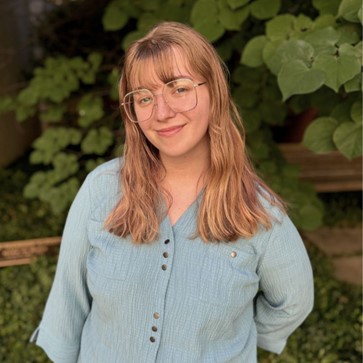
Autumn Koors-Foltz is a second-year MFA student in poetry at Colorado State University, where they serve as an associate editor for Colorado Review. Their poetry can be found in places like Red Ogre Review, Ghost City Review, and the sound a wishbone makes when it snaps.