Lissa Franz discusses “MonkeyMonkeyGirl,” featured in the Summer 2025 issue of Colorado Review, with associate editor Andy Parker.
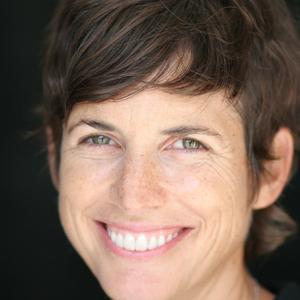 Lissa Franz is a writer, editor and teacher. Passionate about the art of writing, she teaches memoir, fiction, and the college essay. In 2015 she received the Discover New Writers Award in fiction from PEN New England for her novel THE START OF THE REAL WILD OCEAN. Her short stories have appeared in numerous journals, including the Missouri Review, Colorado Review, and Fogged Clarity. Living with her family in Massachusetts, she can also be found open water swimming, sewing, or tending to her feral garden.
Andy Parker: One of the things that first really compelled me to “MonkeyMonkeyGirl” was the way you strike such a delicate balance between humor and melancholy, joy and loss. What was it like trying to find that tonal balance in this piece?
Lissa Franz: This story is about finding joy in hopeless situations, right? Dementia steals hope from its patients and their family members. There are a whole lot of different hopeless situations that we all face, whether it’s poverty, neglect, oppression, injustice. So I think, as a writer, I was really interested in how people find that joy. How do the characters find resilience?
It’s an interesting story in that you kind of know the ending. This isn’t a story where there’s going to be seismic change by the end. Evie’s going to die. Nadine is probably lost forever. Claudia and Deidre are always going to have a difficult sibling relationship. Bree is going to experience some form of neglect. And so, in a story like this, I think I necessarily gravitated towards the dialogue. I created all the lightness and almost a sweetness through the banter in this story. Even though there are very severe consequences happening in this story—all of this darkness—I tried to create some levity through the delicate relationships between the characters. It’s the joy in that hopelessness that really intrigues me as a writer. And so I definitely was playing with light and dark, high and low.
AP: Aside from your works of fiction like “MonkeyMonkeyGirl,” you also write and teach a variety of nonfiction genres. I’m curious about how you see your fiction and nonfiction writing in relation to each other—does your approach or process change significantly? If so, how?
LF: I would say that I treat all of my writing the same, whether I’m writing a novel, or writing an op-ed piece, say, for the local paper about the importance of not spraying your lawn with chemicals. You have to tell a good story, right? I always tell my memoir students, stories are the way that we as humans communicate with each other. And we actually tell and hear stories all day, every day. All of these stories tap into a shared humanity. And so, when I sit down, I don’t actually think that they’re different at all.
I also help kids with their college essays—first-generation, usually—and that’s a really interesting experience, also. It’s all about, ‘let’s just tell a story about who you are.’
And in terms of this story, stories bring us all together. You may not have lost a parent to Alzheimer’s. You may not have found a girl smoking in the woods. But what you probably have experienced are really fraught relationships in your life, and you’ve probably wished some things in your life had gone differently. I think being able to tell those stories is really important. There’s a huge shared humanity to that.
AP: Yeah, absolutely. So, it sounds like people really are at the heart of what you’re writing and like sharing those universal experiences, even though the narrative itself is not universal.
LF: I teach a lot of memoir, and I adore teaching memoir. My students’ honesty is so raw, and they’re so incredibly brave. I find it really inspiring. Plus, I love to teach writing, and I get to teach all of the craft of writing in addition to hearing all these inspirational life stories. It’s a great experience for a fiction writer.
AP: “MonkeyMonkeyGirl” features an intergenerational cast of women, many of whom seem to have a complicated relationship with age: a narrator who only starts to call her mother “Mommy” in her forties, a young child who handles cigarettes with the ease of a seasoned chain-smoker, a mother whose Alzheimer’s has caused her to mentally regress. What was your approach to developing these complex intergenerational relationships between characters?
LF: It’s a big question. I think as you age, you start to realize how insignificant age is. I don’t think I was doing it deliberately, but I was definitely playing around with that concept by throwing all of these characters together and playing with the idea of their ages and how they relate. I was trying to show that we’re all kind of the same: a troubled little girl, a woman in a midlife crisis, and then an older woman who’s losing her mind and body to dementia.
I was leveling the playing field to see what would happen. And I think it destabilizes the story. Playing around with the ages also creates destabilization for the reader, which I think, as a writer, is really fun. But they get to meet inside these sweet shared experiences as people. But it’s a super interesting question. I think as writers, we often don’t do things deliberately. We set people in motion and see what happens. And that was definitely the case with this story.
AP: In your profile in Dead Darlings, you mention that you love “researching anything that has to do with strong women in history.” “MonkeyMonkeyGirl” is undoubtedly a story full of strong women. Were there any strong women (in history or otherwise) who helped inspire the women of “MonkeyMonkeyGirl”?
LF: I’m surrounded by strong women in my own personal life, but the story was actually inspired by a photograph taken by Mary Ellen Mark, a famous photojournalist. She died in 2015. I went to a photography exhibit at a museum and saw a photograph of hers. The photograph was of a young girl smoking, standing inside a kiddie pool. And I could not forget this photograph. It was so arresting, and my imagination immediately took off.
I actually didn’t look up the photograph for a while. It is of a real person, so I’m always very respectful using it as an artist. But I did use the photograph to get into the story. What circumstances would ever cause this to happen? I often use art—I’ve used Edward Hopper paintings because they’re so beautifully abstract and evocative. And I have used other photographs as well to jumpstart my stories. And I would say that I don’t always, but I’ll use women artists, too.
So, to answer your question, Mary Ellen Mark, to me, is a really strong woman in history. If you look her up, her photographs are absolutely incredible. Her life’s work was photographing people who were invisible, many of whom were living in poverty and really struggling to survive. So I would put her in that category. But yeah, I’m absolutely fascinated by strong women. I’ve written many books about very particular strong women in history.
AP: Speaking of Dead Darlings, as a contributor, you are an alumnus of GrubStreet’s Novel Incubator. You also mention in your Colorado Review bio that you’re working on a novel currently. Were there any standout experiences or pieces of advice you received from your time in the program, and is there anything you would like to share about the novel you’re currently working on?
LF: The program [GrubStreet’s Novel Incubator] run by Michelle Hoover in Boston is absolutely incredible. I think we do a lot of things as writers just naturally, but it was really good to sit in a classroom and learn about rising and falling action, crisis, climax. I think, as storytellers, we do those things naturally, but it was really nice to learn about why and what makes a story compelling. But mostly what I learned is that it’s really imperative to have a literary community and to surround yourself with supportive writers, whether it’s in writing groups, or reading groups, or just the person who will drop everything and read your novel—I did it recently for a friend—because it’s due at the publisher, or because you desperately need a read. It’s important to have that community in your life, because writing can be a really lonely endeavor.
AP: Definitely.
LF: And then, in terms of what I’m working on now, I’m probably going into the fifth major revision of a contemporary novel, which is a departure for me. I have mostly written historical fiction. The novel I worked on in the Incubator program is about a woman who wanted to become a pilot in World War II. And then the novel I wrote after that was a family saga set in 1800s Pennsylvania about a woman who commits an act of violence to save herself and her family, in an America that is trying to figure out who belongs in America. And then this contemporary novel features a female stunt car driver, so I definitely have a thing for very strong women and their stories.
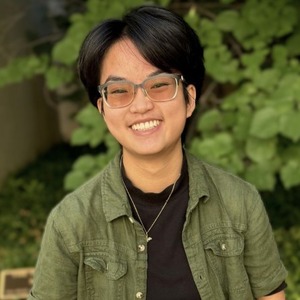 Andy Parker (he/they) is currently working toward his MA in literature at Colorado State University, where he serves as a first-year composition instructor and editorial assistant for the Colorado Review. Born in China and raised in the US, their research centers QTAPI coming-of-age graphic narratives. When not analyzing others’ poetry and prose, they are writing their own, which has appeared in Gasher Press, Beyond the Veil Press, new words {press}, and elsewhere.