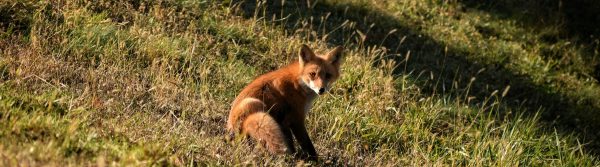
It’s mid-December as we wrap up production on this issue, and the news cycle, often grim anyway, feels particularly so at the moment, creating an unfortunately familiar sense of disconnect: Adjacent to so much tragedy and sorrow, there is inevitably still joy. Perhaps unsurprisingly, the stories and essays in these pages echo this peculiar crux of our human experience. Norm, a grieving saddlemaker in Mellissa Sojourner’s story “Queen of the Rodeo,” makes this doleful observation: “In one square mile there could be loss and sickness, there could be sun-scorched inner tubes and autumn nights—that was how the world looked to him now, heaped in contradiction, a shiny jewel just waiting for a thief.” In a family on the verge of imploding, a pet bunny serves as the repository for everyone’s unspoken grievances in Kate Lister Campbell’s “If You Wanted to Live.” A father and daughter, hobbled by grief, illness, and addiction, struggle through a Vermont winter in Priscilla Hunnewell’s “The Good Thing.” And in R. X. Zhang’s “The Making of the Imperial Tofu,” a young girl attending mandatory military camp agonizes over her family’s reduced circumstances and mourns the absence of her troubled friend. Darius Stewart’s lyrically beautiful essay “In the Wake” examines the complex threads of his grief following his father’s death. Keith Stahl’s poignantly humorous “Rabid” explores the nexus of fear, love, and death as Stahl recounts a run-in he and his wife have with a likely rabid fox as they are about to visit his dying father. And as that bit of inevitable joy in the midst of so much grief, T. L. Khleif’s “Everything You’ve Ever Done Wrong” recalls the summer of 1989, when she and her strict father, having spent weeks fighting with each other, reach détente at a Ringo Starr concert: “I was acutely aware that we were in a moment of calm and happiness—that, however elusive, this was our true life together—and I should hold on to as much of it as I could.”
We hope, of course, that you come to this issue from a space of joy rather than grief, but if you find yourself in that other territory, perhaps Darius Stewart’s experience offers something of a balm: “I was trying to write from there, not around it but through it.”
— Stephanie G’Schwind, Editor-in-Chief
What I am most grateful for these days are moments when the world encourages me to stop and appreciate its treasure. It’s hard to know where splendor will show, but the poems in these pages offer instance after instance of glory. Like Byron Xu, “I Test the Ductile Strength of Everyday Objects,” and despite the many forces that tear our world apart, often I find evidence of unbreakable connections. Sometimes, as Donald Platt does in his poem, “Slides,” I discover bombastic grandeur hovering all around, like fireflies, and the music of the world grows more wonderful and welcoming. The poems in this issue offer lessons in looking. Adam Edelman has us looking at a “Labyrinth in a Dewdrop,” and through such a lens, the world grows simultaneously weirder and clearer. There’s Bob Hicok’s concern about the “unintended consequences” that erupt endlessly from our very existence, and Jordan Hamel describing “How to Drive Drunk in a Flaming Paddock.” These poems tend to provide more clarity on how not to live a life than easy answers about how to persist. Such clarity might help us survive, though survival is rarely a given, or something to be simply attained. Apollo Chastain offers lessons for survival in “My Old Man,” and we find a different sort of dangerous instruction in Akhim Yuseff Cabéy’s “When a Black Man Dies.” If survival depends partially on trusting the human spirit to live on through mistakes and willful cruelties, John Gallaher and Suphil Lee Park make art from such horror and error. Sarah Gambito, Lana Reeves, and Radha Marcum attend to what is left to celebrate and praise, and Andrew Israel Reed and Hee-June Choi look to something I might call justified hope. Like Mik Johnson, all these poets understand that catastrophe might happen at any moment. It’s enough, sometimes, to be grateful that the worst of the worst has not happened yet and to look, meanwhile, for beauty.
— Camille T. Dungy, Poetry Editor
Featured in this issue:
Akhim Yuseff Cabéy, Kate Lister Campbell, Apollo Chastain, Hee-June Choi, Adam Edelman, John Gallaher, Sarah Gambito, Jordan Hamel, Bob Hicok, Priscilla Hunnewell, Mik Johnson, T. L. Khleif, Radha Marcum, Suphil Lee Park, Donald Platt, Lana Reeves, Andrew Israel Reed, Mellissa Sojourner, Keith Stahl, Darius Stewart, Byron Xu, and R. X. Zhang