T. L. Khleif talks about her essay “Everything You’ve Ever Done Wrong” in the Spring 2026 issue of Colorado Review with social media manager Kadra Guillermo.

T. L. Khleif’s fiction and nonfiction have appeared in The New England Review, The Normal School, The Common, and other publications. She is the recipient of a MacDowell Fellowship and a Rona Jaffe Foundation Writer’s Award. She teaches fiction and creative nonfiction at the University of Michigan.
Kadra Guillermo: Thank you for being here today. What prompted you to go back and write about your fourteen-year-old self? And, since you write both, why creative nonfiction instead of fiction?
T. L. Khleif: I think the two questions are connected. With fiction, we can often draw inspiration from our lives, but in that case, we take one element, one piece, one character, and then invent a lot around it. For this experience with my fourteen-year-old self, it felt like something I was interested in for a long time but couldn’t really write until I thought of it as creative nonfiction. I wanted to make sense of these events in my own life. My parents’ wariness of rock concerts growing up frustrated me as a kid, but it became more of an interesting question as I grew older. I wanted to see my parents more clearly as people, especially my father.
I was also thinking, “What was going on in my mind at this time?” My obsession with the Beatles was something I later wanted to make sense of in the context of my family life—why the obsession seemed so odd to my parents, and how it shed light both on my experience growing up in an immigrant family and on my parents’ experience raising their children in their adopted country.
Of course, it wasn’t until I grew much older that I was able to find the perspective and tools to explore this question. And creative nonfiction seemed the most fitting medium.
KG: Yeah, and I feel like that leads to my second question. I noticed music plays an important role in a couple of your pieces, including “Everything You’ve Ever Done Wrong” and “Abu Musa.” Could you speak a little more about the presence of music in your work?
TLK: Part of it is simply that I love music. I was in a band for a while. I play guitar, sing, and write songs. I played oud for a while when I lived in the Middle East. So I’m drawn to music in my own life, but the way it fits into my writing is that music—playing and listening to it—allows us to make connections with people that we often, otherwise, would not get to make.
I would never have met Abu Musa if I hadn’t tried to learn oud. I was living in Damascus as a woman in my twenties from America. He was living a completely different life, but we managed to become good friends through playing music. I also think of our connection to the world, how music forces us to pay attention to the world around us, and I find that quality of attention moving. So, I think that goes into the way I see characters interacting in my fiction and the way I try to process the world in nonfiction.
The other thing with music—there are so many things—is that music can express so much that can’t be conveyed in words. You and I both live in words; we love words. But I think music has this other power and can embed so many different emotions, experiences, and memories. I’m always interested in that other layer that we can access through music, and this permeates a lot of my work.
KG: How do you see pop culture, in general, influencing your work? I picked up references to TV shows, including Family Ties, Growing Pains, and Mr. Belvedere. And as a related question, How do you see the divide between “high” and “low” art?
TLK: It isn’t so much pop culture itself that interests me—although, obviously, the Beatles deeply moved me and still move me—but the role it can play in people’s lives. For example, in this essay, for me, it was really the desire to belong to something beyond the small world I was in. When I was fourteen, I yearned, as many adolescents do, to belong to the greater world of people my age. These sitcoms were being made by executives in Hollywood, but they were things kids my age were watching, so they were a way I was part of the larger culture.
In anything I write, I think about longing. What are people’s tastes in the age they live in? Why do certain elements of pop culture or any culture awaken them and excite them?
As far as “high” and “low” art, I don’t necessarily make the distinction in my mind that firmly. Some shows I watch or books I read are pure fun. But I think, depending on the context, they can have equal value. I do greatly value literature where writers really dig into intricate language and character—I guess we would call that high culture—but I don’t think of there being levels, layers, or a hierarchy. The Beatles were huge, extremely popular, definitely a pop culture phenomenon, but what I felt and feel when listening to them is as significant to me as, say, listening to a piece of beautiful classical music, which I also love. There are just different ways of communicating human experiences whenever people are sincerely trying to make art.
KG: How do you feel the background information about immigration and your parents’ lives outside the US was influencing this essay? And how do you decide which details to include? Coming from an immigration background myself, I often worry about including details in my own writing that may detract from a piece’s central messages.
TLK: It was really challenging to do in this essay—to figure out what to include and how much to include. My parents came from a place I had never seen, which seemed central when I went to write this essay. As I went through drafts, I thought, “This is about me at fourteen, having an experience with music that was lifting me above this world and giving me a sense of who I was and who I wanted to be.” How my mom and dad grew up felt important. I needed some sense of how starkly different their childhoods and adolescence had been.
My experience growing up in small-town America in the eighties and nineties was idyllic compared to their childhoods. I routinely worried about school and friend dramas—and sure, it can feel like a lot at that age—but they had to deal with much starker realities. And as I mention in the essay, the troubled news from the Middle East hung in the air of our house. Sometimes in the background. Sometimes front and center. I can imagine that, given all these circumstances, it might have seemed baffling to them to watch their teenage kid treat a rock concert as a life-or-death matter. And yet, in the end, they tried to understand. They tried their best to let me answer that longing.
To write this essay felt like one small way I could reach some new understanding about them, in turn. It felt important to find a way to weave all this material together in light of the question I was trying to explore. And I put so much in that ultimately had to be cut because it wasn’t serving the story.
KG: I see. In your process, are you someone who overwrites?
TLK: Oh yes, I tend to write three times as much as I need to because so much of life is lived in the details. I prefer to write too much and then wade through the mire rather than miss possibilities. It makes for an exhausting writing process, but that’s the only way I know how to get to the material I want.
KG: Thanks for sharing those insights into your writing process. I know you also teach. How do you see writing and teaching informing each other?
TLK: I often teach creative nonfiction, and one of the things I find fun and moving is seeing my students relax into the process of investigating their lives. Any part of our lives that we find compelling can become a compelling piece of creative nonfiction—as long as we’re willing to interrogate our experiences in depth. On the surface, while writing this essay, my first thought was, “Who cares about fourteen-year-old me wanting to go to a Ringo Star concert?” Then I thought, “I care”—because it points to some differences with my parents and the way I felt growing up in an immigrant family. It points to their experience raising children in a country they hadn’t grown up in. And so, having the patience to let ourselves do that work is crucial, and teaching reminds me of that all the time. Of course, you get busy; your time gets tight; there are always challenges of trying to write while teaching. But over the long term, I think they really serve each other. The chance to be in dialogue with other writers, whether they’re established or just setting out on their paths, reminds me why we do this work in the first place.
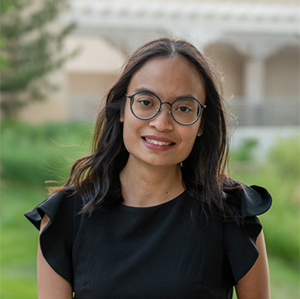 Kadra Guillermo is a MFA candidate in creative nonfiction at CSU and the Center for Literary Publishing’s social media manager. Her work has been published in Casa Urraca’s A Year of New Mexico Poetry Anthology, Scribendi, and other literary magazines. When she is not reading or writing, she enjoys spending time with cats, crafts, music, and nature. You can find her on Instagram @kadra_writes.