Poet Christine Larusso and associate editor Natalia Sperry discuss poems featured in the 2025 Fall/Winter Colorado Review, climate justice, getting lost in hybrid forms, and the process of writing her 2019 collection, There Will Be No More Daughters, ahead of completing her second manuscript.
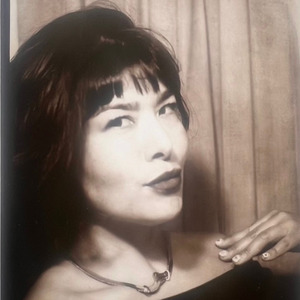 Christine Larusso is a Chicana-Chinese poet. She holds a BA from Fordham University (Lincoln Center) and an MFA in Creative Writing from New York University. Her poetry has appeared or is forthcoming in BOMB, Panafold, Los Angeles Times, the Literary Review, Pleiades, Women’s Studies Quarterly, Court Green, and elsewhere. She is the 2017 winner of the Madeleine P. Plonsker Emerging Writer’s Residency Prize and has been named a finalist for both the Orlando Poetry Prize and the James Hearst Poetry Prize. She moved home to Los Angeles after spending a decade in Brooklyn.
Natalia Sperry: I noticed so many resonances between these two poems featured in the Fall/Winter issue of Colorado Review. Both are rooted in soil, be it the embodied location in “No One Sees the Bones,” (“in the soil, beneath the shop that sells / ceramics and gold-plated trinkets”) or in the precise observations of the speaker in “Offerings,” (“Often halting dinners short / to lecture strangers on the amount / of magnesium in the soil. . .”). There’s this imagery of lush decay—kind of a contemporary gothic vibe. Could you speak to the relationship between these two poems?
Christine Larusso: I first thought of my manuscript-in-progress as one that would be looking toward some future apocalyptic world, a post-Anthropocene world—“Offerings” came largely from that, but as I kept writing poems, slowly and over the years, many of the scenarios and situations became real life, as climate collapse became less of a “someday” thing and more of a “it’s in your backyard thing,” especially after the Los Angeles wildfires of 2025. So I suspect some of what you’re picking up between the two poems, even though they were written years apart, is me working through those ideas as life happened, and how I watched the physical world around me change, some of it literally burnt to a crisp. Sometimes I bemoan the fact that I take a long time to write books, but I also think it can be illuminating to see how the world and its events, good and bad, can shape the language and perspective.
So, to more specifically illustrate this: “No One,” was written following a soliloquy someone gave me about my bones, their future, and what would happen to them—the speech stuck with me, this person is important to me, and it was quite beautiful, and clearly memorable, but as I kept it in my memory and let it pop into my consciousness from time to time, I wondered deeply about the fate of my own body and bones, and how some people are not even given the dignity of a choice of burial. This happens all the time to Native folks, especially women, and Palestinians in the genocide, and countless of marginalized others. As I continued to develop my manuscript, many of the poems I wrote, or am working on, hold a tension between feeling allowed to experience pleasure and feeling guilty about the state of the world, and how I often feel as though I am doing too little to change or shift the power and class dynamics that dictate misery in this country, and that guilt can lead you right down to the place where you feel bad about what might happen to your bones.
NS: Utterly haunting. There’s almost this sense, too, of blending the modern/ancient, which I see especially in the lines: “No one sees the bones because they are old, relics from a different era: / ossification predating road rage drive-thrus, / the Hollywood sign.” The supernatural and natural are interwoven in these poems’ imagery, too, while the speaker maintains a near-scientific precision (“Trabecular, marrow, cells, I atone”). How do these dichotomies inform your poetics?
CL: The short answer is: I am a climate justice activist, and find myself in front of a lot of scientific words to inform that part of my identity, and they tend to work their way into my poems.
The longer, more nuanced answer goes something like this: I’m actively trying to unlearn some of my old poetics. For many years, when I was younger and just started to write poetry, I purposefully obfuscated the real events, places, and people I was writing about, because doing so made me feel safe. It was like writing from an out of body experience, using baroque—or scientific—language that was so ornate, at least to me, so you couldn’t even squint at the poem and see what it was drawing an outline of. Sometimes I didn’t even know what I was writing about, because some of my poems are written in response to trauma of one kind or another, and the writing is a way of working that out of my system.
But as I was working on the rewrite of my first book, I started to understand what I had been writing about during my time at NYU, and I knew I needed to be more direct so the reader didn’t feel lost. I had studied with Rachel Zucker and Sharon Olds, two absolutely fantastic writers and teachers who are famously direct in their poetry, frequently sharing intimate details of their lives, so you think it wouldn’t have taken me until after graduate school to figure all this out, but the mind can be pretty stubborn.
In discovering the directness—or to use your word, modernity—I found I wanted to push it further in my new work. I think it’s important to get a little bit uncomfortable with your art-making, and that’s what this is for me. By stating clearly the details of my life, from the Arby’s sign I used to pass on Sunset to the house my grandmother lived in, I feel exposed in a way that is uneasy but necessary for me to explore new artistic territory. At the same time, that baroque language I started with, that’s still critical to my voice. So the marrying of the two is, I hope, where I retain my core poetics while continuing to push myself closer to the edge.
NS: I also really appreciate the way these poems listen to themselves—the attention to sound throughout both poems, the different alliterative movements in each, feel like another kind of deep attention paid here. How do you consider or approach the “sound” of a poem?
CL: I really like this question because I don’t instinctually know how to answer it!
Here’s what I’ll say: I think I was brought to poetry by my love of music. I was drawn to a medium where I could play with sounds, with repetition, with strange words, with long words, with unexpected words, and truly play, with words that destabilize but are still pleasurable to hear and hold in your mouth, and with words that you’ve fused together or invented wholecloth.
I originally conceived of writing poetry so sonically powerful that you’d get lines stuck in your head, like little poetry earworms. Some of my favorite contemporary poets do this to me—I’m thinking specifically of Olena Kalytiak Davis and her poem “sweet reader, flanneled and tulled,” which I think is one of the greatest contemporary poems out there. I haven’t memorized lines in that poem, I just hear them, like you would “Good Vibrations” or something—
Art-lover, rector, docent!
Do I smile? I, too, once had a brash artless
feeder: his eye set firm on my slackening
sky. He was true! He was thief! In the celestial sense
he provided some, some, some
(much-needed) relief (Davis 2003).
Similarly, Tommy Pico will often have several song-like refrains in his epics, usually short phrases like “Let’s say. . .” or “Don’t like. . .” but sometimes longer, like in his new poem in the Yale Review— “I’m surveying the damage after a storm.” The most obvious reading here is this is part of what makes his poems responsive to the oral epic history, but it also fits in with the idea of poems as performance, as vessels for both stepping outside of oneself and exaggerating oneself. This feels related to my work, in how I am frequently juggling what it means to write a lyric (which, of course, is a poetic form that came directly out of music), how much of the self I am allowed to share, to exaggerate, to hide, to mask.
NS: I so admire the range of formal experimentation in There Will Be No More Daughters: erasure, “extraction,” and a cento, not to mention the stunning lyric essay “The Letting Go,” with its refrains pulled from Emily Dickinson, Lewis Hyde, and J.E. Buntin. And your use of white space in poems like “I Was a Painter Once” evokes another kind of haunting. I’m curious about how you made the decision to include this range of forms and allusions in your debut collection. What was the process of writing and curating this book?
CL: Thank you for this close reading!
Experimenting and upending form feels particularly important to me as a non-white writer, as a woman. It’s a way to not feel tied down to a left margin or any strict set of rules—use the traditional poetic forms as a launchpad, but weird them to your liking. It’s a way to take up space, to be capacious, to demand attention without apology.
“The Letting Go” was my first real formal attempt at zuihitsu, the Japanese form of writing a hybrid essay that dances between lyric and prose, but can also include images, excerpts—it’s quite open-ended, actually. Zuihitsu translates to “following the brush,” and the intent is that the product should feel somewhat spontaneous or random, rather than perfectly constructed.
Tina Chang describes the value of her use of zuihitsu this way, in her own (marvelous) iteration of the form, “Hybrida”: Hybrid forms leave fences open. They are wide fields with snow leopards, wolves, and honey bees. The combustion of imaginings forms a lake, water spreading, explosions on the surface of an oil slick.
I think the “combustion of imaginings” sticks with me most. I’m frequently grappling with—both in my work, directly, and in my thinking about my work, as I do it—the tension between writing about myself in a confessional, traditional lyric “I” way and the self-indulgence that comes with that, the guilt of being too focused on the self rather than on community, on expansive political thought. Hybrid forms, whether we want to call them zuihitsu or not, allow me to situate my work in a lineage, which gives me some authority, while also freeing my imagination to invite in different voices and modes of approaching text.
I also linger where Chang mentions the snow leopards, wolves, and bees—none of these animals would immediately pose any danger to us unless threatened, but they do carry a stigma of danger. I think a light sense of danger, when writing or creating, is critical. It’s like getting a little lost in the woods, or driving on a dark road with one headlight out. Chances are, nothing bad will happen. But you won’t know, and you certainly won’t find your way home, unless you keep going.
NS: I love that image of getting a little lost. If you’re open to sharing, what are you working on these days? What sustains your poetic practice—in other words, how do you keep going in the woods or along that dark road?
CL: I’m very open to sharing, especially as I feel I am getting close to the finish line of the first draft of my second manuscript! At least I think I’m close to the finish line…
My new manuscript is called Surf’s Up, after the Beach Boys album. I was inspired to title it before Brian Wilson died this year, but his death only catapulted the way I thought about the album and its complexity in relation to what I was trying to do. I had already been writing a book that was centrally about three things: the “flattening” or “sameification” of cities that has been occurring as a result of gentrification, racialized urban design and the problems inherent in that which are exacerbated by climate collapse, and the broadly damning effects of empire and capitalism.
So why Surf’s Up and the Beach Boys? Well, Surf’s Up, to me, marks a distinct shift in the tone and sound for the band, it is sonically and lyrically much darker than their previous albums, and I wanted to consider this in contrast to their early image and how it relates to a changing Los Angeles as well as to broad stereotypes of the West, especially of Hollywood.
In addition, I experienced—as many did—some pretty rough years following the COVID pandemic lockdown, and I recognized that some of the songs on Surf’s Up represented Brian exploring the depths of his own loneliness, isolation, depression, while presenting them against a backdrop of political commentary and engagement—and so all the themes I wanted to consider seemed right there, to say nothing of the Beach Boys being from LA, and how they were, in many ways and for many years—until they started producing darker albums—an almost cartoonish representation of Southern California, with the surfboards and sunshine, the whole package.
Essentially, I knew that my experience—as a Chicana-Chinese woman—of LA was unlike the one painted on their earlier albums (much as I love those, too), so I’m exploring the relationship between the presented and the real, especially as it pertains to a changing landscape influenced by big money, authoritarianism, and gentrification.
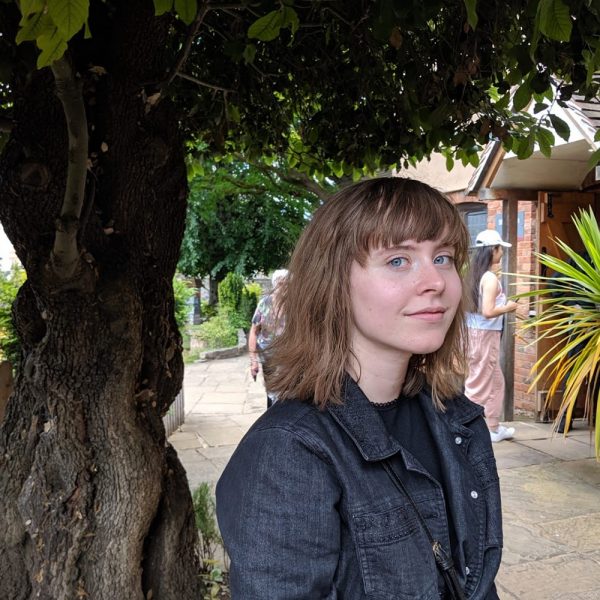 Natalia Sperry is a third-year MFA candidate in poetry at Colorado State University, as well as an associate editor for Colorado Review. Their writing has appeared in Five South’s The Weekly and is forthcoming in Interim. When she isn’t lost in the alternate universes opened up by poetry, she spends her free time with her partner and cats, Apollo and Artemis.