Heather Kirn Lanier discusses her essay “An Ounce of Light,” featured in the Fall/Winter 2025 issue of Colorado Review, with Managing Editor Izzy Martens.
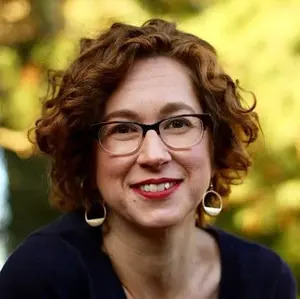 Heather Lanier is the author of a poetry collection, Psalms of Unknowing, and a memoir, Raising a Rare Girl, a New York Times Book Review Editor’s Choice. Her essays have appeared in The Sun, Longreads, The Atlantic, and elsewhere. She works as an associate professor of creative writing at Rowan University.
Izzy Martens: Your opening line is fantastic: “Given all the fancy diagnostic tools in the world—blood draws and biopsies, CT scans and MRIs—my new doctor was relying on a popsicle stick.” It’s such a sharp, funny way to open. Humor appears throughout the essay, even as you lead readers through fear, pain, and uncertainty. How do you think about the role of humor in nonfiction, especially when working through serious material?
Heather Kirn Lanier: That’s a great question. I think I naturally look for what’s funny, maybe as a coping strategy, because tragedy sticks to me like Velcro. I’m always seeking moments of humor as a counterbalance.
When I write, it’s often only funny later—once you have distance and realize, okay, I’m not dying after all. In that opening scene, I’d had so many medical encounters with high-tech tools, and suddenly this doctor uses a popsicle stick he’s just snapped in half. It was jagged and totally unsterile, the opposite of what doctors usually do. That discord was funny to me—it stayed in my memory.
Humor is strange, though. You don’t always know what will land until you read something aloud. Audiences often find humor in tone or timing that readers might miss privately. And some readers will take a moment seriously that others laugh at. That’s why I wanted to clarify in the essay that this was an Ivy League institution—to signal that this wasn’t a quack doctor, but actually one of the best appointments I had.
IM: There’s a powerful thread in the essay about how institutions often fail to believe women when it comes to their bodies. You write about this so beautifully. Could you talk a little more about what compelled you to put that into words?
HKL: This essay had been hanging around my subconscious for years. It was actually the experience of James Turrell’s “dark space” that made me want to write about not trusting yourself. When the woman in the essay says, “You saw what was there,” I wanted that voice to echo backward through time—to all the moments I, like many women, was told I didn’t see clearly or couldn’t trust myself. I’m not special; I’ve been told that many times.
As I wrote, I wanted to include other women’s experiences—writers like Tricia Hersey, who writes about an OB-GYN not believing she could deliver her own baby, or Kate Bowler being told her abdominal pain wasn’t real when it was stage 4 cancer. There’s nothing unique about it, which is what makes it important to write about.
When I later experienced dermatographia, I wasn’t sure how to write about something as seemingly trivial as itching. But reading Pádraig Ó Tuama’s essay on dizziness made me realize we can write about the body—its discomforts, its limits. And humor helps; who can take itchiness too seriously?
IM: The essay explores tension between knowing and not knowing, seeing and being unseen, trusting and doubting the body. In the final moments, the doctor seems almost to turn the blame back toward the narrator—and yet the final line is “all those stars.” What do you hope readers take from that ending?
HKL: If it were fiction, it might have been nice for the doctor not to backpedal. But in nonfiction, that ambiguity feels true. Those moments happen constantly in medical spaces—where you’re made to feel like your body is the problem. I write about this in my memoir Raising a Rare Girl, about my daughter, who has a rare chromosomal syndrome. I’d never spent so much time with doctors, and I noticed how medicine can act as if bodies exist for medicine, not the other way around. As for that last line—“all those stars”—I just knew that’s where it needed to end. Stars exist amidst darkness; they’re pinpricks of light that guide the way. My certainty sometimes feels like that—a pinprick of light in a sky of self-doubt.
IM: I love that. It connects beautifully to Turrell’s work with light. How does this essay link to the larger themes you explore as a nonfiction writer or poet?
HKL: I’ve been working on longer-form essays for a few years now, often through a feminist lens. I’m fascinated by how a braided structure allows an essay to expand beyond the personal—to layer ideas, art, and philosophy. This essay, and others I’ve been writing, grapple with how the body is problematized—something I’ve thought deeply about as a mother to a child whose body falls outside the charts. Lately, as I enter middle age, I’m also thinking more about mortality, finiteness, and the yearning to be more than just a body.
IM: I relate to that deeply. I’m a yoga teacher, so I think often about our relationship to the body—how we are more than it, yet live entirely through it.
HKL: Exactly. That paradox fascinates me.
IM: What’s next for you? Any upcoming projects you’d like readers to know about?
HKL: I’m working on a collection of essays. I’m not sure yet of the exact order or which pieces will make it in, but themes are emerging. I also write a very irregular Substack called The Slow Take—the opposite of the “hot take”—where I explore how to stay human in a world that feels less and less so. Topics range from AI to Botox billboards. It’s free, and readers can subscribe if they’d like short monthly reflections. And I’m always writing poems. I tend to work on several things at once—or nothing at all. Lots of burners on the stove, all simmering.
IM: One last question. In our world of AI and constant technological advance—why does the writer write? Why do we come to the desk?
HKL: To know what it means to be human. AI can mimic a human-sounding voice, but it’s not from a human body or spirit. Writing is an act of devotion—of gratitude, lament, or wonder. It’s how I work through the human experience. I write for myself first, to stay human, and then shape what I can for others.
IM: That’s beautiful. Thank you, Heather.
HKL: Thank you. These were such thoughtful questions.
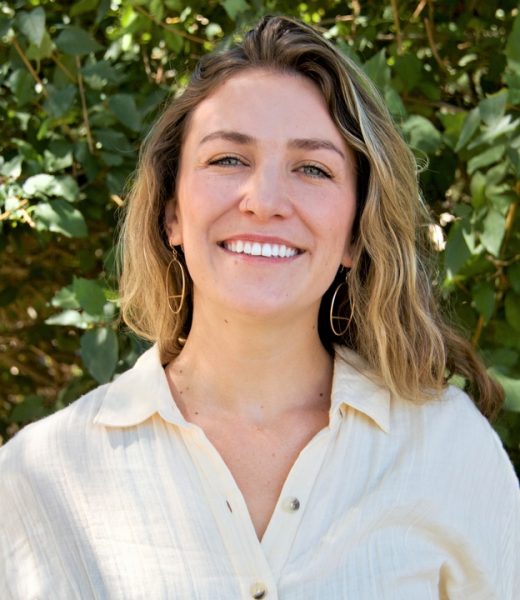 Izzy Martens is the Managing Editor of Colorado Review and a second-year MFA candidate in creative nonfiction. She is the co-author of the book Holding Space: A Guide to Mindful Facilitation. Her essays have been published in The Tiger Moth Review and The Metaworker, among others.