Social entrepreneur Turner Wyatt discusses the process of creating and editing Begin Where You Are: The Colorado Poets Laureate Anthology, available for purchase here, with associate editor Josephine Gawtry.
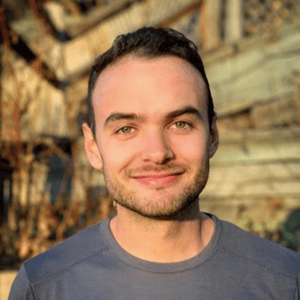 Turner Wyatt is the founder of the Colorado Poets Laureate Anthology, a nonprofit organization focused on increasing access to poetry in Colorado (which is supported by your purchase of this book!). He assembled the team who made this book a reality and directed its progress from scanning hundreds of pages of out-of-print poetry through publication. Previously, he cofounded four award-winning social enterprises, including Denver Food Rescue, Fresh Food Connect, and Upcycled Food Association.
Josephine Gawtry: Begin Where You Are: The Colorado Poets Laureate Anthology, released just last week, is such an exciting project and one that you spearheaded. What was your path into conceiving the potential of this anthology, and what made you interested in the Colorado Poets Laureate position?
Turner Wyatt: Back in 2022, I was involved in helping to start the Durango Poet Laureate program in Durango, Colorado. We have this great arts funding program called the Lodger Tax Art and Culture Fund, where they take lodgers’ tax—tourists spending money at hotels and AirBNB’s, etc.—and they invest around $600,000 per year into arts and culture programming. I had been thinking about how there’s all these cool poet laureate positions, nationally, statewide, and locally, and how we should have one in Durango. We successfully applied and received this grant to create a poet laureate position and a youth poet laureate position. I saw how much of an impact that this role had in the community: to advocate for poetry, to expand access and education around poetry. The poets laureate in Durango were doing all kinds of events and speaking engagements, and I got to thinking, Wow, this is a really interesting position—the fact that we have this official artist for a municipality, for the state, for the country. It’s kind of a rare concept.
In the process of all of this thinking, I had this idea while I was on a run (of course, all the best ideas come to you while you’re outside and in nature), where I wanted to seek out a collection of poet laureate work. I found the US poets laureate anthology, which came out in 2010, and I read it and really enjoyed it. I went to google the Colorado poets laureate anthology, and none existed. As a social entrepreneur, or an entrepreneur who is always excited about starting a new business or a new project that helps to advance social or environmental causes, I saw it as an opportunity: not just to create a book that did justice to our amazing legacy as the state with the second oldest poets laureate program, but to raise money to do something interesting.
I reached out to my friend Bobby LeFebre, who was the poet laureate at the time—we knew each other from other social justice and equity work from my time growing up in Denver—and we both agreed that an anthology like Begin Where You Are should exist. He introduced me to Joe Hutchison, who introduced me to David Mason, who introduced me to Mary Crow, and everyone was really excited about this idea. They all said they had some new poetry they’d be willing to include. We came up with the idea based on a goal to generate some revenue for this position. Bobby told me that the Colorado poet laureate at the time got something like $5,000, yet they’re pulled in so many directions to do events and speaking engagements and all these things. Since there are so many demands, they’re really stuck in their bubble geographically due to funding limitations. In Durango, we see all of this arts stuff happening over on the Front Range, and we often don’t have access to it in a rural part of the state. We realized the poets laureate want to go to all these parts of the state, but didn’t have the funding to do so. We said, what if we used the proceeds from the book to fund the travel costs and accommodations and programming costs associated with bringing the poets laureate of Colorado to more rural, low-income parts of the state that tend to have barriers to literature and arts programs. From there, it snowballed into what it is today—this wonderful, well-received anthology we’re launching this week.
JG: What does the role of poet laureate mean to you in a broader sense? How do you think this anthology does a service to this program?
TW: I think the poet laureate position is this totally remarkable feat in our capitalistic society, where in light of this ongoing dialogue about how we make best use of our tax dollars, that we still, of all the different art forms, prioritize poetry as the one official artistic and literary voice in society that the state is willing to support. I think that speaks to how resonant poetry is with us as humans, and how important poetry has been to the evolution of our society. You look at every social justice movement, every movement of any kind throughout history, and poets have been right there at the cutting edge, creating the language that describes the potency of the moment. I think that this anthology will only increase the scope of that impact that these individual poets are able to have by bringing that influence to new areas that haven’t had as much access to that art form.
JG: How has the experience of selecting the poems that go into the anthology been? Are there particular pieces that stuck with you, or larger themes that were addressed among multiple poets laureate?
TW:The Colorado Poet Laureate program was started in 1919, making it the second oldest state poet laureate program in the country. One of the most interesting parts of the book was seeing the evolution in style, where we start with this very traditional verse over a century ago and move all the way to Andrea Gibson, who was a very stylistically modern poet. In the documentary just released about them, Come See Me in the Good Light, they talk about their efforts to make their language accessible to the broadest audience. Their work has really resonated with millions of people all over the world, so that evolution was really interesting.
Each of the contemporary poets laureate chose their own poems; they all chose some of their more famous work, and then all five included unpublished work, which gives the anthology this exciting, contemporary relevance—so it’s not just a historical document, but it’s a living document that has new work. For the five preceding poets laureate, from the 1910s through the 1990s, we had an exhaustive process—I spent hours and hours in the reference section of the Denver Public Library scanning out-of-print poetry books from 100 years ago, combining all of this into a Google Drive folder. I did read all of it, hundreds of pages, but luckily David Mason, the poet laureate from a 2010-2014 who is a wonderful reviewer and essayist and literary genius, took on the task of deciding which of those poems from those five earliest poets laureate would be in the book. I think he did an excellent job of that. It was a labor of love that took many hours of documenting and scanning and then ultimately the process of Dave selecting the poems he thought would demonstrate the arc of the evolution of poetry in Colorado’s history the best.
The anthology is out now, and next year when the next poet laureate is appointed and every year into the future, there will be extra money to bring them to underserved, lower-income rural parts of the state. It’s just a really great book, and we’re really honored and grateful for all of the support.
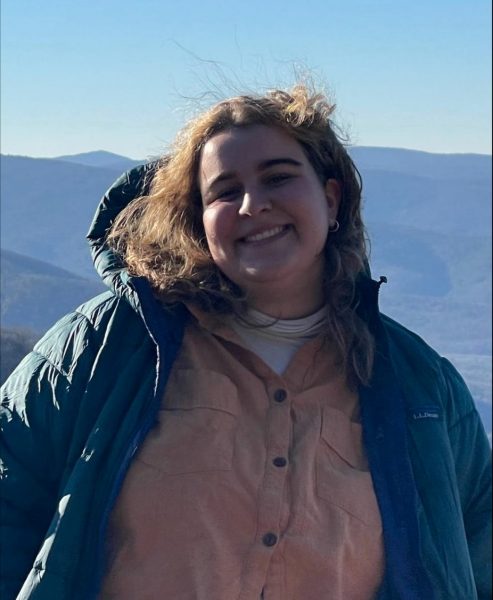
Josephine Gawtry is a third-year fellowship recipient in poetry at the Colorado State University MFA, where she is an associate editor for Colorado Review and the assistant director of the Creative Writing Reading Series. Her work has been published in Gigantic Sequins, South Dakota Review, Beaver Magazine, and elsewhere. She has a three-legged rabbit named Cabbage.