Robert Krut discusses his poems in the Fall/Winter 2025 issue of Colorado Review & his newest book, Oh Oblivion (Out October 15 with Codhill Press) with associate editor Josephine Gawtry.

Robert Krut is the author of Oh, Oblivion (forthcoming in 2025), Watch Me Trick Ghosts, The Now Dark Sky, Setting Us All on Fire (winner of the Codhill Poetry Award), This Is the Ocean, and The Spider Sermons.
Josephine Gawtry: Congratulations on your forthcoming book, Oh Oblivion! Reading it was such an experience–the pacing is excellent. It does what all good books do, which is make you want to go out and write something of your own. How do you know that a new book is ready? Is it just a volume of poems, or is it when it starts to feel like a group is speaking to something very specific?
Robert Krut: Oh, great—thank you for saying that! That’s how I always feel when I read a book I love; I want to go write afterwards. I remember being in both undergrad and grad school, discovering new people, and instead of it shutting me down, thinking, how on earth could I ever write like this?, and it energized and excited me.
In terms of putting something together, I finally feel like by this point, because this is my fifth book, I get what the pattern is now. I’m trying to write all the time, and then I just hit a certain point. I can’t determine what the book’s going to be right up front; I know some people can do that, and that’s great. You know, that’s just kind of the way some people operate. For me, I’m just trying to write and write and write, and then at a certain point you hit a critical mass in a group of poems and you get that sensation where, hey, maybe this is taking shape.
I was talking to students last quarter about shishi-odoshi, the bamboo that fills with water and then tips over when there’s a certain amount of water in it. I feel like that a lot: when you’re putting a manuscript together, you’re writing and you’re writing and you’re writing, and then you just feel the water tip over and you know this might be something. And what I usually do is that I print out whatever I have and, say it’s 40 to 50 poems, spread it out all over the room and step back and look at it and you start to realize, oh, there’s these certain themes that are coming up that I didn’t even realize were happening, or these certain images that start to be a thread.
JG: Thank you so much. And that goes into this question of sequencing–I guess I’m wondering how many of the poems you write make it into each book, and how many end up getting discarded, or maybe you save them for later and they make it into the next book?
RK: It changes periodically, but the last book, the one before this, kind of came very quickly. Most of the pieces wound up in the book because I was writing a lot and quickly. Admittedly, it was during lock-down and I was home, and I was just writing so much, and it all kind of came together. But in general, I’d say for every one poem that winds up in the book, there’s one that gets thrown out, and then there’s one that goes in a folder of ‘this is something, but I don’t know what it is yet and I’ll probably revisit it in two or three years and see if there’s something there.’
JG: That’s a great answer, thank you. This next question is kind of about tone—there’s a sparseness to your work that indicates this leaving, or ‘going, going, gone’ movement, but also such density of tactile things and images. How do you feel like you cultivated this voice? How do you think voice operates in your work, and, I know this is ambitious, but in poetry on a larger scale?
RK: No, that’s great–ambitious is great. I’d rather people take a big swing than no swing at all. That’s probably the only sports analogy I’ll use in this interview, but I would rather get asked a big question like that.
The thing about voice is that, you know, there’s a million different people writing poems, a million different voices. You want to start writing to cultivate your voice, but not get too locked in on what that voice is. You want to be willing to change and not become stagnant. In the book, there’s a tone that I strive for: that tension between something that wants movement but is willing to stay still, or something that’s willing to be hopefully light on its feet but dense with imagery. The tension between things is generally what’s interesting to me. If it’s a poem about being out in the world and moving through the world, I want it grounded with images so that we’re in the world. And if it’s a poem that’s the speaker standing in their kitchen looking at a tree, that’s built in grounding and density, but I always want there to be a willingness to move from that point and outward into more surreal spaces.
When I started writing in high school, the two developments that came at the same time were my obsession with the Beats and my obsession with Raymond Carver. I grew up in the late 80s, early 90s, so Carver was still the guy, and the Beats are kind of eternally there. I loved Carver’s super sparse writing and the Beats willingness to be so furiously romantic and unreserved. So ever since then, since I was seventeen years old, it’s been the tension between those two approaches in the work.
JG: Yeah, that’s great. And I think that is what draws so many people to poetry, is they read two lines or two pieces that share similarities but have these tensions that they can’t fully describe. That impulse to understand how that tension makes you feel compels you to enter poetry.
So that is wonderful. Thank you. This question is redirecting a bit, but I’m curious how you enter the situation of your poems? Do you move into writing them through a narrative, or a line, or even a word? I also notice that certain themes come up, especially water. It’s in one of your pieces in the Colorado Review and it’s this thirst, or even the motion or action of drinking. Do you cultivate these themes as they emerge, or are you thinking of themes as you enter the poem?
RK: This is a really interesting question, because typically those themes, when I start writing, are not clear to me. I try to go in open to whatever is going to come out, and then I hit that point we talked about earlier, that kind of critical mass of like, OK, now we see what the manuscript is. Like with this one, you mentioned water and thirst. When I stepped back and I looked at all the poems, I thought, oh, this is a connection. I realized that it is a real through line, and other books have had other images like that, where I didn’t even realize there was that much happening until I started to craft it as a manuscript.
To go back to the beginning of your question; when I’m entering a poem, there’s really one or two ways. One is that I’m starting with an image and then following wherever that’s going to take me. I’d love to say that there’s a narrative or a straight line or a place, but there very, very rarely is. And usually, if there is, the poem winds up being pretty clunky. More typically these days is, before I go to bed, I’ll jot down the start of a poem or a phrase that’s jumping out at me. When I sit down the next morning to write, each line is kind of a discovery. That sounds melodramatic, but you’re following through and then by the end you’re kind of surprised. I’ve said this to students before in classes, and I know that it sounds over the top, but it really is the best ones where you have to follow the crumbs to see where it’s going to go.
JG: Yeah, I appreciate that and definitely get it. I’m wondering, when you say you write a line at night and then wake up in the morning and work on that, is that how almost all of your poems come about? Are mornings always your writing time?
RK: It changes. I mean, the past book or two, the typical thing has been to get in bed and sit on my phone, you know, like everybody does. Then, to try to be productive, I’ll just start jotting things down. And then the next morning when I wake up, I’ll look at whatever I wrote and I’ll use that as the jumping off point. I kind of like the leapfrog of night into morning because then you have the benefit of a kind of ‘nocturnal mind’ and then ‘sunrise mind.’ It kind of works.
When I teach, I get up really early in the morning because I live in Los Angeles, but I teach in Santa Barbara. If you’re not familiar with California, that’s about an hour and a half away. To beat rush hour, I get up around four in the morning, so I’m up early and my mind is open to whatever’s going to happen.
JG: Oh my gosh, that’s early. Yes, I hear that–you’re tapping into two very different mental spaces, or even physical spaces, you know. Sometimes it feels like in the night and in the morning the atmosphere is composed differently. There’s all sorts of tensions going on there.
The lines at the end of ‘Biosonar Dawn’, which are actually the final lines of the Fall 2025 issue, are such a distinct and fabulous ‘exit’ from the poem: “Launch/this arrow. Drink/the water. Are you home.” I notice throughout Oh Oblivion that you have cultivated these endings that perfectly toe the line between providing closure and keeping the reader wanting more… “The Apple Is an End unto Itself” also stands out with the ending lines: “moving dirt,/just dirt.” How do you find yourself considering endings in your work?
RK: I’m a sucker for that last moment, and I want it to have a sense of closure. But the issue with it just being closure, period, is that it can run the risk of being too dramatic, too heavy-handed. I like the idea of leaving a beat to ask what’s going to happen when these words end up out in the world. You contacted me from a university address, so my brain just keeps thinking about being in school. And when I was starting, when I was a student, I was so interested in these endings that just felt like, you know, the last note in A Day in The Life by The Beatles where it’s a big sound like that. Sometimes it just all starts to feel so unearned or dramatic. Now, instead, I like an ending where you have a sense that this moment is concluding, but another one is moving forward. We talked earlier about Carver, and I always remember there being a line from his poem “Drinking While Driving” that ends with, “any minute now, something will happen.” And you just think, well, what is it?
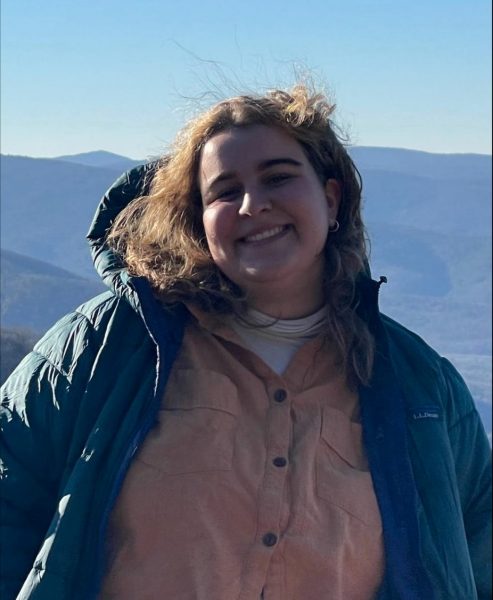 Josephine Gawtry is a third-year MFA candidate in poetry and a Gill-Ronda Fellow. She teaches Beginning Creative Writing at CSU and is an associate editor and media manager for Colorado Review. In her free time, she parents a three-legged rabbit named Cabbage.