Associate Editor Bel Mercado talks with Darius Stewart about his memoir, Be Not Afraid of My Body, and his essay in Colorado Review.
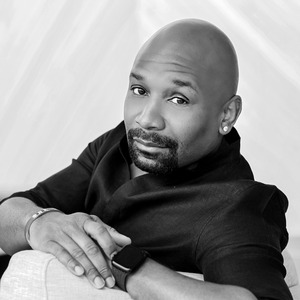 Darius Stewart is the author of Intimacies in Borrowed Light: Poems (EastOver Press, 2022) and Be Not Afraid of My Body: A Lyrical Memoir (Belt Publishing, 2024), which was named a 2025 Stonewall Book Award–Israel Fishman Non-Fiction Honoree and a Lambda Literary Award finalist.
Bel Mercado: When I read an essay, I love to learn about the circumstances that prompted its creation. Why write this piece now? How did your purpose change or develop as you drafted?
Darius Stewart: After writing Be Not Afraid of My Body—a book I couldn’t write until I’d had time to process what happened and to find the right balance between retrospection and reconstruction—I felt that my next project, structurally and formally, needed to be different, something urgent and relevant to readers outside myself. It felt urgent to me because the essay is really about what grief does to intimacy—how Black queer bereavement lives in the body and in the day-to-day, not just in memory—so I needed a form that could hold the immediacy of that experience. When I started drafting this essay for my dissertation and experimenting with form, the stories I worked through felt very much about the now. Much of the critical framing of my dissertation as a whole was essential to create narrative distance between myself—the writer—and the text while trying to preserve my perspective in the moment.
That being said, voice and perspective shouldn’t be a static feature of writing. They should always be evolving. As writers, our experienced voices should respond to the moment with the craft tools that feel most appropriate. I tell my students that we don’t always need to use essayistic tools to write nonfiction if those tools don’t serve the writer’s purpose. We can use the crafts of poetry or fiction. We can use critical frameworks. We can use it all.
BM: Speaking of a critical framework, I’m drawn to the narrator’s use of theory as he reflects upon his situation. Over the course of this essay, the narrator grieves his father, his relationship with Andrei, and gay men who, after dying of AIDS, lost both their families and their places within the archive. What does your process look like when writing reflection? How did you approach weaving together the multiple pulls of grief the narrator feels alongside critical reflection?
DS: I wrote toward a critical framing of an experience, specifically Christina Sharpe’s concept of “wake work” or “being in the wake.” Through this concept, I was able to situate the variations of grief I was experiencing, but beyond my own experience, I tried to situate these experiences into the larger framework of the afterlife of slavery. For instance, my father’s death was due to alcoholism. Why was my father an alcoholic? I don’t really know. I can only speculate. I like to believe that one reason stems from a genetic predisposition. He might also have turned to alcohol to deal with PTSD following his service in the Gulf War. However, some of the risk factors for alcoholism include the systemic conditions shaping his life as a Black man in America. By that, I don’t mean biology; I mean my father’s exposure to what Marlon Bailey calls “structural vulnerability,” which, in his case, was economic precarity and inconsistent access to adequate healthcare. That’s where theory enters the essay—not as explanation, but as a way for the narrator to frame the aftermath of slavery as part of mourning. I use it to track how he negotiates his grief with the knowledge and evidence available to him after the fact.
BM: In this essay, you’re creating a careful balance between yourself as the writer-at-the-desk and your narrator as the character-on-the-page. I was especially drawn to the moment of speculation in which the narrator is in the hospital room with his father and two nurses, and he projects his own longing and desire onto Nikki without knowing anything about her life or circumstances. I’m fascinated by your speculative process. Where did you begin speculating, and how did this process evolve as you drafted?
DS: I love speculation because it’s a way for me to resurrect moments I never could have experienced myself. When someone writes speculatively, they reveal more about their narrator than they do about the world the narrator inhabits. In this scene, I needed to make the moment feel not necessarily cinematic, but immersive. So I stayed faithful to what the room could actually give the narrator—what he can see, what he can hear, the fragments of the nurses’ conversation—and I let the speculation live inside that, instead of letting his imagination run away with him. The narrator is alone, and his father is dying before him, and the narrator is also subconsciously wondering about his ex. As he hears this conversation between the nurses, he’s strangely annoyed. I’ve used the Nikki character to show the narrator’s response to a stranger’s lovely, romantic evening as he grapples with all this loss. And in revision, I kept reminding myself that Nikki can’t just be a screen for his feelings. The scene has to know it’s projecting itself because the projection is the point, and it tells you what the narrator can’t admit to himself in that moment. The reader can see that the speculation is all about the narrator—that he’s projecting his own grief, jealousy, and longing onto Nikki as he navigates his mourning process.
BM: Your narrator has to see himself through the other because he cannot view himself with clarity.
DS: Right!
BM: That being said, I see the narrator very clearly responding to the death of his father. Most significantly, this narrator mentions that his father is enacting the body’s “right to grieve.” Could you speak more on the body’s right to grieve?
DS: In this scene, the narrator’s father is wasting away. By “right to grieve,” I mean the body’s permission to testify even when the “self” is trying to be composed. My father might have been lying there regretful, conscious of his dying. But the wasting away is the body’s register of grief—its slow, involuntary accounting of what alcohol has done to it over time. Even when the self wants to make meaning, or to resist what’s happening to it, the body keeps speaking, showing the effects of the life one lived.
BM: You’re doing such interesting work grappling with both grief and mourning. How would you define the differences between these concepts, if any such differences exist?
DS: While I think there is a difference between the two, I don’t know if I’ve been able to clearly identify one quite yet. That’s what’s so wonderful about language. We have these closely related terms that identify very familiar concepts of how humans behave around significant events, but because they’re so related, we struggle to pull them apart. At this point, I think grief is something we can name, but mourning isn’t nameable because it’s so idiosyncratic. Mourning belongs to each individual person. Some say that everyone grieves in their own way; I like to say that we all mourn in different ways, because grief presents itself as familiar.
More than differentiating between the two, I think it’s important to consider how we respond to people’s ways of grieving and mourning. In my experience, people project their own ideas about what mourning should look like. For instance, when I was trying to put together the funeral arrangements, I had many of my father’s friends tell me that I had to “man up,” that there was no room for tears. I know that they were trying to say that I had a tough job to do, and I didn’t have time to mourn my father. That was detrimental to my process of grieving and mourning—not because they said it, but because I had already internalized that way of thinking. Everyone—myself included—was grieving, but I held back my mourning to deal with the logistical, day-to-day tasks of funeral preparations.
I have a picture of my dad right above this bookshelf. You might be able to see it in the corner of the screen.
BM: Oh, yeah! I see it.
DS: When I first put the picture up, I noticed that his eyes seemed to follow me everywhere I went. In this picture, he looks so unlike the man I saw when he died. This is the man that I remember. I get these pangs when I look at him, and I wonder, is this grief or mourning? Is this feeling nameable or unnamable?
I don’t think that grief or mourning are static, temporal kinds of emotions. They’ll be what they’ll be. It’s not how you engage with mourning—it’s how the mourning, this unnameable thing, is trying to engage with you.
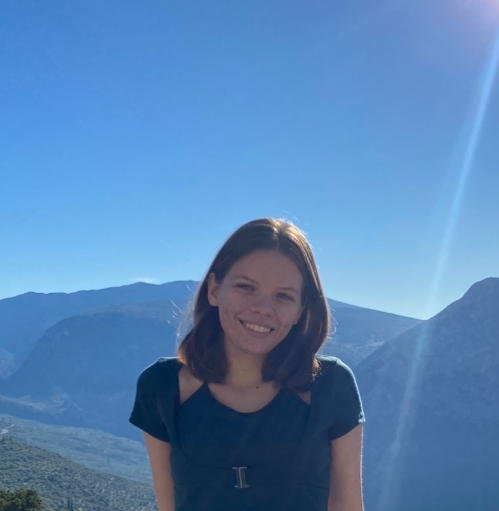 Bel Mercado is an MFA candidate in creative nonfiction at Colorado State University, where she is an editorial assistant for Colorado Review. She enjoys writing strange lyric essays, baking for her friends, and spotting rattlesnakes on the trail up Greyrock Mountain.