Jamie Cattanach discusses her story “Vectors,” featured in the Spring 2025 issue of Colorado Review, with associate editor Sarah Stambaugh.
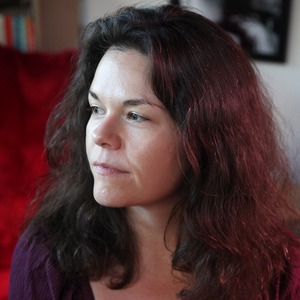 Jamie Cattanach is a Pushcart Prize-nominated writer based in Portland, Oregon. Her work has been featured in major media outlets including CNBC, USA TODAY, SELF, Fodor’s and Ms. Magazine, as well as literary journals like Nashville Review, DMQ Review, Fourth Genre and more. She has served as assistant editor for The Rumpus and her in-progress manuscript was chosen for the Tin House Winter Workshop mentorship program in 2022.
Sarah Stambaugh: As someone who is terrified of flying, this piece spoke to me in a vulnerable way and also terrified me–especially the research aspect. What was the process of researching like for you as you drafted this piece, both the research the audience sees you discover in real time in the piece and the interjections of research later on in the story?
Jamie Cattanach: I guess I’d say that it was less research and more a morbid fascination hobby. As I state in the piece, I kind of fell into plane crash and aviation disaster research after I attempted to book that flight right after the pandemic. Truly, when everyone else was making sourdough starters, I was reading the entire Wikipedia backlog of plane disasters… so yeah, I would say that it was less of a piece that I had the idea for and then researched and more a sort of natural evolution of a fascination that I had and rabbit hole I went down. I first drafted this piece in the Summer of 2022, so 2022 to 2023 is when I was really drafting it and I certainly continued and continue to have my plane crash fascination. There is always more that I can add to things and shape them, but I would say that most of the actual plane crash stuff was set in motion when I first drafted it.
SS: And I think that sequencing of information and research in “Vectors” is so well done and effective for maintaining tension, simulating that intense anxiety and keeping your audience wholly engaged with this work. Is order something you thought about a lot in the writing process? Did the sequencing shift as the draft continued to develop?
JC: Yeah, I find that with braided nonfiction–which is one of my very favorite modalities to write in–order is one of the the hardest parts, because you have all of these ideas that are living in the same place in your head but you can’t quite understand how they fit together until you really start playing with it. So I certainly think I had a lot of little individual chunks that have remained pretty much as is, but moving them around was a significant part of editing this piece.
SS: Similarly, how much of the writing of this essay evolved as you wrote it? Were there drastic changes made in the drafting process? Is what you initially envisioned what the essay ended up being, and how has this essay changed?
JC: Yeah, that is a great question. It has. It has changed a lot. There is still a sense of this in the essay, but when I was first sitting down, the ideas that were kind of clanging together in my head were plane crash stuff; the death of my father; anxiety, and the control piece of anxiety, and how we don’t actually have control over anything, and if we are trying to maintain control then we’re not living our lives. But I had a bigger technology idea at the beginning and, this is sort of in the weeds, but there is a kind of philosophical shift in aviation that has happened in the last thirtyish years–fact check that–but recently-ish, it is basically a very similar concern as the AI concern, because we started having fly-by-wire types of planes where the pilot has less control because a computer is insuring the plane can’t do certain things. Some pilots think that this is a very bad thing, because it causes the pilots skills to atrophy, since they don’t have to be ‘hand-flying,’ as they say. So yeah, I had a bigger piece around technology and I kind of wanted to bring AI in and then that sort of just devolved, I guess, or was distilled down into that piece around seafaring navigation and that kind of technology. The technology piece of the braid just sort of fell out and was distilled a bit because it was already so long.
Then the other piece that I wanted to mention was that I am just really privileged to have an incredible, beautiful community of writers here in Portland. Some good friends of mine were doing a summer workshop in the summer of 2023, and I brought this piece and I had a friend who was like, “what is this about?” and I just remember she really was willing to take it down to “what is the question this essay is asking?” And I remember at the time being like… I have no idea. And I honestly put it down for, like, a year.
SS: Wow.
JC: Yeah, I just put it in a drawer and I didn’t look at it. I didn’t look at it and I was letting it simmer. I have historically, as a writer, always thought that was a failure to have something in the drawer that you’re not actively working on. And I see now, at least for me, that it is a very important part of the process to actually let things simmer. So, yes, the essay definitely did change a lot. Thanks for that question.
SS: Yes, of course. So I guess similarly to that, in regards to being in a drawer for a year–which I think is something very relatable, at least to me, so thank you for mentioning that–one thing that often comes to my mind when reading essays is an author’s “why now?” for writing a certain piece. Could you talk a little about what led you to write “Vectors” when you did, and anything that feels significant to you about that writing process? How, if at all, did that “why now?” shape your writing process?
JC: I think that this really–and usually my best writing usually is–just an organic consequence of what is happening in my brain at the time. I think that I wasn’t thinking about these things articulately while I was writing them, but I think that factors that probably influenced that being what I was thinking about at the time were obviously the pandemic and the sort of global lack of control and anxiety that that produced. I lost my father in 2021, so that had been really recent as well. And I was trying to get home to Florida and really feeling the distance between where I lived and where my family is. I will also say that we are in an interesting time just as far as aviation stuff. Obviously the Max jet crashes in 2018 and 2019, and now we have had all of these recent slates of the FAA not being beefed up enough and we don’t have enough air traffic controllers. And…I don’t know. I think it is somewhat sensationalized in the news, but it also does seem like people in the FAA are saying that the American air system is at a critical mass moment and stuff is changing in weird ways. Fortunately, my weird obsessions ended up being fairly timely and relevant. Although, unfortunately, this has also come at the cost of some people having really terrible experiences or even passing away in aviation crashes recently.
SS: The writing surrounding anxiety, both the narrator’s and father’s experiences, is so carefully crafted and articulated. Although I got the sense that the anxiety the narrator experienced was exhausting and traumatic, the writing is handled in a really loving way. The narrator takes care of anxiety in a way I haven’t really seen before, especially in connection with the narrator’s father’s anxiety. Is writing about anxiety something that you have learned to do in a different way over time, or have you always had a soft spot for approaching it with so much generosity and care?
JC: That is a really really sweet question, Sarah. Thank you.
SS: Of course.
JC: I guess I would say that I have been living with anxiety since I was, like, eight… so I don’t know. I have had to learn over the years to let anxiety be my friend in some ways, because when you try to push it out, it just gets worse. And I think that is reflected in the writing. As far as my father’s anxiety, it comes from my own personal understanding of living it and recognizing it the older I get. Even when it was something, as a child, that was frustrating to me or limiting to me, it is also this experience that we are still sharing beyond the grave and it is, in its own way, a connection.
SS: That is really beautiful. A lot of my own creative nonfiction explores grief and death as well, and I really admire the way you handle the complexities of the narrator’s grief with so much honesty and vulnerability. How did you arrive at a place where you were able to write about death and grief in this incredibly powerful way?
JC: Thank you again. I think just going through it and allowing time. Allowing time to process. I think that time is a secret ingredient in writing that is often unsung. Especially in our culture, in academia–you have to be always producing. I don’t think that creativity always works that way, and I think we can beat ourselves up about not producing enough, even when you are dealing with the biggest questions in life and these really fundamental and difficult experiences. You just have to let it happen, and then that will come out in the writing.
SS: Yeah, absolutely. So, in closing, what are you hoping that people come away from this piece thinking or feeling?
JC: Wow. I mean, selfishly, I am always writing because I want to feel seen.
SS: Absolutely.
JC: But, I think I just wanted to invite a thought process around this thing that we so often–so many people–take for granted: air travel, and how miraculous that really is. How it is actually an extension of this deep human need or desire to see and experience and connect and how that interacts with our deep need for safety and reliability. I guess in some ways this essay is really about this sort of age old conundrum between freedom and security. Which is a well known and well trodden path but through this particular lens.
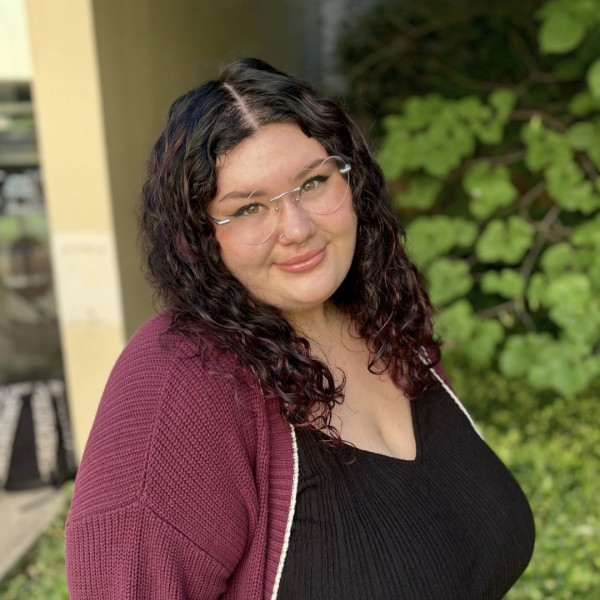 Sarah Stambaugh is a first-year MFA student in fiction at Colorado State University, where she serves as an associate editor for Colorado Review. Her writing is interested in the horrors of our reality, the subconscious fears of unreality, and fighting them through human connection.