Mariah Rigg discusses “The Impossible Real,” her story featured in the Fall/Winter 2025 issue of Colorado Review, with associate editor Sarah Stambaugh.
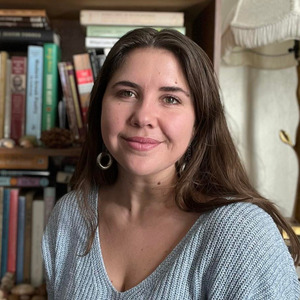 Mariah Rigg is a Samoan-Haole who was born and raised on the island of O‘ahu. She is the author of the short story collection EXTINCTION CAPITAL OF THE WORLD (Ecco, 2025), and the creative nonfiction chapbook, ALL HAT, NO CATTLE (Bull City Press, 2023). Her work has received support from the National Endowment for the Arts, MASS MoCA, Virginia Center for the Creative Arts, and Lambda Literary, among others, along with being featured in The Sewanee Review, Oxford American, Electric Lit, Chicago Review of Books, and elsewhere. Currently, she a visiting fellow in creative writing and Mount Holyoke College.
Sarah Stambaugh: What part of “The Impossible Real” came to you first? The characters? The setting? The queer adolescent narration? Something else? It is all so compelling. Can you also tell me at what point in the writing process did you come up with the plot twist?
Mariah Rigg: This story, like so many I write, was something I had been thinking about for a while, so when it came to the first draft the story fell out of me all at once. When outlining, I don’t think of characters or setting but instead of moments and images. Writing, for me, is an act of leaping from one moment or scene or image to the next. Of finding ways to connect the exclamation points of memory that make up a life. If I’m thinking of the “ingredients” of this story, I knew I wanted to write about queer codependent girlhood, about class, about finding a sex tape and the horror of realizing a man you’ve spent your life around—a man that someone you love loves—has done a terrible thing.
SS: Could you talk a little bit about your writing process in general? What does it generally look like and does it vary from piece to piece at all?
MR: I do a lot of drafting in my head, on long walks. When I’m writing something new it has to have a central question or obsession to it, or else I’ll get bored. Usually, this central question or obsession has to do with a relationship. For “The Impossible Real,” the central question had to do with the main character wondering if this person from her adolescence, this girl who was and is so central to who she has become, ever really cared for her. There’s a lot of horrific events and discoveries and even people that orbit around the two girls, but they are the story’s center. In revision, I look to see if the central question has been answered in a way that is intelligible. Oftentimes in a first draft it’s not, hidden instead by the wrappings of pretty, meaningless sentences. Every draft after the first is trying to strengthen the story’s heart.
SS: Something I often struggle with in my own writing is when to reveal what information to my reader. The rollout of information and withholding in “The Impossible Real” is so expertly done. Is this something you thought a lot about while writing this story or played with at all? Do you have any advice for other writers who want to improve this element of their craft?
MR: Oh, this is something I am always wrestling with. “The Impossible Real” is unique in stories I’ve written in that the narrator isn’t as afraid to dump information on her readers. There are moments in the narration where she’s obviously struggling with her past and what it means to her present, where she’s asking her readers to hold some of this hurt for her. I wanted to write her in a way that wasn’t evasive, that was instead focused on making sense of something bad that had happened. There’s still yearning, and what-ifs, but my hope for the narrator is that she comes to some sort of peace, if not in these pages then in the unseen life that comes after. When it comes to advice for other writers, I think the key to withholding vs. not is character. How information is disseminated to a reader has to be consistent with the rules your narrator has set for how they see the world and process information. If those rules are broken, there has to be a reason for the break.
SS: I felt place so strongly in this piece, and the way you described Hawai’i is breathtaking and so immersive. Can you talk a little about the process of place-based writing?
MR: As someone who was born and raised as a fourth generation settler of Hawaiian land, I am always trying to destabilize Western assumptions of place, ownership, and occupation in my work. Hawai’i is who I am always writing to, even if my stories or essays or poems are not explicitly set in the Hawaiian Islands. In my work and life I don’t think of land as something lived on, but an entity that is known and loved across generations. A part of my family, and of me. This shapes my writing, and is why, perhaps, so many people think of “place as character” when they talk to me about my work.
SS: I think the characterization in “The Impossible Real” is just absolutely phenomenal. From each girl, to their parents, to the grandmother. How did you form these unique and dynamic characters? How did you get to know the people you created so well?
MR: I feel like all the smart people who talk about writing character (and plot) talk about desire. And I do focus on that. But I’m interested in the body too, and how certain bodies react to other bodies. Which perhaps is just embodied desire! I had a professor in my MFA program, Marjorie Celona, who told me that a story isn’t finished until you’ve completed a draft for every character. My best stories follow this advice.
SS: I felt so much emotion reading your piece. I felt the nostalgia of girlhood, relived my own experience of queer awakening, and felt so wildly, incredibly uncomfortable. The plot twist in this story also completely shocked me. I had to take a moment and step away and process what I had just read. Writing that can evoke such visceral emotions and reactions is so inspiring to me. Can you tell me a little bit about the kinds of emotions you want to express in your writing more generally, and the kind of reactions you hope to elicit from your work?
MR: Oh, I used to tell people that I wasn’t satisfied with my work unless it made someone cry. I wanted my work to hurt. I think that’s because it hurt me a lot to write the stories I was writing. This story has… a lot of deep shit, to put it ineloquently. And even though parts of it are horrifying, even disgusting, I didn’t write it to horrify or disgust. I wrote it because there are people out there that this shit happens to, and I wanted them to know that it didn’t just happen to them. It happens to a lot of us. I wanted them to find, hopefully, some peace in knowing that. Maybe I was just trying to find some peace for myself in writing it down. More and more, I feel like sitting down to write, and choosing to send what I write out, is an act of reaching. It’s sticking my hand out into thin air, or even one of those mystery boxes they filled with pasta and dirt and pudding when we were kids, and hoping that my hand doesn’t come back with blood or shit on it. Hoping, instead, that in the darkness or the mystery box, I find that someone is reaching for me back. This is so sappy. But in this age of climate collapse and rampant fascism and endless killing, I can’t think of a better reason to write than to connect.
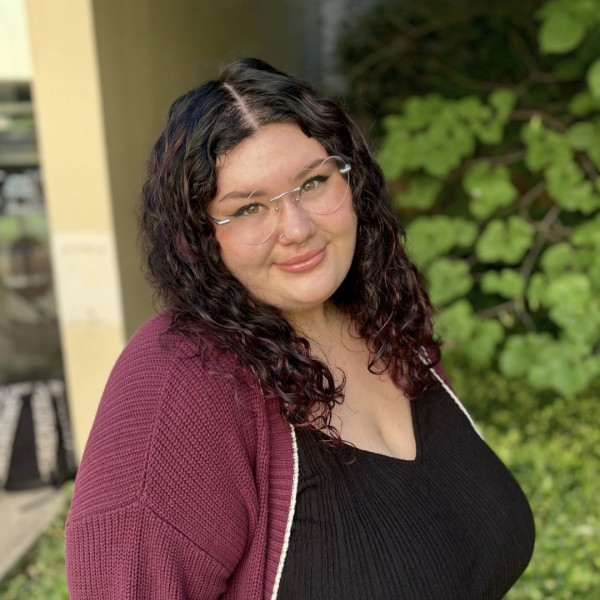 Sarah Stambaugh is a second-year MFA student in fiction at Colorado State University, where she serves as an associate editor for Colorado Review. Her writing is interested in the horrors of our reality, the subconscious fears of unreality, and fighting them through human connection.