Editorial assistant Calista LaMotte talks with Emily Winakur about “Who Lives in that House,” her essay featured in the Spring 2023 issue of Colorado Review.
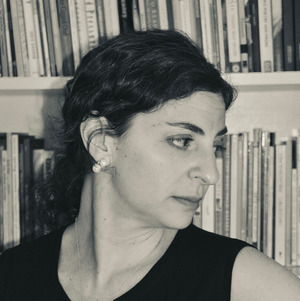 Emily Winakur is a psychologist and writer living in Houston. A native of San Antonio, she has also lived in Washington state, Pennsylvania, Miami, and the Boston area. Her poetry has been featured in several print and e-journals, such as The Texas Observer. Her poem “Uvalde” was selected for inclusion in Texas, Being, an anthology of poems about Texas. Psychology, poetry, and place are themes that recur throughout her writing, including in her first young adult novel, currently in the submissions process.
Calista LaMotte: I’m curious about the kind of process of this piece. What initially drew you to this topic? Was there a catalyst for starting it? Did you start out knowing what you wanted to write about, or did it come out in time?
Emily Winakur: One of the things that I grapple with as a writer at this time in my life is that I don’t have a lot of time to write because I’m a mom and I’m a full-time psychologist, so when I have an idea where something hits me, I really have to just sit down and go with it. Because I am a poet, I often start with language, right? Like a phrase or a combination of words, or maybe a title comes to me, and suddenly the title is the nexus of a whole bunch of ideas that get pulled together. So that’s probably how this piece started. I had this phrase, “who lives in that house,” which began as this very personal, tender connection between my daughter and me. It became a much larger meaning, and it seeped out of the container that it started in, and I saw the way that it was touching so many different aspects of my life. The first place where I saw that it touched was my work as a psychologist, and the concept of the house, which is so present in psychological symbolism, and in my work as a play therapist playing with kids, in the evaluations that I do, where I ask people to draw houses, and I evaluate what that might mean about their personality. It really connected with my experience living in this house here in Houston, which is both my longest residence since I lived in the upside-down house that I mentioned in the piece when I was a child, but which also feels very tenuous because of where we are, politically, historically, and climate-wise.
CL: A lot of my writing also grapples with themes of family, place, home, and belonging. It’s kind of an ever-evolving relationship while writing. Did your relationship to these themes become clearer or shift, or change at all, when you finished and published the piece? Did that also affect your understanding of these themes in your writing?
EW: Yes, definitely. One of the things I realized was that I can connect my personal experience growing up in my individual family of origin, in this particular place, with psychological constructs that I think are increasingly important to people. I mean, right now, folks have more access via social media to immediate information, education, even interventions for therapy and for psychological education. Because there’s so much out there about narcissism and attachment theory and anything you’re interested in, mental health-wise, you can find that on some platform. And some of it’s really great, and some of it is not as great, but there’s a lot of it and a lot of people access it. So I’ve had this idea, and I was interrupted by breast cancer in 2023, but I hope to continue exploring my personal experiences with mental health, tracing their roots in my family of origin, in my upside down house, through to what I’ve learned as a psychologist, and then connecting it to larger social issues like cancel culture, for example, and the way that cancel culture connects with attachment and some of the ways that we enact our attachment issues. I love bringing pop culture into my writing and connecting pop culture with psychology, and both of those things with my own personal experiences. As much as I like pop culture, really don’t want to lose the neuroscience piece, because I really loved that about “Who Lives in that House?” the way that I was able to connect it to the the book by Veronica O’Keane, where she actually is laying out the science behind the place-cell networks.
CL: In “Who Lives in that House?” we see that family plays a vital role in determining place in this piece, and we hear about your childhood home or homes. We hear about your parents’ homes and where they came from in New York and Baltimore, and other family members’ homes. I’m curious, how are family and place tied together for you and for the narrator in this piece?
EW: I think that family and place are fairly inextricable for me, personally. I don’t think that is the case for all people. I just think that for whatever reason, for my temperament, for the way that my individual brain is put together, family and place are very much intertwined. I can sort of extricate them, but it is traumatic and painful to do that. So I spoke in the piece about how my parents divorced when I was in my early 20s, which a lot of people hear that, and they’re like, Oh, you were a grown-up. You had your own life, and you were doing your own thing, so it probably wasn’t that bad. But I think my attachment was not really to my parents as individuals. It was more to our family as a group and how we existed within certain places. There were these very physical places of intimate connection and attachment that were my strongest point of attachment to my family. When my parents divorced and my mom moved here and my dad moved there, I was completely fragmented in terms of understanding myself as a person with a family. I did not understand that until many, many years later, after finally getting into therapy and ultimately becoming a psychologist myself. But when I think about my grandmother, I can’t not think about my grandmother in her house. When I think about my great, great aunt, who actually traveled over from eastern Europe, it’s very hard for me not to think of her in her apartment in Queens. I think because I am more prone to attach to place, period, that I’m also more prone to connect people to place.
CL: Yeah, definitely. So I think you’ve been speaking to this kind of this whole conversation, but how does your work as a psychologist inform your work as a writer?
EW: Being a psychologist has actually made me a much better writer for a few reasons. One, it has just given me a lot more sophisticated and interesting ways to think about character. Two, there’s so much about being a psychologist that involves being really patient, and you do much better work as a therapist if you talk less and listen more. I started writing really young. My first poem was published when I was, like, 19. And I went right into my MFA program after college, and it was a total waste on me. I was way too young and too immature and still too traumatized by my parents’ divorce to get out of it what I might have gotten out of it at an older age. I was really concerned with producing writing, producing poetry, or whatever it is that I was working on, and I was less interested in listening to the world around me. I read a lot, but a lot of the time, my goal was just to get more reading under my belt. It was hard for me to be in the moment with literature, with art; it felt very instrumental. That’s one of the things that being a psychologist has helped me change—my fundamental way of interacting with the world. I don’t know when I’m going to be inspired, and I don’t know what it’s going to mean when I’m inspired. It doesn’t necessarily mean I have to write something, but if I do write something, it’s probably because I’ve really been listening and waiting for the moment when I can make the most of it, as opposed to just doing it to do it now.
I’m not in a place in my life where I can write a lot. So I try to write what I need to write, and what I’ve really been listening to inside of myself or in my relationships with other people for a long time. The other thingI’ve learned about writing from being a psychologist is just the amazing ways that people tell their stories. Obviously, what my patients tell me is confidential and I can’t record it, but sometimes I fantasize about being able to record it, just because of the beauty of their narrative and the way that they share their story. The authenticity of that; there’s nothing self-conscious about it. That’s what we want in good writing. I feel very privileged to be able to experience that on such a regular basis and strive for that in my own storytelling.
CL: Even people who aren’t writers can be amazing storytellers and completely engaging. My final question for you is about the ending of “Who Lives in that House?” I love the final image and the metaphor of the house, tree, and person. This has special meaning for me, too. My mom’s a social worker, and she showed me this exercise, probably when I was too young. So I’ve been thinking about it for a lot of my life, and it fascinates me. How did this image or metaphor come to you for this piece? And what is the power of ending on this metaphor?
EW: For me, it goes back to how we form a sense of self and how we reveal that to the people we love. So, in a very basic, concrete way, what I was doing with this essay was trying to figure out why on earth I invented this game called “Who Lives in that House” that, to some people, like my husband, might seem really weird and potentially useless and not really a game. Why did I do that? What did that mean to me? Why was my mind doing that? I started off the essay by saying, “this is when I made it up. This is the role it served early in my life with my daughter,” then exploring throughout the essay all of the things that home means, and having a place and a sense of belonging, and having that place and that sense of belonging inform one’s identity and how we communicate that identity. So in the end of the essay, I wanted to come back to that and talk about how that’s one of the most fundamental things I do when I work with people. I had not made that connection before I wrote this essay. I don’t always do House-Tree-Person with people. I do it when testing because it’s part of an evaluation. But I often do it when kids come in for the first time, because they don’t always know how to say, here’s why I’m coming to therapy. Parents might have a way of saying that, but the kids just come into the room, they see the toys, the paper, and the markers. Sometimes they’re not sure what to do with it. So it’s a very simple, structured task to basically say, “Hey, can you draw me a house?” A kid knows how to draw a house. Every kid knows how to draw a tree, but that is the starting point of telling a story about who you are and why you are. That is really the most important thing we can pass down to our children. To say, I brought you into this world, but you’re going to be the one who writes the rest of your story, and I’m going to be a part of that. I will always be willing to tell you about my story, but I’m here for you to figure out the story you want to tell about yourself. I think that it would not be too far off to say that a lot of people raising kids right now have a lot of anxiety about the world we’re bringing our kids into, and we don’t know how stuff’s going to go. We want our children to feel very empowered to make the world safe, clean, and beautiful for themselves and for their children. We want them to have hope. And one of the ways that we help people have hope is by giving them authority. You tell me who lives in your house. It’s your decision. It’s up to you.
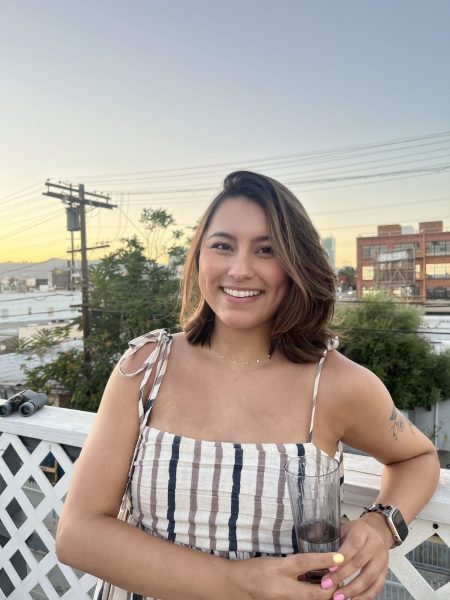 Calista LaMotte is currently pursuing an MFA at Colorado State University, where she is the Gill-Ronda Fellow. Her nonfiction has appeared in HerStry and I Think You Might Need to Hear This. When not writing, you can find her outside taking photos of trees or snuggled up with her two cats.