About the Feature
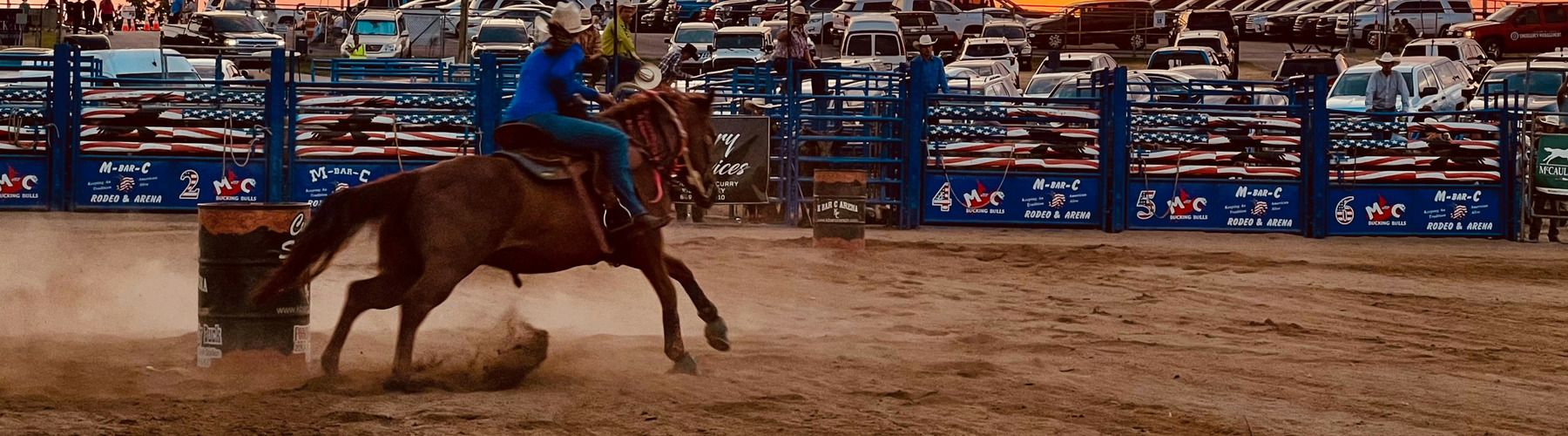
Queen of the Rodeo
Photo by Armando Guerrero on Unsplash
In the last nine months, Norm had lost a kidney and then a brother along with that kidney. To be clear: his kidney had been cut out—pulled through his abdomen in a surgical bag—and then stitched up inside of his brother, and then his brother had passed anyhow, leaving behind a son and a wife, Misty, a woman Norm might have loved once, though it was hard to be sure.
The doctor had told him that his remaining kidney would increase in size, that it would claim some of the emptied space and take over the whole job of filtering his blood. “Without a problem,” the doctor had said. “Just the same as before.” Of course, the doctor had said a lot of things. There were slivers Norm couldn’t remember about that day, and then there were sensations that refused to leave him: the lump of his skin mounding under the needle, the cool push of the IV, and those fateful drips of oblivion traveling into his vein. Sometimes, he still felt the oximeter pulling at his finger and the stupid wave of his hand as he passed his brother in the corridor, each of them flat-backed in their beds, monitors beeping off-beat, as if in competition.
A long summer had been spent repairing saddles, eating most of his meals from a can, listening to the awful startle of sheep shears buzzing up from the valley, the fluff of their coats lining the wind like dandelion seeds. It had been a relief to see those metallic trailers loaded up, the border collies nipping in circles, and the Peruvian herders on horseback, pushing south, headed for warmer, greener pastures. There was a splinter of fall in the wind, a dampened cool at the close and start of each day, a sense of impermanence. He’d loaded up his truck with camping gear—his bell tent, his duct-taped sleeping bag, the fancy freeze-dried rations fit for space travel.
Norm still had a box of his brother’s things on the floor of the passenger seat—a collection of objects that held little meaning. Except for the arrowhead, which he had been carrying around in his pocket.
But whenever he tried to test his limits, head out of town for a spell, he’d get as far as the old train tracks, a division, a crossing line. Driving over it seemed to represent something akin to running away, so instead, he’d park and walk along the weedy trestles, kicking at other people’s trash, mumbling every curse word known to man. Then he’d lie down in the bed of the truck, straining up at the night sky, following the blink of a satellite dish, the suicide dive of a star, and the next morning, like clockwork, he’d turn around, head back. Things had gone upside down, and all he wanted was a sign, a ghost light, a burning bush. Anything at all. He’d even take a slap, a punch to the gut, the zip of an electrical current if it shook him out all right, set him on his feet again. But Misty kept calling. Or he did. Or both.
Whenever he called, she always asked how he was feeling, searching his voice for signs of pain or fever. And he hated that part—that she asked, that there was guilt in the asking. But his donating the kidney had nothing to do with her, or with his nephew, whom he loved terribly. He would have given the kidney to his brother even if he had been the sorriest, loneliest, meanest prick on the face of the earth. And if his brother had been that way, things would’ve turned out the same anyhow. But instead, his brother had been enviable: a filament of light attracting people like moths.
He visited Misty and his nephew at least once a month. He drove east through cattle country to their little farmhouse, to that desolate parcel of land. He packed a bag of groceries, maybe a fresh catch or two, and often a small something for his nephew—a jar of marbles or the little Hot Wheels they sold at the grocery store.
Last visit, Norm brought him a BB gun in secret. They dumped out a six-pack of Coca-Cola and lined the empties along the fence line, hidden by elms. Norm taught him how to aim, how to hold his breath when he fired. But he could feel the boy’s nerves run through his fingers. Even the triumphant sound of the first BB’s ding against the can appeared to unsettle him. What he thought had been a good idea—a rite of passage for a ten-year-old in southern Colorado—turned out to be a grave miscalculation. He worried, with each attempt, that he was leaving his nephew in even worse condition than he had found him that day.
Afterward, Norm hid the gun and the BBs inside a sweatshirt and left it out there between the roots of a tree, reminding his nephew that the gun should never be aimed at any squirrels or birds. “A broken wing can kill,” he’d said. Though from the way the boy had looked at him—the way he’d lifted his freckled nose, his soft chin, and considered it slowly—Norm knew that it had never occurred to him to go out there alone. He was so different from Norm and his brother, who would have woken in the night, snuck out of the house, done anything to get that gun in their hands as quickly as possible. But the boy, of course, was Misty’s too. She was sweet and warm, and she was smart. But not so sweet as to seem helpless. You could sense there were rocks inside of her, and she could reach down and hurl them anytime she liked.
Norm had been trying to toughen his nephew ever since Misty let it slip that he’d been crying on the bus on the way to school so often that the driver had begun bribing him with gummy bears. The other kids on the bus would beat the backs of their seats, try to make him break, and chant, “Don’t cry, Kent!” These were the kids of farmers, of drillers, of truckers.
Kent had been Norm’s brother’s name too.
Misty and Norm stayed out on the front porch together that night. After the BB gun debacle, Norm had cooked a supper of trout and red potatoes and then cleaned everything quietly in the kitchen while Misty said goodnight to Kent. The night had turned calm and cool as they sat in the rocking chairs watching the pasture go navy. His brother’s ashtray was on the side table between them, the ethereal weight of his presence lingering like dew.
“I thought I saw him the other day outside the hardware store, walking down Sixth toward Pinehurst,” said Norm. “You know that little alcove with the boarded-up phone booth? I even raised my arm for a moment.”
Misty remembered something and smiled. “I’ve been there,” she said. “Anyone of size in a ballcap—even a woman sometimes.”
“Must be one heck of a woman,” said Norm.
Misty nodded. “Sometimes good-looking too.”
Norm laughed.
“But then I worry. What comes next when I stop thinking I’m going to wake up and he’ll be standing there at the closet, asking what I’ve done with his shoes?”
“Maybe that never comes,” said Norm.
They kept on rocking through the creaking, pausing to talk. Some of the neighbor’s cattle had wandered over and were calling to each other out there in the dark. There was no one to blame, really, for what had happened to his brother, for the illness and the failure of his body, and that made it hard—the grief never seemed to settle anywhere.
“I just keep thinking: If only we’d known sooner,” she said.
Norm rubbed his hands together. Already he could feel the dread of leaving, of each of them being alone. “You can’t think like that,” he told her. But everything he said felt half-hearted. His words seemed to trail off, waiting for some final declaration. Without his brother and that center of gravity, his relationship with Misty had become slippery and undefined.
A cattle egret triggered the floodlights and froze just beyond the steps, staring balefully at them, blindly, or perhaps with utter clarity. He felt the sudden question of their proximity, of his lingering, until the lights blinked off, leaving them to shadows again.
Misty held her head, but Norm knew she wouldn’t cry. Her face was freshly washed. She’d come out with her hair pulled back tight and her skin as pale as the flesh of an apple. They both sighed almost in unison.
“Are you working on something new?” he asked her. He’d seen her sketchbook on the table, the charcoal pencils. Her perspective drawings—renderings of cityscapes and famous streets, of narrowing rivers and shrinking landscapes—often ended up on postcards and memorabilia, etched in metal trinkets at tourism centers. Norm had always liked her drawings—the way the subject of her work slipped into a vanishing point, as if she had carved a portal, a tunnel to the center, a city beyond a city tapered to the point of a pin. Everything was there, the world as he knew it, but it was heading somewhere, gliding down the precise angular lines she had drawn with a ruler.
“Not yet,” she said. “Oh, that reminds me!” She stood, brightening. “I saw something the other day—thought you might be interested. Maybe it’s worth a call.” She went inside for a moment and came out with a newspaper clipping and handed it to him. At some point, the cows in the field gave up their lowing, and Norm collected his things and drove home.
The girl in the newspaper article was a promising rider whose leg had been shattered and then amputated after a tragic accident involving a rearing horse and an elk stampede. In one quote, the girl had said: “It would have been a sensational dismount if my leg hadn’t given out.” Norm liked her instantly when he read that. The accident had taken place a year ago, and the story was the obligatory back-in-the-saddle follow-up. A photo, mid-trot, spread across the fold of the paper. The portrait made it look as if everything had been settled and put to rest, made whole again. Of course, that wasn’t how these things worked. When a leg was gone, it was gone for good, and everything that came after was a series of adjustments.
Norm reached out to the family, and a series of emails were exchanged. He sent them designs and sketches until they settled on a custom saddle that would suit her needs, that would fix what could be fixed. A few weeks later, he crossed the railroad tracks and headed three hours south to their property in Oklahoma. He left Colorado and the blue ripple of its distant hills and drove into the panhandle, through lonesome stretches of old abandoned mining towns in a region that had once been known as No Man’s Land, an unwanted strip between states, just north of the 36°30′ parallel.
He followed the careful directions down nameless streets, hung a left at a white church with a broken steeple, and then cut across a field tracked with tires. Along that grassy road, he came upon a line of barefoot kids shouldering black inner tubes. They squinted at his truck as he passed, kicking at the grasshoppers sawing in the daylight, failing to return his half-hearted wave.
Lange, the girl’s father, was waiting for him at the fence line, undoing a padlock. The wind swooped down, worrying the stalks, and Lange’s shirt fluttered like a flag. Norm could tell from just a glance that the man was in poor health—his clothes and the cinch of his belt spoke of a previous body, the body of a better past. For a moment, a little match of injustice lit up inside of Norm. In one square mile there could be loss and sickness, there could be sun-scorched inner tubes and autumn nights—that was how the world looked to him now, heaped in contradiction, a shiny jewel just waiting for a thief.
Norm followed the father’s rusty old truck into a patch of woods, tires thumping, bouncing over rocks and roots. A green tin roof sparked into view between the trees, the sun glinting against it as if through a magnifying glass. As the woods thinned, they broke open into a circular clearing where a log home had been whittled in place like a fairy-tale cabin. There was a small horse stable and a dirt corral and a chicken coop that trembled with feathered activity.
The fuel-rumble of their trucks coming down the lane must have alerted the girl, Amy. She came bouncing out to greet them, leaving the screen door banging at her back. Even at fifteen, she was as imposing as a woman. An impossibly long braid hung behind her like a tail, swaying with the up-down of each prosthetic step. She smiled, shook Norm’s hand; her mouth was silver, stuffed with braces, and it was there that Norm saw the vibrance of a child shining through.
Amy’s mother, Judith, fluttered out behind her, watchful in the background. A pair of gardening gloves flopped from her pocket. Norm ma’amed and tipped his hat to each of them. Amy seemed to get a real kick out of that, swiveling around to smile at her mother.
As they walked toward the stable, Amy told Norm that her leg was made of carbon fiber and aluminum. “I’m bionic,” she said. “At least one-sixteenth Terminator.”
“Amy,” Judith chided, as if she had been caught bragging.
Amy shrugged at Norm.
“Now you’re just making me jealous,” he said. And he thought of telling her that he was missing something too—even though it was small in comparison—but his age opened between them like a chasm, and he couldn’t figure how to talk to her, how to relate.
They had set up a little projector in the stable with footage of her barrel racing. The screen had been hung on the back wall between the stalls, and the bottom edge of it curled against the pile of hay. The four of them stood shoulder to shoulder, watching the old Amy churning up dirt with the speed of her turns. Norm couldn’t decide if it was lovely or tragic. There was enough promise there to wonder if she really could have made it. Next to him, Amy’s mother leaned and shifted, along for the ride, in perfect sync with Amy’s movements. When it was over, Norm clapped, assuming that was what they had wanted—to see his own belief and conviction, a mirror to their own.
They all stood in the middle of the stable while Norm gathered her measurements. He wrote each number down in a little notebook as they talked about the rodeo circuit. Amy spoke of the riders as if they were royalty, naming their horses and hometowns. That was where she had been headed before the injury—entering teen competitions and performing at local shows. He let her chat away and took more notations than needed, even measuring the length of her outstretched arms. “For the reins,” he said, with a shrug in his voice. She seemed amused by the attention, lifted a pinky into the air and, wiggling it, said, “You missed a spot.” Turned out she had even called the reporter herself, set up the whole article. “There’s no comeback without a story,” she said.
Norm had never been much of a rider—his granddaddy had broken broncs and it had soured him—but when Lange led the horse from the stall, walking with the reins in his hands, the smell of its coat hit Norm like it always did, sweet and familiar. It was the same brown Arabian that had reared, that had dropped Amy amid its own, terrible panic. Blame was a funny thing, he thought, watching the horse nudge at the palm of her hand.
The horse’s name was Pascal, and Amy sang it to him as she brushed the streak of white that ran down his nose. Pascal closed and opened his eyes, the rectangular pupils dark as doorways. Norm thought he could see a sadness there, a knowing, perhaps even a question of what was owed, and he felt hesitant as he reached out with the molding wire to touch him. Pascal’s coat twitched, acknowledging Norm’s fingers as if they were flies. But he stayed still after that. Norm got the shape of the horse’s withers, carefully checked the prominence of his spine. When Norm was finished, Pascal kept turning his head in Norm’s direction as if in recognition, twisting, appraising, and Norm felt the rush of exposure, like it was visible—the missing thing inside of him, the traitor, the organ that hadn’t been enough.
As Norm neared the state line, a few hours from home, he pulled off the two-lane highway and set up his tent at the bottom of an embankment where a river crossed beneath the road through a large concrete tunnel. The water burst out like a slide, and occasionally, he’d catch the sharp edge of a tail backflipping through. The land there was remote enough to imagine it might remain empty for a while longer—as empty as a place could remain when crossed by roads and trains and money.
He ate tinned fish, a bag of roasted peanuts, and a warm beer he found rolling around the truck bed. After he was finished, he pulled the arrowhead from his pocket and turned it over in his hands, longing for the object to spark with significance, hoping to feel the weight of its history, to feel some sense of belonging within its long and stoic viewpoint. It had been found by his brother one summer, dug out from beneath a dried creek bed with a stick. There had been a historic drought, and they had spent weeks crushing snail shells beneath their sneakers, climbing over mossy boulders shedding like lint, until the earth opened like a tomb, giving way to that secret offering—the bone-white arrowhead his brother had claimed and stashed like a treasure beneath his pillow. As Norm thought of this, his heart swung low, and he called Misty.
She answered after hardly a ring, so he knew she’d been holding the phone in her palm, doing nothing. “Hey,” she said. He had to clear his throat when he heard her.
“Hey, Misty. Everything OK there?”
The speaker rattled as if Misty had set down the phone. Norm ran his finger along the serrated edge of the arrowhead. Across the line, he heard the crack and hiss of a can being opened. His brother had owned a fleet of vending machines, and in the shed out back, he’d left behind towering pallets of soda.
“Misty?”
It rattled again and then she was back on. “Sorry, Norm. You just caught me . . . well, just thinking about something, you know. We’re fine, really. Kent is fine. I’m fine.”
The TV blared in the background, and he pictured Kent sitting cross-legged in front of it, picking at the dried spots of glue in the carpet. “Fine. Good,” he said.
“Supper Thursday?” she asked.
“Sure thing.” He’d cut his finger on the arrowhead while he was talking—a paper-thin line that he washed in the cool of the river afterward, though he could still feel his heartbeat pulsing at the tip of it. Lately, there were all these vibrations he had come to notice—sensations of absence, the ticking of his body like a clock waiting to chime. Sometimes he imagined his kidney had left a hole like dynamite through a mountain and time was moving inside him like a runaway train. There was the electricity of his nerves and arteries building new highways, pulsing with progress that he refused to acknowledge.
All week, he’d held Thursday in his mind like a ticket. Misty greeted him at the kitchen’s screen door with lipstick on. It had been a long time since he’d seen her mouth fully punctuated like that and it stirred him up a little, touched the pit of his stomach. He stepped inside, holding a pair of fishing poles, and was about to say something about the black sedan out front when a man emerged from the living room behind her with a jacket slung across his arm. The man was clean-shaven and well-dressed. He stooped as he spoke, as if in false apology for his substantial height. “Earl,” he said, smiling wide. Norm felt that he’d seen his face before in an ad—perhaps in the PennySaver or on a bench dripping with bird shit. There were so many questions, a field of questions. A swirl of unexpected jealousy whistled through his ears and made him dizzy.
“Hey, Kent!” Norm called out. He lifted the poles in the air and smiled with his lips closed tight, acknowledging Misty and that man named Earl.
The kitchen was tiny, and Earl was taking up most of it with one hand stretched to the counter and the other resting on the back of a kitchen chair. Kent crept in like a mouse, ducking beneath the man’s outstretched arm before coming to rest in front of his mother, looking up at her for some final confirmation before he went out the door with Norm.
Down the steps and into the dirt, Norm tried to shake away the jitter of his insides, the narrowing of his thoughts. His words felt choked when he spoke: “The Sutters’ dock sound all right?” Kent shrugged and tucked the pole Norm had given him beneath his armpit as they made their way across the field, which had grown high and needed tending. Norm had the jigs in his pocket, a couple of neon squiggly nothings. He could see the herd across the pasture, swinging the flies from their heads, walking in a straight line down the dirt road to the milking parlor. The land was as flat as a baseball diamond and sound traveled easily across it—farm sounds and bells, windchimes, and the jangle of an old trailer barreling down the road in the distance. Clouds of gnats hung in the air like a mobile above a crib; Norm and Kent wound their way around them, sometimes in opposite directions, then connected back together at the end of each circle.
“I don’t know who that man was,” said Kent. Norm stopped for a moment in the grass, brushing the sides of his Wranglers. Kent had read Norm’s silence all the way down to his toes. “She made me clean my room. She went crazy cleaning everything.” Kent began slashing at the grass with his pole, scaring up the little white moths that hid against the blades like flowers.
Norm considered the information as they walked on. The dairy farmer’s pond was ahead, the surface dark and unmoving, stretched with the bodies of cottonwood trees and the red blaze of the barn. He had never asked about insurance money, or if there was any to be had. She was probably thinking of selling the house—it was a lot to maintain on her own, and Kent was young, too young to be riding a mower and hauling firewood, though he was older than Norm had been when he’d started. But the notion upset him, still—the idea of their moving. And he was hurt. She’d had every occasion to tell him.
“I’m sure your mother knows what she’s doing,” he said, consoling himself perhaps even more than his nephew.
“Yeah, well, she doesn’t tell me nothing, so how would I know?”
“Your mother’s trying her best; don’t you forget that.” The words came out harsher than he’d meant them, and Kent rushed out ahead of him.
“I know that! You don’t have to tell me! Don’t you think I know that?” He dropped the pole and headed to the edge of the dock.
“I’m sorry, Kent!” Norm called after him. It was growing cooler, but sweat had worked through his shirt. He felt wet and foolish. Kent swiped at his nose with his sleeves for a while, and Norm set the lures on the rods and pretended not to notice.
The farmer had supposedly stocked the pond with catfish, but all they caught was bream, three of them, no more edible than toads. Kent caught one and then grew bored and sat with his legs swinging off the edge of the dock, kicking at the cattails. It hadn’t rained in a while, and the water was low and frenzied with long-legged bugs.
By the time they were heading home, the sun was a pale orange, and the clouds were so low and gray they looked like steam from an old locomotive. They crossed paths with a snake, ink black and glistening, and Norm placed his hands on Kent’s shoulders to stop him, and they stood together and admired it. The earlier crossness had gone out of each of them. It had been difficult to hold on to with the light on the water turning to gold. But the guilt was coming for Norm in the still of the evening. Here he was when it should have been his brother carrying those poles, thinking about Earl and the blush of Misty’s lipstick.
He left early that night, cleaned the pot of elk chili and put it on the floor of his truck. The cattle line was crossing the road again, going slowly, so he stopped off at the end of Misty’s long driveway and got out of the truck to sit beneath the grove of elms that stood together like strangers in an elevator. Though he felt uneasy about it, he watched their night progress from the outside. He saw Kent’s bedroom light flick off, then the hall light dim, until there was only the glow of lamplight against the curtain of the living room, where Misty was sitting and reading, or praying, or staring hopelessly at the walls. He thought about the thousand cans of soda in the shed and what would become of them, and the empty vending machines dotted across the county gathering cobwebs and dust.
The BB gun was still there in the damp of the sweatshirt. He rolled it out and considered it in his hands. He used the muzzle to dig a hole and dropped the arrowhead inside and buried it. He twisted at the sound of a twig, imagining things out there moving toward him, thinking of the cattle and their dappled heads like opera masks in the dark.
The machinery of the farm was churring in the distance. He could make out the square windows of the barn, the taillights on a retreating truck. Dark things swirled against the sky like kites, and he shot up at them, thinking they were bats, though they may have been shadows of his own demons flying above him.
For weeks he stitched away at that custom saddle like it would save him, placing those rivets, jittering beneath the big leather sewing machine, thinking of the girl and the giant swing of her life. It was a sympathy that bled through him, that tangled up with his own losses, with his own stalled-out story.
By the time it was finished and he was heading out to deliver it, the leaves along the roadside had gone dark and temporary, and the fields were freckled with the browned buds of wildflowers. He’d loaded up the saddle beneath a dusty canvas tarp, debated a big red bow—tied it, then untied it, fearing it too earnest, too laced with pity.
When he arrived, the family gathered around the tailgate, and he slowly unlatched the cover and then lifted it into the air like a bedsheet. Amy clapped and squeezed her parents’ shoulders, carving little half-moons in the dirt with the blade of her foot. Norm went through all the adjustments—the counterbalance of weight in the saddle bag, a taller horn cap for turns, the custom stirrup. He gave Amy a jar of cedar oil and told her how to take care of the leather.
Lange gathered up the saddle in his arms and walked off toward the horse barn, dragging his body through the dirt and weeds. Norm turned to follow him, but Judith placed a hand around his forearm, clasping and patting as she led him to the porch, where a picnic table had been set with turkey sandwiches and vinegar chips.
He could sense the unframed hours of hospitality looming before him—an endless road, like one of Misty’s perspective paintings that seemed to go on forever. How he had longed to reach that elusive center—the invisible heart, the final dot like a black hole. He flushed to think that once in high school, he’d written her a note on blue-lined paper, asking her about those paintings—a note that had never been delivered, a message that he’d crumpled and let disintegrate in his palm.
Around the table, Judith asked the usual questions. Kids? No. Wife? No. A series of dead ends. “Plenty of time for that,” she told him. Turned out they’d had Amy when they were both forty-two.
“When she came out, the first thing the nurses did was count her fingers and toes,” Judith said as she lifted Amy’s braid from her back and let it fall again.
“It seems pretty funny now, huh?” said Amy, her silver smile gummed with potato chips.
When Lange joined them at last, Norm could hear a wheeze in his chest—a sound like a broken rattle. Amy sidled up close to him, and he put his arm around her and kissed the part in her hair. Judith disappeared inside, then carried out a bucket of water and a pile of carrots, fresh from the garden, and began washing them off and peeling them into ribbons. “The chickens go crazy for them,” she told Norm.
Soon there was just the calm scrape of the peeler and the earthen smell of the carrots all around them. Time had gone slow and liquid, and Norm let the unexpected good feeling stretch out like a cat flexing its paw. When the wind blew, he could hear it in the trees, and the birds within them rang out like bells.
Amy begged Lange to tell Norm about the time he had gotten lost in the woods.
“Moonshine,” Lange half-whispered to him.
“Stupidity,” Judith said, rolling her eyes as she piled the ribbons into a glass bowl. Amy tucked her good leg up beneath her and rested her chin in her hands.
Norm could tell it was a story they were used to; it had the rhythm of practice.
Lange had been walking home, taking a familiar route. “The night was full black,” he said.
“Blackout,” teased Judith, smiling.
“Anyways,” Lange continued, “I had this penlight I always carried in my pocket, but it couldn’t light up a teacup. The forest just swallowed it right up. The sun had dropped so fast, but I had been wanting to revisit this place I remembered—a little detour on my way home, this beautiful rock clearing where you could see the river running below, all dressed up with stars.” He looked at his wife, lifted his eyebrows. Her neck went pink.
“He took Mother there once,” said Amy in a whisper. “It’s in a different town.”
“But of course”—Lange slapped the table, regaining their attention—“it was so dark, I didn’t know my ass from Uranus.”
“Lange!”
“Sorry. But I didn’t! My feet were all scrambled, following the path this way and then that, doubling back, spinning around. I don’t know if you’ve ever been lost like that, but it felt like the trees were stepping in on me. The dark is there your whole life, but it’s only a few times you really feel it—how much it weighs, how it stretches the mind out.”
Norm was nodding along.
“Somehow, I make it out to this vista, thank the Lord, but everything is all wrong. It’s backwards—sky, river—all flipped, I swear it. I couldn’t tell what was what! And that freaked me out something good. So, I start to run. I’m tripping, catching branches all over, and then wham, I trip right over a door in the earth, stopped me right in my tracks. Looked like one of those hobbit doors, just right there in the ground, all muddied up with leaves.”
“A door in the earth,” said Amy.
“Turns out I had discovered this old mining shaft. Months later, the city’s marking up a trail and leading hiking tours right to it.”
“How about that,” said Norm.
“How about that,” said Lange.
An hour had passed on the porch. The chips were gone, and the ice had melted in their glasses. Condensation fell down the sides like drops of rain. After Norm helped to clear the table, they headed out to the stable. Amy jolted out ahead with excitement, her swinging steps bounding like mechanical skips. Norm trailed behind her parents, who walked together, occasionally reaching out, brushing fingertips. The chickens were retreating into their coop, and Norm could see the red glow of their heat lamps through the windows.
Lange scanned the field as they walked and turned back to Norm. “Sometimes we get a coyote,” he said.
Norm stopped along the fence of the corral, leaning against the day-warmed wood, keeping to himself while they readied Pascal in the barn. The sun had slipped to eye-level, and the woods fell into a distant, piercing haze. He wondered if most of their days were like this. He knew, of course, that they weren’t—the evidence was there before him—but it was easy to imagine the three of them waking each day to the same gentle pattern. He looked off into the woods, resting his boot along the bottom rung as a red-tailed hawk swooped overhead. The shadow drew a giant arrow across the field before shrinking away. His thoughts fell to Misty and his nephew, to cooking supper again in that quiet, temporary house and playing catch in the yard, taking up space like a ghost, like a remnant.
When the horse was ready, Amy called for Norm, waving him over. He jumped the fence and walked with his head down, showing his nerves like a boy. The ground was packed with the old marks of boots and hooves, and each step felt like crossing someone’s feet in a dance. There was something about entering a corral that always made him feel bare and exposed, like a stage had been emptied around him and it was his job to fill it.
There was a little stairstep at the center—the kind used to hoist kids onto the backs of ponies—and Amy’s riding prosthetic had been laid across it. It had been made to bend around the horse and would disconnect easily if she fell. Amy sat down on the step and began removing her walking leg. Norm turned to give her privacy, as if she were revealing something he had no right to see, but then she asked for his help, and he saw that she had no shame about it, so he stood in front of her, holding the riding prosthetic steady as she folded down the sheath and adjusted it over what remained of her thigh and wedged it in place. For her, it was just another day, glimpsing that leg. But to him it was visceral—the puckered end of her thigh seared into him like a brand. He swallowed the drop in his stomach and felt his knees go weak. The confusion of that feeling would arrive again later, as he drove away—the shameful repulsion, the desire for life, all of it coming together like a clap of thunder.
Norm checked the saddle and then Amy climbed the steps and placed her foot in the stirrup and boosted herself over the top. Norm went around the horse and lifted her prosthetic leg to place it into the stirrup he had fashioned from a flag holder.
“Ouch!” she said. His heart tipped over. But then he saw that she was teasing, laughing at him.
“That’s her favorite joke!” Lange called out from the fence with his hands cupped around his mouth.
“Just plain mean,” said Norm, smiling with relief, shaking his head. He climbed back over the fence and watched Amy start off with a slow trot.
There would be times that Misty came out to the porch with her eyes pink, and he would know she had been crying, hiding it from him, though he didn’t know why. And in his body, he was torn. He wanted to leave and he wanted to hold her. He wanted her pain gone more than his own. He wanted permission to make the best of things. “He’s never coming back,” he wanted to say, he wanted to shout.
But he knew that even next time, there would be no shouting. That instead, they would sit and watch the light of the sky press against the earth and extinguish itself until all that remained was the blue veil of the mosquito zapper glowing between them. Norm would tell her for the thousandth time that he was sorry, though at that point, it meant nothing. And she would tuck her knees to her chest and say, “What do you have to be sorry for?” And he would think of a boundless sky of reasons, only a handful of which had to do with his kidney.
Amy picked up the pace and was straight-backed, bouncing in an easy rhythm with the horse. Lange shuffled down the fence, coughing into his hands, but joy had spread all over him and Norm felt it too, felt it unroot something deep inside. But he didn’t have a right to it, even though he had come there seeking that very thing.
“Look at what you’ve done for her—she looks comfortable again. By God, she’ll never get off now,” Lange said, placing a hand on Norm’s shoulder. “We sure are grateful you reached out.”
“Seems to be doing the job all right,” said Norm, slapping the fence with his palm, signaling the end. The wind kicked up, rolling in the dusk, and the treetops at the edge of the forest shivered.
“Are we keeping you from someone?” Lange gestured with one arm to the field beyond, to the meaningless whole that surrounded them, as if the possibilities were unlimited.
Norm didn’t answer. He shook the man’s hand and told him that he ought to be heading home.
Amy kept circling the corral, smiling as she went by. Even as Norm walked away, he could hear the hooves drumming the dirt, and it was a sound he could feel in his chest, like the beating of a heart or the wings of a duck on the water.
There was just enough light in the sky to see where he’d come from, a glow like honey along the grass. As he drove, the falling sun stretched down in saintly beams as if through the windows of a church.
Norm followed the same worn track of tires, windows down, his arm draped along the side of the truck, trying to make up his mind about where he was headed. He liked the idea of waking up to that rush of river water, to the certainty of its direction. Maybe he’d find an abandoned inner tube and float along for a while, basking in the morning shine like a turtle.
He was imagining himself being carried by the water when something dark and shapeless appeared in his rearview, rushing toward him. As he slowed, he craned his neck around to see it. When it drew closer, the light that remained fell upon it, gave it shape, and he saw that it was Amy, galloping toward him through the pasture. She overtook him, laughing and hollering like something wild, passing ahead of him into a field of barley, where he watched her with his breath caught up inside. She startled a flock of ravens from their roost, and they spread like ash, like a splatter of paint, dimming to pinpricks and then into nothing, as if entering a door through the sky.
What is at the end? he had written to Misty on that paper ripped from his notebook. What is at the end? he had asked of her drawings. He had folded the note and carried it around; he had moved it from his pocket to his palm.
What is at the end? he wondered, as Amy grew smaller, as she continued away into fields that had turned cold and blue. He switched on his headlights, feeling frightened and young and undefined.
There seemed to be a window of his life that was closing, a blazoned thing he could see from the outside. But it was fragile. When he considered it, it felt like an egg, heavy but delicate in his hands. But about Amy, he was certain. One day, he’d flip on the TV and there she would be, all fancied up with a cloud of dust settling behind her. And then he would hear it building like a stampede, the great culmination: a cheer roaring across the foil-bright stands.
About the Author
Mellissa Sojourner’s fiction has appeared in The Missouri Review, Catamaran, and Gulf Stream. Her work has been nominated for a Pushcart Prize. She lives in Florida with her husband and two children and is at work on a collection of stories.