About the Feature
Keepers
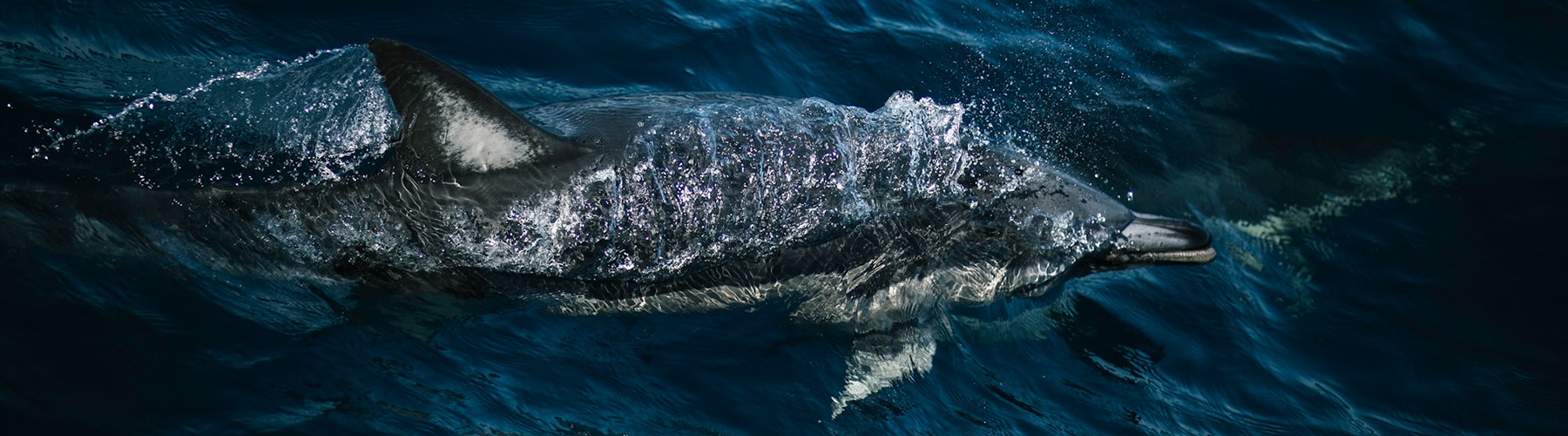
Photo by BehindTheTmuna on Unsplash
For a second, my face pressed flat against the concrete floor, I think Sasha might hold me here forever. This, despite her knowing me from the time she was a calf. This, despite the trust we built through training exercises and illnesses and long nights staring at each other through aquarium glass. But when we came to the end of our routine, she grabbed the back of my wet suit in her mouth and would not let me go. I heard one loud gasp—mine, or the audience’s, or both—and then everything went dead. Now she has me pinned at the bottom of the pool, and I haven’t felt pressure in my lungs like this since the day you asked me to marry you and I couldn’t say yes.
Bubbles fizz around my face and my mouth fills with sour saltwater that makes my whole sinus cavity burn. She holds the skin between my shoulder blades and each of her two hundred teeth dig into me, and all I can do is let out this mangled animal sound I didn’t know was inside me. I thrash and hit and claw, but none of it matters because Sasha is so strong. My nails connect with Sasha’s smooth gray skin, but it makes no difference. I reach for anything, for everything, pulling at the collar of my wet suit, my vision tunneling to blackness and little sparks floating everywhere in front of my face. No one understands how strong a dolphin is until she wants you dead.
And then you appear.
In the blue-dyed water of the Dolphin Amphitheatre, I see you for the first time since you left Florida. You stare at me, your face hovering in the water. Lying there at the bottom, my body so useless in her world, I see you gathering your things in the early morning when you thought I wasn’t awake yet. I see the quiet, concentrated look you got when putting together one of your favorite puzzles on a Saturday morning. I see you the way you looked in tenth grade, acne dotting your face like flecks of fish food, before the two of us had to face the world. My lungs burning under all 130 pounds of her, I see your mouth moving, saying something I can’t understand.
Maybe she’s playing. Maybe this is what she would do if we were in the ocean and I were one of her species. But as her teeth needle my back, sharp and unrelenting, I realize she wants me gone. Somewhere far above me, there are muffled noises. The water sloshes with movement. I grab at my throat and it’s hard to see anything, even myself or Sasha, just darkness. And you.
I scratch her again, hard enough this time that little geysers of blood, hers and mine, float in the water. Sasha shakes my body from side to side, the concrete floor burning my face like a road burn. You always told me to be careful working with the dolphins, that they are unpredictable creatures, and I brushed you off. Maybe you had a point after all.
But it’s my fault. I pushed Sasha too far. I have a tendency to do that, as you can attest. It was the trick she always struggles with—you know, the one where she explodes out of the water and jumps through the ring. I forced Sasha onto her side when she didn’t want to be, and that’s what made her snap.
And now, down here on the floor of the aquarium, my lungs burning, you tell me to be with you. You tell me we can get married and have this forever. We are twenty years old, and the world can be ours if only we want it badly enough. We can live in an apartment until we save up enough money, and then we can think about kids. We can get out of this godforsaken state with its mosquitoes and heat and hurricanes. It doesn’t matter if we have everything figured out, because we have each other. I stop struggling.
Dylan, maybe I made a mistake. Maybe I was wrong to let you go. I’m going to die from a dolphin attack, and all I can think about is you.
Something jerks in my body. My training kicks in like an instinct. All those hours of zookeeping safety courses seemed pointless until right now. I hit Sasha on the nose as hard as I can, in the place where her sensory organs converge. Her bite loosens enough for me to swim to the surface. I push the water away from me, kicking my legs in a stir of bubbles. I stretch toward the surface, away from her and your voice that haunts those depths, everything in me burning.
The whole time we were together, I never knew what I wanted. I couldn’t pick which Fleetwood Mac album to listen to on our beach drives or if I should go to college or what we should have for dinner or if I wanted a future together. But as I reach toward the rippled surface of the amphitheatre pool, I know. I know with the kind of sharp and piercing clarity you always wanted from me. I know I want air.
Since my near-drowning three days ago, Seaside has slated Sasha for death. I try to explain to Angela that Sasha has bad days. What mammal doesn’t? I try to explain that despite her aggression, she is still the dolphin who rested her head in my lap when she was sick, who built seashell castles in her enclosures to soothe herself during bad storms, stacking cockles and whelks one on top of the other. But Angela won’t hear it.
“Isn’t there another option?” I grab her arm as she leaves her morning meeting. It’s a quiet day, low attendance, since what happened. The moon jellies ebb in their exhibit.
“I don’t want to do this. I don’t want it to be this way.” She holds her hands up as if surrendering them to me. “Why are you even here? I told you to take off.”
I follow her through the staff entrance to the back—the behind-the-scenes, as you always called it. I know I should hate Sasha. I know she betrayed me. But for those few moments when I held her dorsal fin, I felt my muscles stretch and strengthen. I felt who I could become. “Please don’t do this.”
“She almost drowned you, Mia.” The tanks’ filtration system hums as Angela pulls frozen fish out of the fridge. You always liked this back area, with its endless tubes, battery backups, and off-display parts of the animal pools. You said it was like lifting the curtain to see Oz. “I watched you nearly die.”
Angela came with me in the ambulance last Friday. She held my hand while my whole body shivered and they fed me warm fluids through an IV the way we would for an animal in distress. My throat was raw from swallowing so much water, and the doctors kept telling me I was so lucky. Fish girl, the nurse called me. All you need is some stitches. I didn’t have the energy to tell her that a dolphin is a mammal—one of us—and not a fish. And I didn’t have the energy to tell her I didn’t feel lucky because all I could think about was Sasha and the fate that would befall her.
“She can’t be rehabilitated. We can’t let her stay. It’s too dangerous. I told you if this happened one more time, then that was it. This is it.” She gives me a stern look I can’t hold.
When Sasha first became aggressive, I thought it was because she was going through a rough patch. Or maybe she was having teenage angst like any mammal. But her condition advanced too quickly for it to be anything normal. She snapped at children who tried to pet her during her brief stint at the Swimming with the Dolphins event. She charged at visitors who took pictures of her against her will. We took her off display for a few days, but when we put her back in the main tank, she was vengeful. She held tight to Lexi, biting into her arm until I hit her with the shark prod.
She has zoochosis. That much is very clear to me now. I discovered the term during one of my late-night Googling sessions when I couldn’t sleep. It’s a kind of depression and panic associated with capture. It’s how I felt the moment you tried to decide my whole life.
“She could make it in the ocean, maybe,” I say. “A release.” She has spent half her life in captivity, since I rescued her as a yearling. Most dolphins lose their natural instincts—their ability to hunt, to sense danger, to interact with other dolphins. But Sasha’s instincts are more intact than ever. She’s not like the Four Seasons—Summer, Spring, Winter, and Autumn—our captive-born show dolphins. The ones we sell as stuffed animals and on T-shirts in the gift shop, who love to be hugged, touched, trained.
Angela puts her hand on my arm. “You know she wouldn’t make it there. We’re euthanizing her tomorrow. It’s the kindest thing to do for her.”
I never should have brought her here. I found her on one of my dives through the open water near our apartment. I did that a lot after you left. I swam out in the ocean until I imagined myself falling off the edge of the planet, like I still existed in a world where the earth was flat.
She was starving, and her pale gray body was sunburned because she had been floating at the surface for so long. I wrapped my arms around her, holding her against my stomach the way I would a spare air tank, or a drowning child. She was too weak to fight against me, and we weren’t too far from the shore, and I swam with her until the ocean gave way to sand.
I loaded her in the back seat of my shitty Prius you always worried would break down, wrapping her in that old, crusty gray towel in the trunk you always wanted me to throw away. She had pneumonia. Dr. Mel couldn’t tell why she was abandoned. Weakness, maybe. Or something deeper. It didn’t really matter to me. I know the reasons for leaving are never simple, whether it is a pod of dolphins or a human being.
I spent all the nights I would have spent with you rubbing aloe on her sunburned skin. I changed her IV regularly. I made sure the port for her liquid diet went into her stomach and didn’t get infected.
Those nights with Sasha were the only thing that helped after you left and I found remnants of you everywhere. Strands of your hair clogging the shower drain. Your favorite brand of wheat bread growing green mold in the bread box. I slept next to Sasha’s tank, the water reflecting beautiful swirls across the tile floor.
Now, Sasha rests at the bottom of her isolation tank. I dump in some frozen sardines. Their scarred silver eyes stare up at me. She comes to the surface and rests her head on the edge.
We’ve already forgiven each other. I know when she pulled me under, it was because I overstepped. Whenever I snapped at you, it would take weeks for you to forgive me. Not Sasha. There is a simplicity in our relationship, a sudden violence followed by complete reconciliation.
“I knew I’d find you here,” Lexi says as she grabs a bag of lettuce from the fridge. I have always thought Lexi exceptionally beautiful, like a storm coming in over water, or the arc of a wave. Angela comes in close behind her and gives me an exhausted look.
“I can tell she’s upset,” I say.
“You’re projecting.” Angela pulls a bag of frozen fish from the freezer.
“She’s frustrated.”
“Girl,” Lexi says, “she tried to kill you.”
This morning, I checked my back in the mirror and saw a long triangle shape of stitches that pulled my skin together where Sasha’s two hundred teeth broke skin and tendon.
“Mia. You need to take this seriously,” Angela says, holding a feeding bucket. “You know this is the right thing to do. Tell her, Lexi, please.” Water trickles through the filters. Shirley the manatee looks at me through the glass. I wave to her.
Lexi raises her eyebrows. “I’m worried about you.” She puts her hand to her face. “It happened so fast on Friday. You were there, and then you weren’t.”
“I’m fine. Really.” I bend to grab the blue feeding bucket and wince at the way the movement pulls at the stitches and my sore muscles. Lexi rolls her eyes and takes the bucket from me. We look into the dolphin pool.
“You’re better off without him, you know,” Lexi says, talking about you, of course. “You don’t need anyone except this mess right here.” She points to me, and I try to smile.
I trail my fingers in the water and watch the ripples spread outward. Sasha rubs her head against my hand. But I see her eyes narrow and turn upward the way they do when she gets impatient, so I pull back. She swims down. I wait for a few minutes and, as always, she circles back around to me and offers her head again. It’s not that hard, really, to know what another creature wants, deep down.
I update Sasha’s behavioral log in my waterproof notebook. Anxious, aggressive. Exhibits pacing tendencies. Loss of appetite. You always used to narrate my actions as if we were in a nature documentary and you were Sir David Attenborough: The wild Mia is angry. Observe her sitting on the couch in silence. The male will bring an offering of chocolate.
Those nights we watched Blue Planet together were perfectly numbing. My head on your shoulder and the deep sea on the screen. You used to tell me I was everything you ever wanted. That after your dad left when you were fourteen, the same age mine left too, you wanted to make a family that wouldn’t break. Some part of me wanted that too, you know, even though, like Lexi says, I’m not supposed to need anyone. That’s what made it so hard.
I bend to rub Sasha’s face, thumbing along her thick nose, and it feels as smooth as a fresh-shaven cheek.
I know what I have to do.
I dress in your black hoodie and drive to Seaside. I’m not sure what the right clothes are for a dolphin rescue, but I figure black is the most discreet. You probably wouldn’t believe that I—who takes an hour to decide between my blue Seaside keeper shirt or my green, who obeys every speed limit—would break into my place of work at night. But I’m trying to become someone you won’t recognize.
I switch off the ignition and look around the empty parking lot. A discarded popcorn bag rolls across the parking lot like a dead jellyfish washing ashore.
There have been other euthanasias at Seaside before, but never for violence. There was Sally, our fifteen-year-old arthritic manatee. Laila, the pilot whale scarred too deeply by a passing boat. Benjamin, the sea turtle born with no flippers: a floating shell.
My phone buzzes in my pocket like a thrashing thing, and I jump. It’s my mother. She’s been calling every day since you left. Asking if I’ve heard from you. What she’s supposed to do with my wedding dress. She’d already started making it. When a daughter is with a boy for four years, it seemed safe to assume it was a done deal, but apparently not. I could hold my breath underwater for four whole minutes, and still I felt more suffocated when her measuring tape was against my waist. Feeling you and her and everyone else choose my life for me while I stayed there silent, unable to speak.
I’m still trying to untrain myself from you. I still wake up at the same time as your alarm, even though there’s no sound. I still search for your Irish Spring soap scent, and wish I had a more advanced olfactory system that could detect you even from thousands of miles away.
I keep thinking about the day we met. The man o’war day, when you were on the beach doing one of your 1,000-piece puzzles you were always doing, and there I was with red welts on my calves, crying, snot dripping down my face, another problem to be solved. You called the ambulance and my mom, then waited with me while the tentacle venom burned my legs.
“Isn’t it kind of hard doing a puzzle at the beach?” I asked, sniffling. I imagined lost pieces buried in the sand. Little grains getting in between the edges.
“I mean, yes, actually. But I think it’s better than being stung by a man o’war.”
After the hospital and the paramedics, we went to the diner where you worked, and my wet hair dripped onto the fake leather bench seat. Your hair kept falling in your eyes. We had AP World together, we realized. I sat in the back, and you sat in the middle front. Your favorite era was the Roman Empire. I loved the Mayans. There was a piece of cheese on the corner of your mouth, but I said nothing because I didn’t want to embarrass you. And you said I never loved you.
You set me up on the couch in my house with a blanket and a glass of water until my mother came back from her night shift. You were so careful with everything despite the fact that our whole house was in disarray—the way you put the blanket on me, the coaster you put the glass of water on. You stayed a few more hours to fix the leaking sink. Then you came back with a proper tool set to fix the back patio door that didn’t fully latch. A man that fixes things without asking? Marry him, my mother said. You wanted to fix all the pieces of my life, and I let you.
I loved your steadiness, your worry, always, about whether I was taking care of myself, even if it got annoying sometimes. Did you make it back home safe? Did you remember to lock the door? In a way, what we had was one long rescue mission.
I scan my pass and let myself in through the employee entrance. I pass the otter enclosure—Allison, your favorite, is a mother now. She has three pups who float on her stomach. She opens her eyes and glares at me in the dark from the fake rocks at the top of her tank, thinking me a threat.
And Alfred, the nurse shark, is slowing down these days. You were right about him going blind. The cataracts sit on his eyes like silver coins. I stand in front of his tank and put my hand against the glass. “It’s okay, old man,” I tell him. He gets anxious at night because he can’t see. He hovers in the water.
I stop in front of Queen, the leatherback turtle who permanently scowls. You always said she was the Grumpy Cat of Seaside, and it’s true. She floats in her tank, looking disgusted at sweaty families and children with blue popsicle-stained mouths.
The red-eared slider turtles see me and start swimming toward the glass. I throw them a few pellets left over in my pockets.
Remember when we got drinks with the other keepers and we decided what animals we would be? We all agreed you’d be a turtle, so deliberate and sure. You said I’d be a seahorse, and I know you meant it as something good, but all I could think about were the leafy sea dragons that get stuck to the filters of their aquarium and die there. Who can, with one strong current, lose one of their fins or even a piece of their tail, they are that fragile. I never saw myself that way until you said that. And the sad part was that no one, not even Lexi, disagreed with you.
I look into the dolphin pool. The emergency light on the battery backups bathes the room in red. Summer, sensitive to noise, stirs in the water, making small waves.
“Shh,” I tell her. “I’m on a rescue mission.” I open the frozen lunch box filled with sardines I brought to distract the Four Seasons while I evacuate Sasha.
She is at the very bottom. She circles listlessly, her nose scarred from rubbing against the concrete walls day and night.
The signs were so clear she needed to be set free. I knew it a long time ago. But I kept putting off the realization because I didn’t want to face your pile of clothes on the chair next to my bed, your collection of perfect coquina shells still lined on your nightstand.
I lure her to the surface with food. But even when she surfaces, she looks up at me with complete apathy. She lets me slide the water sling under her belly, her skin smooth against my hand. She thrashes for a moment as I pull her out of the enclosure and onto the deck, where I have the pushcart dolly we use for animal transportation days.
She isn’t as heavy as I expected, and I strap her down to the cart. She doesn’t move, not really. Her whole body is the pale gray of an aged nickel.
“I’m sorry.” Her head has shrunk from lack of fat. If she hadn’t been starving herself for the last few days, it would be impossible to pull her. But she’s light enough. The cart clicks down the animal evacuation path we use for hurricanes. My arm aches, but I know I have to do this. I know I have to make this right.
We come out by the parking lot in that small side area where you used to pick me up after work. It’s then I hear the sudden screech of the Seaside alarms. I forgot Angela had them installed since some teenagers kept sneaking into the aquarium at night and skinny-dipping. The security lights turn on and the fish startle in their tanks. “Fuck,” I tell Sasha.
I pull the cart faster toward my old shitty Prius. She stares up at me, and I wish she could tell me what she feels. Do you remember that night we went kayaking in the bay? In the distance were soft, persistent calls of a baby osprey. I felt such sharp grief, suddenly, even though I wasn’t sure what I had lost.
You reached out across the kayak. “What’s wrong?”
I shook my head, and you took it the wrong way.
“Why don’t you ever just let me help you?”
I didn’t know how to tell you what I was feeling, how to put it into words. And you were always pushing me to make myself understandable when, Dylan, sometimes I don’t even understand myself.
The shine of a flashlight strobes over us.
Angela, probably. She lives in a trailer right next to the aquarium—our built-in night guard, she always jokes. I lift the sides of Sasha’s sling and put her in the back seat where she barely fits. I have to fold her tail to close the door. She thrashes for a moment before settling down. I put the seatbelt over her, just in case. I collapse the cart and throw it in the trunk, where it makes a loud metal clang.
The flashlight beam sweeps over me. “Hey!” Angela calls. “Hey! Stop!”
I turn on the ignition and hit the gas. A wave of crushed shells spits out the back wheels. I drive through the exit, hitting part of the gate on my way out. If you were here now, you’d tell me I’m making a mistake. You’d tell me I’m being stupid.
But instead, I press on the pedal hard, and I tell Sasha, “I’m taking you home.”
The waves crash, and Sasha stirs in the back seat. Her eyes shine like pearls cut from the muscles of oysters. I load her on the transportation dolly again, pulling her over the thick sand to the Seaside boat we use for rehabilitation releases. I stop to kick the wheels that keep getting jammed up. And then I hear sirens behind us, loud and wailing.
“How’d they find us?” Angler’s Cove is secluded and far away from any public beach. Seaside alone has access rights to the docks.
Sasha’s tracker, I realize. We tag every Seaside animal. Months ago, I put Sasha’s microchip just behind her dorsal fin.
“We have to go, Sasha.” When I turn, I see the red-and-blue flicker of police lights. Hear the sirens as they pull up on the beach. Sasha bends back and forth on the sand in distress. “Shit, shit shit.”
I push Sasha onto the boat. Her body thrashes in the sling, and I feel her pulling against me. But once she’s on the hard plastic of the boat floor she goes still, like she knows she’s a secret.
There’s no boat key. I know, I know, I never think ahead. I don’t envision the future. You’ve told me many times before.The police shine their flashlights on us, and I hide beneath the bow, pressing myself against Sasha. “Police! Come out!”
The flashlights scan the shore, and I watch my shadow absorb Sasha’s.
“What are we going to do?” I look into her dark brown eyes, but there is an abyss between us.
The hard plastic of the boat presses into my knees. I crawl to the steering wheel column where the cables hang down. Once, when we were caught in a storm while we were free diving, the boat died. You told me to step aside while you rewired it, even though my father took me out fishing every weekend when I was younger. Our old clunker stalled out plenty of times, and I learned how to jump start just about anything. But I still let you do it because that was our relationship: you fixing things, me letting you.
I press the wires together now, intertwining the copper strands, and the propeller spins. The boat rumbles.
“Stop! Don’t move!”
The engine roars to life, and I hear three sharp clicks and the sound of metal hitting metal. I look behind me as I drop the motor down, and there are the police shooting at the propeller. “Holy shit, holy shit, holy shit.” Sasha’s eyes widen, or maybe it’s just the glint of my reflection in them.
I hold tight to the steering wheel. The boat jerks a few times, but then I find my footing, and I take us to sea.
We’re back where I found Sasha two months ago, near that sandbar close to No Name Key. Maybe I should have left her there and let life take its natural course. I thought I was doing a good thing by helping her, which is probably also how you felt about me.
We bob in the water. Small scratches on Sasha’s belly bleed onto the floor of the boat. I hold your hoodie to a bad scrape on her abdomen. It’s small, maybe the width of my pinky finger, but her blood is deep and red. Her eyes are two chips of playground tar.
I open the sliding panel of the boat specially made to release animals directly into the water with minimal struggle. I push Sasha until she’s right at the edge, the way I’ve done with other releases. I pet her back, feeling her smooth skin.
For a moment, I think about bringing her back with me. I think about holding on to her the way she did with me at the bottom of her enclosure. I remember her as a baby, how she rested her chin in my hand when she got tired, how the aloe absorbed into her sunburn, how I’d see myself reflected in her eyes and think, That’s me, there I am.
Sasha reaches around and bites my hand hard. In her thrashing she slips through the opening and into the water with a splash that soaks my whole body. Always when I think I know her, she reminds me I don’t.
She disappears into the water before she surfaces again. She turns in circles the way she does when she’s anxious. She sticks her head out of the water and stares at me, as if waiting for me to give her a cue.
Your hoodie lies on the floor of the boat, covered in fish juice and dolphin blood.
“Go,” I tell her. “You wanted to go. Now you can go.”
And looking at her in the water, all at once I feel this ache that comes from a place deeper than I knew existed in my own body. My throat constricts, and I can’t breathe. She stares at me, and the shine of her confused eyes and the smell of low tide and rotten things is enough to remind me of . . . to remind me. I’m thinking of you. I can’t stop.
You proposed after one of our long dives. It was calm on the water, and the tide was low, so it smelled just like how it does now. We were eating patty melts you took home with you from the diner.
“Marry me.” You said it so soft I thought you hadn’t said it at all. “Marry me,” you said again, your eyes turning down at the edges the way they did whenever you looked at me.
“Stop it,” I said, because I thought you were joking.
“Please, Mia.” It sounded like you were speaking underwater. You waited, eyes wide and clear, and rubbed at your chest as if I were holding you under. “I know it’s scary. But we’ll do this together. We love each other. We can have a life together.” I saw you putting the pieces together like our future was some kind of puzzle that, with enough time, would fit together.
“Dylan, I—” And I felt something jerk inside me so strongly I almost moved my whole body.
“What if we try? We could make it work. I know we could.” I felt the cold ocean water dripping down my back and the burn setting in on my shoulders. “I love you. That’s what matters. We can move together. We can start somewhere new. We can get out of here. We can go to Boston or New York or anywhere but here, and it will be okay, because we’ll be there together.” Your face was wide and drowning, and I saw how much you wanted it. But it wasn’t me, Dylan. If you’re honest, it was the life you pictured in your mind, and the space I filled in it.
“I—”
“I know it’s a lot to spring on you. But I think we’re ready. For something new together. I can’t keep working at the diner and going to Bluebeard’s every Saturday and coming home and waking up again. It’s killing me.”
“But Dylan—”
You reached into your pocket, and there was your mother’s ring. How long had you been carrying that around? You held it out to me, palm upturned, the same way we signal the dolphins to come over. “All you have to say is yes, and we can be happy. I can make you happy.”
I imagined the life you laid out for us. The swell of the tide was loud, the call of some distant future I knew I was supposed to want.
“Dylan, I’m—” The truth is that I didn’t know. The truth is that I have never been able to decide on a single thing in my life. That was what I realized then. I’ve never chosen anything for myself.
“Mia.” Your eyes flooded, and I could see what I was doing, that I was taking away from you the future you’d put together as carefully as one of your puzzles. “I can take care of you.”
I stared at my hands. “I think—” And it was hard to say. You didn’t understand. You’ve never had trouble saying what you want. You’ve never had your free will stuck in your throat. And I was afraid, Dylan, that I would do it again. That I would let you decide. “I can’t—”
Dylan, I didn’t know how to explain it to you then, but I was watching myself disappear from my own life. It was so easy to let you choose everything. Like when I couldn’t decide what to do that lost year after high school, and you put in an application for me at Seaside. Like when I couldn’t make up my mind if I wanted to repaint our kitchen seaglass green or a light yellow, and you got so frustrated with my months-long deliberation that you painted the whole kitchen green when I worked a night shift, and I felt like I was inside a glass bottle. Like when I waited for you to come back from work each night, sitting on the couch alone in our apartment, even though I never wanted to be that—someone who waited, someone who couldn’t live without another person, but somehow that was exactly what I’d become.
You presented me with the pieces of a life you’d created and expected that I would step inside of it, and Dylan, I was afraid I would.
I am terrified of the shapelessness of myself.
Sasha studies my face now, and my eyes are hot. I thought she’d swim for open water, but she stares at me with this pathetic look, her dark eyes flicking back and forth. I make the motion to dive and she does it. Normally, it takes three or four tries before Sasha does anything, but not now.
I turn on the engine while she’s still underwater. I put the boat into high gear. But I hear her clicking. She leaps in and out of the waves. I give her the command for “stop,” but she keeps following. She gives up only when I hit the shore and the water runs out.
On the beach, Angela waits with the police. They tell me to raise my hands, and I do. They tell me to lie down flat on the boat, and I do.
When Angela sees that it’s me, she throws up her hands. “For fuck’s sake.”
She explains to the police that she knows me. They still take me to the station where they file the report. Angela says she won’t press charges.
“Take a week off,” she says, diving weights beneath her eyes. “When you come back, you’ll be on cleaning duty for a year.”
You still have your location shared with me, and I track your profile the way marine biologists track sharks, even though I tell everyone (my mother) I have no idea where you are. I wait to see when your profile turns active, a bright green dot. Do you track mine too? It feels like we’re signaling to each other at the bottom of the sea.
Angela stripped me of my title as keeper, but she keeps me on because I know all the animals and their habits maybe better than I know my own. I keep Allison and her pups’ cage clean. I wash the filters in Alfred’s aquarium. I hose shit down the drain.
The other keepers call it the Great Dolphin Heist. I almost laugh.
I track Sasha on the GPS system, even though Angela tried to lock me out by changing the password. I read about Sasha on online forums. She’s become something of a legend in the local waters. There was even a newspaper article about her. Fishermen report that she comes close to their boats and allows them to pet her. They throw her food from their bait buckets and she catches the fish in her mouth—her old tricks. Kayakers report how she swam alongside them for an hour. Some say she pressed her head to their extended palms.
The pod has moved to their breeding grounds in the Gulf without her. Sasha won’t follow them, and I’m afraid if she doesn’t she’ll starve out there. Yesterday I drove to Angler’s Cove and saw her swimming in the same place I released her.
She’s gotten even thinner. Her back is covered in bite marks from other dolphins. I know I shouldn’t, but I dump frozen fish in the water for her to eat. She peeks her head above the surface and stares at me like she’s waiting for a hand signal for what she is supposed to do next. She always follows me back to the shore as far as she can until the water gives way to land. I worry that one day I’ll find her beached.
I tell her she can go anywhere now. I’ve even driven the boat after the pod to guide her to their breeding ground. But it’s no use. She follows me back as far as she can, clicking at me.
I’ve been reading a lot about captive animal releases and their success rates. By every definition, Sasha’s is a failure: She barely hunts on her own, she has been rejected from the pod, she shows signs of emaciation. Some scientists say that certain captive animals are trained too well to ever return to the wild. Their human imprint is too strong.
Tonight when I visit Sasha, she swims to the dock and rests her head on the ledge. She stares at me and clicks.
“I don’t have anything,” I tell her.
She puts her head back underwater and swims around the dock. Small shiners leap from the water, and she tries to grab a few but misses. She turns on her side and shows me her belly, smooth and shining and rippled by her ribs.
I stare at my phone screen. I know I shouldn’t, but I do. I don’t know what I want to hear—your voice, maybe, or your breath.
“Hello?” you say. “Mia, is that you?”
I have imagined talking to you for months, and now that I have you on the line, I can’t say anything.
“I think you’re there? Is that you?”
I wonder if you’ve been talking to me in your head all these months the way I’ve been talking to you. Or if once you left, I disappeared from your life altogether.
“Are you there?”
I am here, and tonight is a new moon, and the water is so black there is no horizon. Sasha glides underwater, and I hear the faint sounds of her squeaking. She swims so far out that I almost can’t see her anymore. I want her to keep going. I want her to never look back.
“It’s me,” I say.
“Is everything okay? Why are you calling?” You pause. A breath. A hold. “I don’t like how things ended between us. I can’t stop thinking about it. It was a mistake. A huge mistake.”
Sasha’s fin cuts through the water. I squint to see her, and in the dark, moonlight reflects off of her body. I want to yell, I want to hang up, I want to tell you my heart. I want everything all at once.
Sasha stops in the open water in the same spot she always does. I open my mouth to speak, to tell you I’m different now and more sure of myself, just like you always wanted, but then I stop. I move my phone away from my ear. I rest it on the dock.
Dylan, this whole time I’ve still been waiting for someone to tell me how to live.
There’s a sudden pressure in my body like when Sasha pulled me under, or maybe it’s more like a release. It swells inside me like some kind of vestigial organ. In the distance, Sasha hovers, as if she’s come to the edge of an enclosure only she can see, or she’s pushing against a door that opens only from the inside.
About the Author
Caylee Weintraub is from Bokeelia, Florida. Her work has appeared in Narrative Magazine, Terrain.org, Wild Roof Journal, and others. An alumna of Bread Loaf Environmental Writers Conference and The Kenyon Review’s Writers Workshop, she is the editor-in-chief of the tiny journal.