About the Feature
Rabid
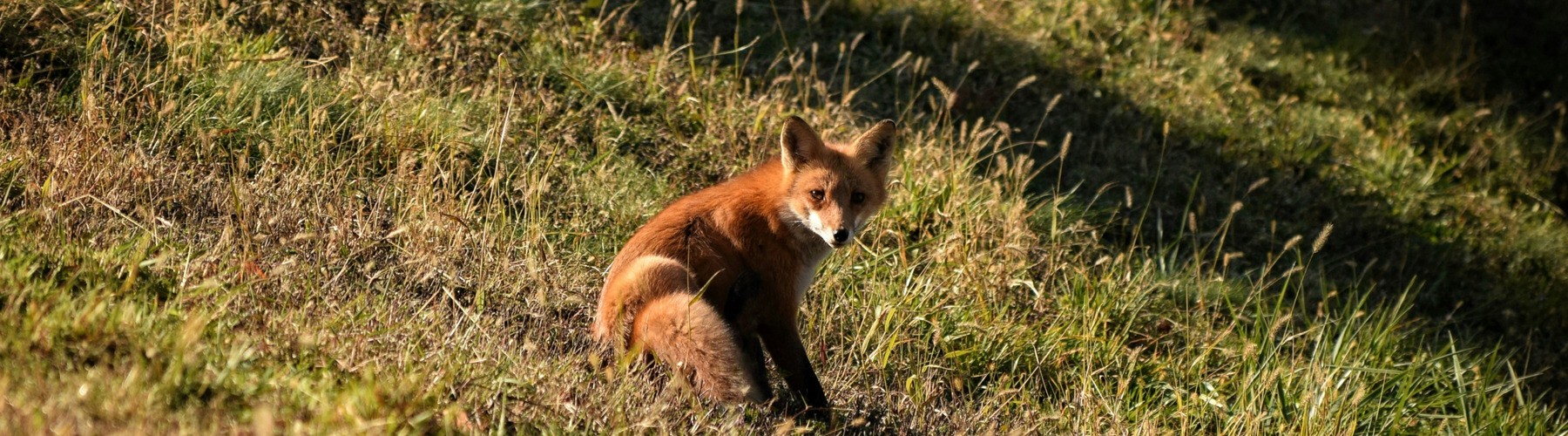
Photo by Satyawan Narinedhat on Unsplash
One Sunday morning you will be reading in the gazebo and hear your wife scream. You will scurry in your slippers to the mulch pile, expecting a bear, having read about bears, thinking you will make yourself bear-like and scare the bear off, or maybe find a stick with which to hit the bear, or entice the bear into chasing you so as to save your wife and this will be how you are remembered.
But when you reach your wife, there will be no bear. She will be on the ground, grasping desperately. For what? For you? For air? Is she in the throes of a heart attack? Stroke? Do people scream when having a stroke?
Your insides will crumple at the desperation of the woman who moments ago was hauling clods in a rusty wheelbarrow with the vim of a puppy and the vigor of a USPS letter carrier—the same woman who fishes with worms and then guts her catch in accordance with a very specific YouTube video, the woman whom you went into debt for when “courting” by purchasing silly knickknacks and a piano, the woman who patiently listens to your “father issues” for hours on end while you watch the Mets drop their seventh straight and then timidly says, “You can have the last cupcake if you want.”
You will notice a fox clamped to your wife’s ankle. Not an elegant red fox—but a mangy gray fox. There will be no stick with which to hit the fox. There will just be you, in all your stick-less-ness and fang-less-ness, and you will make yourself large and bear-like and yell at the fox in a booming but incoherent bear-like voice until the fox releases your wife but comes after you, calling your bear-bluff, foaming, sinking its fangs into your slippered feet as you try kicking it away, not retreating until your feeble toss of a brick—thank God for the bricks—and you will think about following the fox to the woods at the edge of your yard and tossing bricks into what you think might be its den, hoping to kill the fox so that someone can dissect its brain, brain dissection being a thing you will have read about people doing to aggressive things that bite. But you will be reluctant to squeeze face-first into a hollowed-out log in order to retrieve a fox that may or may not be dead, so you and your wife will drive to Community General Hospital to begin a series of rabies shots that will need to be administered at very specific intervals in the days and weeks ahead. You will worry that the rabies protocol might interfere with your trip to Canada to visit your dying father for what will probably be the last time, your father who will loom large as most fathers do, the primordial essence of hero, safety, security—the source of change for the Coke machine down at Eddy’s Gulf when you were a kid, the administrator of antacids when you had those salami nightmares about dinosaurs looming—whose voice over the phone lately has grown gravelly and choked with inevitability.
On the way to the hospital, you both will tell and retell the fox story to each other—from your perspective, your wife’s perspective, the fox’s perspective—and you both will laugh, Google having confirmed that rabies shots aren’t in the stomach anymore, that only ten people die of rabies in the US each year, thanks to the coordinated efforts of health care and animal experts—and you will laugh at the irony of finally finding a house in the country within your price range, away from the rats and hoodlums and mayhem of the city, only to be bitten by a fox. As you approach the encroachment of Syracuse, you will lament that your father will never be well enough to visit your new Anne of Green Gables-ish house, that he would have appreciated it, having illustrated Anne of Green Gables, and your wife will then curl into a ball of shame for possibly jeopardizing your plans to visit your dying father for what will probably be the last time. You will assure her that it could very well have been you who stirred up the fox, while inwardly blaming your wife for stirring up the fox and wondering if your wife’s OCD extends now to weeding.
At the hospital your wife will jovially ask people in the emergency-unit waiting room, “How are you?”—and you will think, How do you think they are?—but people will surprise you with their cheerful responses (with the exception of that one person who’s pretending to be sleeping), and you will recall your wife down at the lake, at the public landing, surrounded by adoring children, the excitement in their voices when she suggests they search for heart-shaped rocks, the energy and sincerity in that search, the tranquility of parents, grandparents, and otherwise legal guardians who get to ignore their children and smoke cigarettes and talk about the algae bloom. And you will feel an inner glow and pride at the positivity your wife instills in complete strangers, and a twinge of guilt at having for a second inwardly blamed her for possibly jeopardizing your trip to Canada to visit your dying father for what will probably be the last time, which maybe you won’t want to take anyway, wishing it would all go away—the looming specter of death—perhaps imagining that you’ll never die if your father never dies, although you will not become conscious of this concept until after the fact.
You will be admitted into the emergency unit and seated in dentist-like hallway chairs, while reassuring your wife and self that the hospital’s eschewal of a private examination room for the administering of rabies shots bodes well for the seriousness of your predicament. It being Sunday morning, Memorial Day weekend, and somewhat slow in the emergency unit, medical personnel will appear from their mysterious nooks to hear your fox story, and you and your wife will become celebrities (mostly your wife because she’s more outgoing and good for you in that human-connectedness way), until finally the nurse with the needles will say, “Okay, relax your arm,” and that’s when the person who was pretending to be sleeping will burst from his private examination room, shouting, “Fuck this shit!” and stride through the emergency unit doors, still in his hospital gown, followed by a nurse who keeps saying, “I was just doing my job,” and your wife will do this loud breathing thing she does that makes you really uptight, and the nurse with the needles, an obvious veteran of emergency-unit unstable people hopped up on God knows what, will say again, “Okay, relax your arm,” and time will stop as the needle pricks and you await your wife’s response to being immunoglobulized.
The other side of that time warp will not be a place you want to be, because your wife will announce that she might faint, and the nurse with the needles will dismiss your wife in that tempered, tolerant, professional way that health care professionals adopt when they really don’t have time for this—which is to say, the nurse with the needles will say, “You’re not going to faint.” But your wife will announce again that she might faint, this time more like a threat, and you will suggest she keep doing that loud breathing thing she does, and your wife will breathe aggressively but then announce that she might puke, and the nurse with the needles will say, “You’re not going to puke,” and you will consider rising from your own dentist-like chair and shimmying between your wife’s dentist-like chair and the robotic mobile contraption that holds a computer screen and the needles, in order to hold her reassuringly.
But you will not hold your wife reassuringly, maybe because of a moment that may or may not have happened exactly as you remember, when your father emerged from deep within his studio when you were a kid, his khakis a colorful universe of his latest artistic creation—acrylics blotched and whirled into galaxies of cobalt blue, lemon yellow deep, rose doré—like your fingerpaints at school—and you rose from your Saturday morning cartoons to hug your father, but he stiffened like a corpse and told you, “I’m still working,” which translated to Don’t touch me, which translated to a vacuum in your gut that collapsed you and kerneled an aversion to physical intimacy.
Thankfully your wife will not faint or puke, and after you are given very specific instructions as to the remaining vaccination shots (three days, seven days, fourteen days), you and your wife will exit the hospital. Your wife will pause at the door, remembering “Fuck this shit!” man, worried that he might be lurking, still in his hospital gown, and you will anxiously survey the periphery of the mostly empty parking lot while reassuring your wife that it’s fine—there are guards, that you heard something about giving this man bus fare. But the specter of being attacked from out of nowhere will stay with you until you are safely in your car and the doors are locked and you are in motion.
You will read that foxes can see the earth’s magnetic field, make forty different sounds, and are born blind. You will read about the magnetoreception hunting process, that foxes have radical pair-forming photopigments that act like a rangefinder, that foxes prefer to jump on their prey from the southwest. And when a former Navy SEAL (Special Ops?) your wife mostly knows arrives suddenly one day to set fox traps, you will follow him around the edge of the yard in your slippers and also learn that foxes like peanut butter.
Then neighbors that your wife mostly knows will hear your fox story and pop in with homemade cookies and bunches of garden flowers riddled with tiny, fast-walking ants. And that Thursday, before you leave to teach community college students how to differentiate between simple, perfect, continuous, and perfect continuous verb tenses, you will walk into the kitchen while your wife’s doing dishes and say, “Hello, Baby!” in your 1950s Big Bopper voice (like you always do), and your wife will jump and maybe break a dish, and you will suddenly resent your new-ish country neighbors for lifting your wife’s spirits because why can’t it be you lifting your wife’s spirits? Why can’t it be you setting traps?
On the morning you and your wife are to begin your two-day drive to Canada to visit your dying father for what will probably be the last time, your wife will tell the nurse in the emergency unit (where you’ve been receiving your rabies shots) that the former Navy SEAL (Special Ops?) hasn’t caught the fox but presumes the fox dead. The nurse will say it’s a good thing that you’ve been immunoglobulizing, since there is no way to dissect the fox’s brain, and you will grow impatient at your wife’s need to inform the nurse about your plan to squeeze your trip to Canada to visit your dying father for what will probably be the last time between now and your last scheduled rabies shot, seeing as how your father could die at any minute and you will have already put the trip off a week because immunoglobulizing in Canada might be a problem with the Insurance Powers That Be.
When finally in the car, your wife will say she sensed your impatience in the emergency unit and argue that it’s a two-day drive to Prince Edward Island and it’s not like a few extra minutes today will make you late tomorrow, and things will get quiet as you both ponder what tomorrow means—a visit with your dying father for what will probably be the last time (if he even makes it through the night)—and your wife will apologize for gabbing with the nurse and for being insensitive, and she will suggest driving through the night—to which you will reply that your father could conceivably live for months (probably not, but who knows?), so it wouldn’t make sense to become reactively reckless. You will confess that a part of you doesn’t even want to make it to your dying father in time, and the car will get quiet again before your wife points out how brave you are for not allowing yourself to be puppeteered by deep emotional and psychological strings, that these feelings of dread are perfectly natural, that nobody looks forward to confronting a dying dad, that you are a good son for not “running,” and you will feel a glow like something is reflecting inside you and express your gratitude for your wife by joking that you think you see “Fuck this shit!” man over there waiting for a bus and that he’s probably rabid. But this will make your wife stiffen and toggle her eyes, so you will drive on and express your love more conventionally by saying, “Thank you” and “I love you”—which is a thing your wife will have taught you over the years.
Beating through Maine and New Brunswick, you will recall that the last time you made the trip to Canada to visit your father for what will probably be the last time, he’d reached out his IV’d hand for you to hold. You hadn’t known what to do with that hand, thanks to your history with your father’s hand-holding-lessness, but you’d figured it out and reached out your hands and taken his hand. He’d squeezed and you’d marveled at the strength of this dying man’s hand, this man who made a living with his strong hand not the way most strong-handed men make a living, building houses and fixing cars, but by expressing longing onto a canvas and selling that longing to others who long. You will describe to your wife how your father’s hand-holding had whooshed into your interior vacuum and felt kind of weird but fulfilling, and that you might just march into that hospital room and hold your father’s hand again, like there’s no tomorrow, maybe even caress it and say, “I love you—I love you, Dad.”
But suddenly this notion will make your shoulders ache and the back of your neck tingle, like walking into your father’s studio as a kid, the king throned in his swivelly art chair—you, peering over his parapet drafting board, asking meekly if he will cross that moat of I’m working and come out to play. You will wonder if holding your father’s IV’d hand had ever actually happened, seeing as how the next day he’d kept his hands to himself, and you will accuse your father of moving to Prince Edward Island to get away from you, pointing out to your wife that PEI didn’t even have a bridge connecting it to the mainland when your father first moved there, offering that this geographic detachment symbolizes your father’s emotional detachment. But your wife will remind you that your father discovered the island while illustrating the Anne of Green Gables books, that he’d fallen in love with the island’s colors and shapes, which you will counter with “The United States has colors and shapes. Who wants to be that far from their kids? Their grandkids?” and ask if she can imagine her own father moving to Timbuktu—her own father who relished the daily company and support of several daughters and sons in the last few years of his life—and the car will get quiet again until your wife says, “Your father loves you,” which will incite the recollection of times your father invited you into his castle to share the excitement of a collage of crosshatched heads for the reprinting of a classic novel, or maybe it was his clever placement of the wolf in a children’s book, and you will recall how you relished the times spent on your father’s side of that drafting board, perhaps not comprehending fully his crafty choices and strategies but inwardly sharing the vision, the joy. And you will remember being sent away but ultimately surprised when your father later presented himself between you and the TV with two baseball gloves, acting like you were late to a party, and you scrambled outside, following your father’s paint-stained pants like a dog heeling and were handed a glove and told to go to the other end of the yard, the distance growing greater as you neared the woods, but a warmth and light escalating within, in anticipation of the electric connection of that hard ball stinging your mitted hand. So when you finally enter that hospital room to find your father blanketed to his neck, smiling like it hurts, his arms slinged beneath the covers to prevent their painful movement, and he says, “Just don’t bite me!” (having heard about your fox encounter and likely exposure to rabies), you will laugh and feel grateful that your father’s still in there somewhere, behind the parchment skin and cancer-ridden frame, grateful that you’ve made it in time to drape yourself across his breathing chest—you, with all your father’s hug-lessness (with the exception of all those competitive bear-hugs, when your father squeezed out your air)—and you will find yourself wishing your father could still reach out his hand, the hand attached to his arm of metastasis, so that you might hold it like you’d held it before, that gesture so foreign that you will wonder to this day if it ever really happened.
But the next day you will find your father in distress, and he will tell you that it’s not a good time for a visit, that the nurses can’t draw blood from his blasted veins without making him howl, that the orderlies keep coming to clean him when all he wants is to sleep, that he can’t get warm despite the heated blankets and turban wraps. You will ask if he wants to wait until after lunch for your visit and notice the uncovered breakfast tray and ask if he’s had breakfast, while nurses and orderlies go about their duties like they’re working a Tim Hortons drive-thru, and half-naked patients wander in from the hall, everyone talking in their outdoor voices, and you will say that you can’t blame him for not wanting company, that you’ll come back later, and you’ll say, “I love you, Dad,” to which your father will blink at the ceiling, perhaps not hearing you, and you will tell him to get some rest, and as you and your wife navigate the bustling hall to exit the ward, you will hear your father barking at nurses and orderlies and tingle with an overwhelming appreciation for being able to walk down that hall and out the door.
That’s when your wife will stick her hand in your pocket, and you will take it in your hand and squeeze.
Visits will vacillate between vascular PICC procedures and never-before-experienced moments of intimacy with your father where you will share that sometimes you enter your office to write and imagine you are your father entering his studio to paint, and he will share that he’s never forgotten when you—as a kid, when your mother was dying in the hospital—told him the breakfast he’d made for you was “better than Mom’s.” Your father will express anxiety about the “ball being dropped” regarding the plans for his estate, which will consist of a not-yet-paid-off Kia Soul, a turn-of-the-century Bose sound system, and dozens of never-sold paintings from his recent abstract years. But in his next breath your father will laud you for all your accomplishments, including the writing of a novel he will not yet have gotten around to reading and never will, and he will tell you about his mother, who turned into a monster after his artist-father abandoned her to run off with his model, that his mother braided strips of leather and left them hanging on a hook so your five-year-old father would see the progress of her DIY punishment whip. You will ask if she ever used the whip, and he will say, “Never had to.”
Mostly the days will be filled with you killing time while your father sleeps, hanging out in the lobby while your wife leaves to go birding, discreetly watching the withered parade by on their way to amputations and eye-gouges, everyone losing their shape, cruel gravity sucking skinny muscles into the earth and leaving behind the aged residue of wisdom spots and outdated cargo shorts.
And when you’re driving over the Confederation Bridge, back toward the States and your flourishing life, the symbolism of an island being connected to the mainland over the Northumberland Strait and the new and improved relationship between you and your father will not be lost on you, and you will muse that this trip to visit your dying father for what will probably be the last time might turn out to be the trip to visit your dying father for what was the last time (but who knows, considering miracles of medical science, even in Canada), and you will regret that it’s the end of things that brings about new beginnings and search your Spotify for Joni Mitchell’s “Big Yellow Taxi.”
When you pull into that hospital in the Berkshires on a sleepy Monday morning, your wife having juggled the directives of county health departments and insurance companies and urgent care facilities to establish where and when you need to be to take that last meticulously scheduled rabies shot—somewhere between your home and your father’s home, somewhere between past and future—there will be a déjà vu vibe to the mansion-like brick structure on a hill in the quiet Rust Belt town of Great Barrington, and you will seem to know the solo receptionist and affable nurses and fresh-off-the-weekend doctors, and they will seem to know you, a comforting light filtering through the large-paned windows like heaven in a religious painting. And as you are pricked, you will feel celebratory at being fully realized, immunoglobulinally, finally free from rabid worry—and you will step out into the sunshine and soar with the singing birds, and share with your wife that your father would probably say, “This is a honey of a hospital,” and that you feel so good and so right in the present moment that you could die with her then and there and be okay with that. And maybe you will hug your wife before getting into the car, and maybe imagine a fox in the shrubs, lurking—but not for you—for small game, maybe peanut butter in the dumpster behind that picket fence—a fox whose time has not yet come.
About the Author
Keith Stahl’s first novel, Dear Future Occupants, is forthcoming from University of Wisconsin Press (fall 2026), and his poetry collection, From the Gunroom, is available from Main Street Rag Publishing. Keith teaches creative writing at Syracuse University and Writers Voice. Visit KeithStahl.net for links to other published pieces.